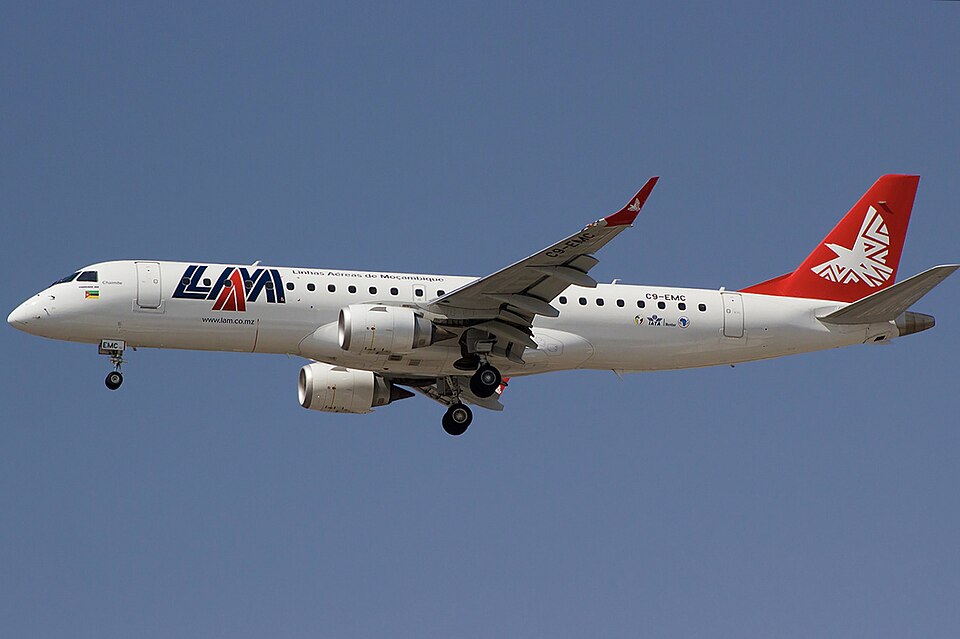
Accident Sequence
On 29 November, LAM Mozambique Airlines Flight 470 departed Maputo Airport at 1126 local time bound for Luanda, Angola. While overflying Botswana and Namibia, the aircraft encountered adverse weather conditions including cumulonimbus clouds at high altitude and turbulence. In circumstances that remain unclear, the aircraft went out of control and disappeared from radar screens at 1230 local time, most probably after diving into the ground. The crew did not send any distress call.
Search and Wreckage Location
When the aircraft failed to arrive in Luanda, search-and-rescue operations commenced but were suspended at nightfall due to low visibility and heavy rainfall. On 30 November, Namibia Police forces announced that the wreckage had been located in the Bwabwata National Park near Divundu. The aircraft was completely destroyed by impact forces and post-impact fire. The crash site lies in a densely wooded and isolated area, complicating recovery efforts.
Fatalities
All 33 occupants perished in the crash. The victims included 16 Mozambicans, 9 Angolans, 5 Portuguese, one French, one Brazilian, and one Chinese national.
Investigation Findings
A press conference by Mozambican authorities on 21 December 2013 reported that cockpit voice recorder (CVR) analysis revealed the captain was alone in the cockpit, which was locked. The copilot attempted to enter without success and knocked on the door several times, receiving no response. The captain engaged the aircraft in a descent at 6,000 feet per minute until impact, and several warning sounds and alarms went unanswered.
The final report from Namibia's Directorate of Aircraft Accident Investigations (DAAI), released on 15 April 2016, confirmed that the accident was caused by inputs to the autoflight systems by the person believed to be the captain. This individual remained alone on the flight deck after the person believed to be the copilot requested to go to the lavatory. The actions caused the aircraft to depart from cruise flight into a sustained controlled descent, leading to collision with terrain. Investigations also revealed that the captain had experienced personal events during the past year, including a divorce, the death of his son in a car crash, and heart surgery undergone by one of his daughters.