Accident
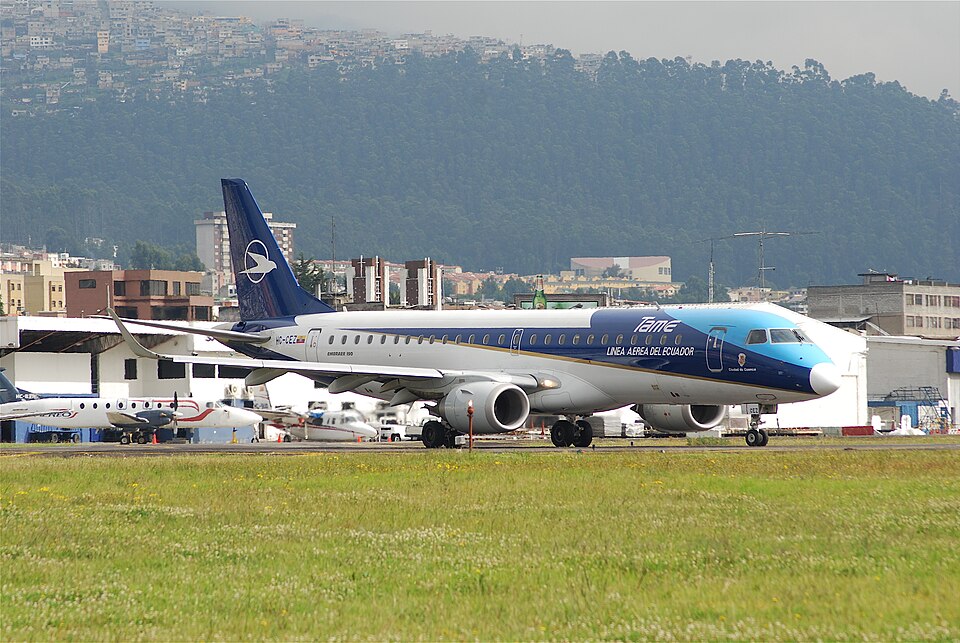
The aircraft was operating an uneventful flight from Loja to Quito. The crew initiated a descent for runway 35 at Mariscal Sucre Airport under night conditions and poor weather. After touching down on a wet runway, the aircraft experienced difficulty decelerating. It overran the runway, went down an embankment, struck a brick wall, and came to rest. No fire occurred. All 103 occupants were rescued, with four passengers sustaining minor injuries. The aircraft, named "Ciudad de Cuenca," was damaged beyond repair.
Investigation
The investigation determined that during the approach, the slats became inoperative. The crew attempted troubleshooting five times without success but decided to continue the approach rather than executing the abnormal procedures outlined in the Embraer Quick Reference Handbook for slat/flap system malfunctions. Consequently, the aircraft was in the wrong configuration for landing. The crew failed to input the correct reference speed and distance required for a landing with inoperative slats. The aircraft crossed the runway threshold at 50 feet with an excessive speed of 163.8 knots, compared to the required 149 knots. It touched down approximately 880 meters past the threshold. Spoilers deployed nine seconds after touchdown at 950 meters, reverse thrust was activated at 1,280 meters, and braking began at 2,300 meters, with the antiskid system active. Runway 35 is 3,125 meters long. The excessive approach speed (15 knots above Vref), a prolonged flare, and late application of braking systems prevented a stop within the remaining distance.
The slat malfunction resulted from the failure of multiple actuators that could not withstand the negative temperatures encountered during the previous flight. Records indicated that the slats had failed 53 times on this aircraft since July 19, including six times during approach and 47 times in flight. The crew did not initiate a go-around.