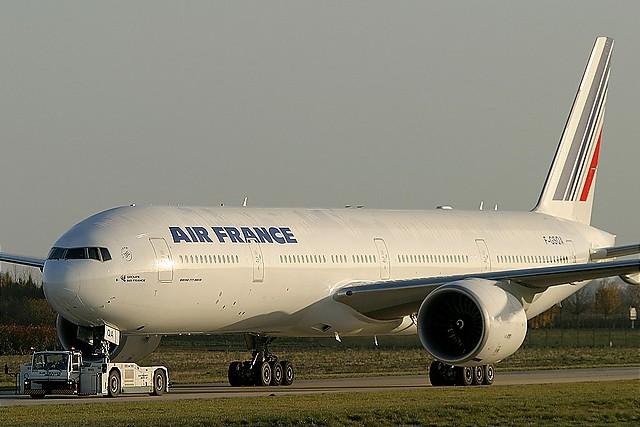
Incident Overview
On July 28, 2013, at approximately 23:00 local time, an Air France Boeing 777-300 with registration F-GSQA was preparing for departure to Shanghai from Paris Charles de Gaulle Airport. The aircraft was on the ground with the Auxiliary Power Unit (APU) running to provide air conditioning while fueling and passenger boarding were in progress. The cabin crew was positioned at the doors, which were not armed for emergency evacuation.
Sequence of Events
At 22:54, the flight crew reported a burnt smell. Shortly after, a smoke detection alarm labeled "SMOKE REST UPPER DOOR 1" triggered on the Engine-Indicating and Crew-Alerting System (EICAS). The captain observed smoke in the cockpit and decided to evacuate the aircraft. A mayday was declared to air traffic control requesting immediate fire assistance. Passengers were evacuated via slides deployed at doors 3G/3D, although initial instructions suggested using boarding doors. One passenger sustained a severe elbow fracture during the evacuation.
Technical Findings
Investigation revealed that a ball bearing in the APU's ventilation compressor circuit was damaged. This failure caused axial movement of the compressor module, which eroded the carbon seal. Consequently, lubricating oil leaked into the compressor area. When heated, this oil generated smoke and potentially toxic compounds, including TriCresyl-Phosphates (TCP), though exposure levels could not be definitively determined due to lack of blood tests.
Safety Implications
The incident highlighted challenges in managing emergency evacuations while aircraft are still connected to jet bridges. The crew's decision to evacuate was based on the presence of smoke and toxic fumes, prioritizing passenger safety despite the complexity of the situation.