History
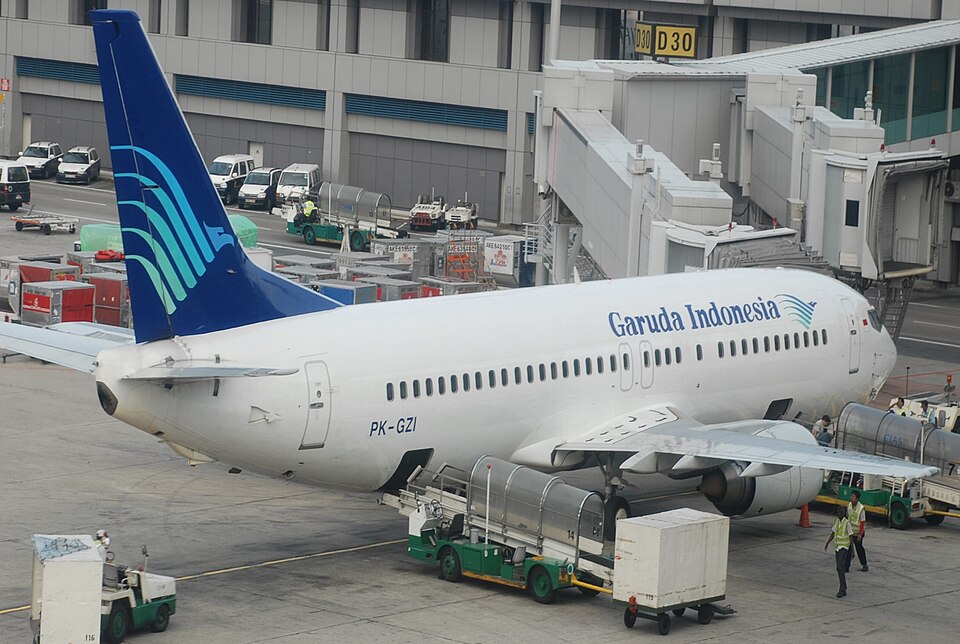
On 28 October 2008, a Boeing 737-400 aircraft, registration PK-GZI, operated by PT. Garuda Indonesia on a scheduled passenger service from Adisucipto Airport, Yogyakarta to Ngurah Rai Airport, Denpasar, Bali. The aircraft carried 139 persons: 2 pilots, 5 flight attendants, and 132 passengers. After landing, while taxiing to the apron, the number-one main wheel axle failed.
Aircraft Information
The left main landing gear had been overhauled by a United States Federal Aviation Administration approved workshop in the USA. The landing gear was installed on PK-GZI on 24 October 2008, and the failure occurred on 28 October 2008. At the time, the landing gear had accumulated 15,345 cycles since new and 7 cycles since overhaul.
Investigation
The investigation conducted by the National Transportation Safety Committee (NTSC) included laboratory examinations on the failed axle in Indonesia and the USA. Two areas of evidence supported that the crack was present before the inner cylinder was last overhauled.
The fracture surface showed a fatigue crack that initiated from a corroded hole in the brake assembly attachment flange at the 5 o'clock position. The fatigue crack propagated toward the flange and the axle wall, reaching approximately 8 cm long until a fast final fracture occurred. The failure occurred on the seventh landing after installation of the overhauled main landing gear.
Findings
The investigation found that an undetected fatigue crack in the number-one main landing gear axle originated from a corroded hole in the brake assembly attachment flange. The crack propagated until the axle fractured completely.
Safety Actions
On 5 August 2008, the operator's maintenance organization issued engineering orders requiring increased inspection schedules for main landing gear axles, because the axle had failed at a time significantly short of the manufacturer's specified component life.
On 6 August 2008, the NTSC issued recommendations to the Directorate General of Civil Aviation, the US Federal Aviation Administration, the Boeing Company, and the European Aviation Safety Agency, with respect to reviewing the overhaul and inspection requirements for Boeing 737 main landing gear axles.
On 20 July 2009, the US National Transportation Safety Board informed the NTSC that Boeing planned to revise the Aircraft Maintenance Manual (AMM) for the B737-300/400/500, specifically ATA Chapter 32-41-41 page 403, dated 25 September 2009.