Incident Overview
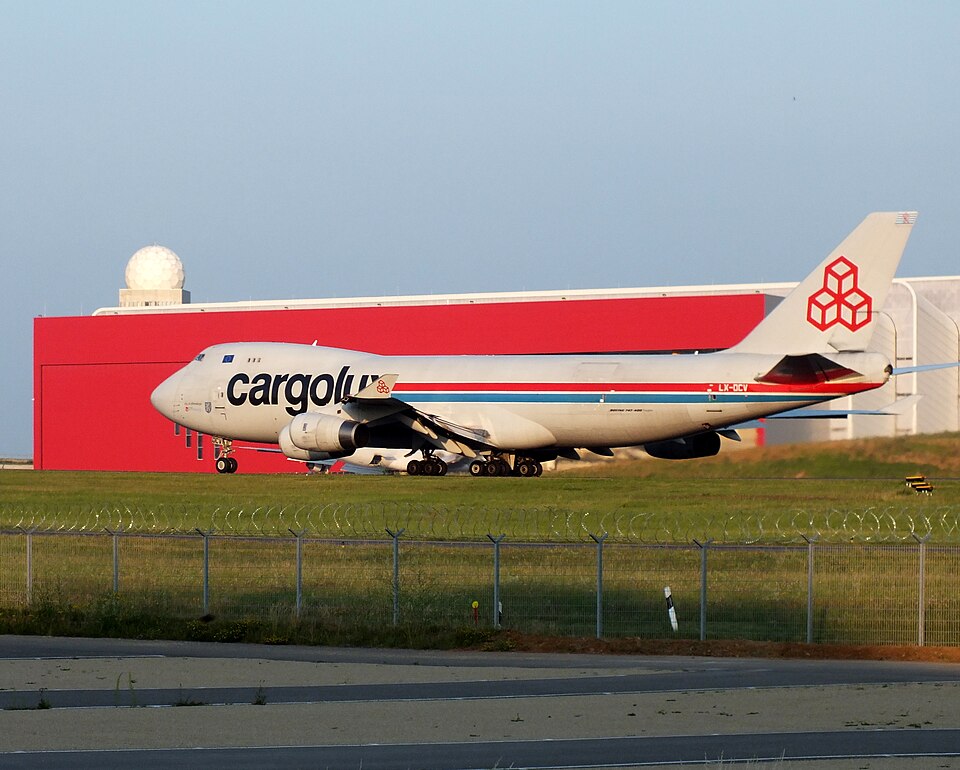
On 30 October 2000 at 1455z, a Boeing 747-400, registration LX-OCV, operated a scheduled international cargo flight from Luxemburg to Johannesburg International Airport (flight CV 714). The aircraft was cleared to land on Runway 03R. After landing, the pilots were instructed by the ground controller to taxi along Taxiway H5 and hold short of Taxiway C1. They were then cleared to taxi along Taxiway C1 and hold at the holding point of Taxiway F2 for an aircraft to depart on Runway 03L.
Sequence of Events
After obtaining clearance, the pilots applied breakaway thrust to taxi over Runway 03L. The jet blast from the Boeing 747-400 caused a Cessna 208 Caravan aircraft, parked on the other side of the fence, to jump the chocks in front and behind its nose wheel. The Cessna 208 turned to its left and rolled forward towards its left, impacting another parked aircraft, a Cessna 407 Twin Caravan, on the side of its fuselage. The Cessna 208's propeller spinner penetrated the parked aircraft's side.
Weather and Personnel
Weather was fine at the time of the incident. There were three persons on board the Boeing 747-400. No injuries or fatalities were reported.
Contributing Factors
The investigation determined that several factors contributed to the incident: a pothole on Taxiway H4, the application of power during the breakout phase, the close proximity of the parked aircraft to each other and to the fence, and the lack of protection for the parked aircraft against jet blast.