History of Flight
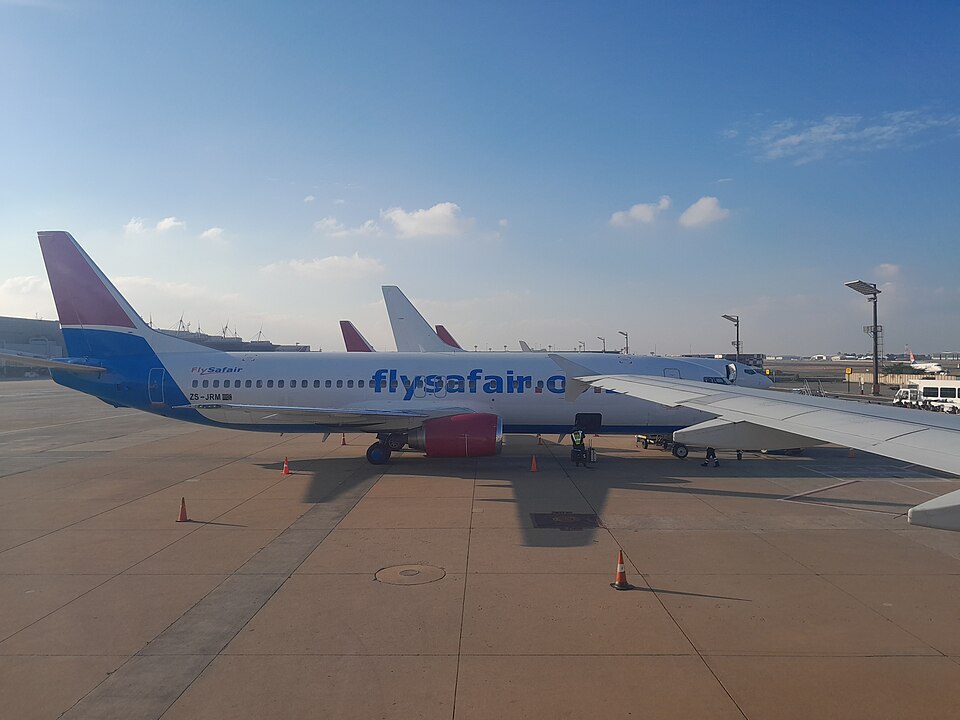
On 16 September 2019 at approximately 0743Z, a Boeing 737-400 aircraft registered ZS-JRM, operating a scheduled domestic flight (FA202) from O.R. Tambo International Aerodrome (FAOR) to Cape Town International Aerodrome (FACT), departed with two pilots, four crew members, and 130 passengers on board. The First Officer was the pilot flying.
During pre-flight, start-up, taxi, and take-off roll, all systems operated normally. However, during rotation on Runway 03L, the master caution lights illuminated, indicating multiple system failures. Additionally, auto pilot (AP) 1 and 2 did not engage. The crew attempted to resolve the problem and read the after-take-off checklist. They then advised air traffic control (ATC) of the issue and requested to maintain 8,000 feet, which was approved. Shortly thereafter, ATC offered a climb to flight level (FL) 110, which the crew accepted to clear low-level turbulence.
The crew consulted the Quick Reference Handbook (QRH) procedures and recommendations. They checked all circuit breakers, particularly those associated with electrical generation, but found them in order. The crew determined that the No.1 engine generator was inoperative, although the "Bus Off" light did not illuminate, while the No.1 transfer "Bus Off" light was illuminated. The Traffic Collision Avoidance System (TCAS) was also inoperative. The crew concluded that all other failures were due to the No.1 transfer bus being inoperative.
The aircraft was flying normally, both engines operated normally, and both hydraulic systems had normal pressure, with the B system electric pump inoperative. The pressurisation system had switched to standby mode, and cabin pressure was at sea level. The crew decided to return to FAOR. ATC was advised and vectored the aircraft back. The pilot-in-command checked the aircraft's weight for maximum landing weight and obtained the latest Aerodrome Traffic Information Service (ATIS) before reaching waypoint RAGUL.
The aircraft was initially assigned to land on Runway 03R, later changed to Runway 03L. Emergency services were not dispatched as the crew felt the aircraft was flying normally. The landing was uneventful until the landing roll phase, when the captain's flight instruments and communications 1 (COMM 1) failed, indicating that the captain's instruments were powered by the standby electrical system.
Damage to Aircraft
The damage was limited to the lever latch of the Generator Control Unit (GCU) of the No.1 engine.
Injuries to Persons
No injuries were reported among the two pilots, four crew members, or 130 passengers.
Investigation Findings
The investigation revealed that during rotation, the GCU of the No.1 engine had moved out of its rack, causing its electrical connectors to disconnect and resulting in multiple electrical system failures. This occurred because the lever latch of the GCU of the No.1 engine was broken.