What happened
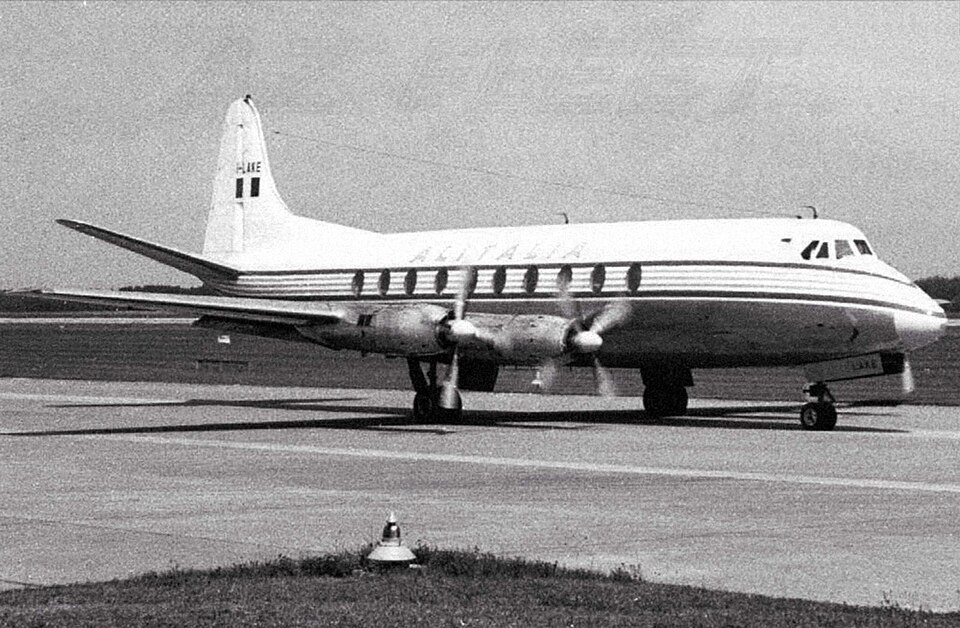
On the evening of the accident, an Alitalia flight departing from Rome Fiumicino (FCO) at 21:10 GMT began its journey toward Naples (NAP). While cruising at FL70, the crew received clearance at 21:32 to descend through 5,000 feet down to 4,000 feet. The final communication from the aircraft occurred at 21:37 as it departed the LD NDB, intending to perform a direct visual approach.
During the descent, the aircraft executed an excessively wide turn on the downwind leg, which led the plane into a region of intense rainfall. At 21:39, the Alitalia Boeing 727 (implied by context of Alitalia operations/type, though source only specifies flight) struck Monte Somma at an altitude of approximately 610 meters (2000 feet). At the moment of impact, the aircraft was on a 90° heading with a 20° left bank. The collision occurred within the Mt Vesuvius Mountain Range.
Findings
Investigations into the crash identified several critical errors during the approach phase. The crew failed to interrupt the visual approach despite visibility conditions being insufficient for the maneuvers being attempted. Additionally, the initiation of an abnormally wide downwind leg caused the flight path to drift significantly south of the intended circuit, placing the aircraft on a trajectory that was unsafe relative to the surrounding terrain. This deviation was compounded by a failure to accurately estimate the aircraft's position, which resulted in the left-hand turn being started too late to safely complete the maneuver.