Casualties unknown

1982-07-05: Boeing 727-233 (CGAAA) — Air Canada — Flushing, NY

Flushing, NY, US

On July 5, 1982, a Boeing 727-233 (registration CGAAA) operated by Air Canada was involved in an aviation accident near Flushing, NY. Investigators recorded the probable cause as: The No. 7 slat inboard track roller support bolt failed due to a fracture through a lubrication hole, with fracture faces exhibiting striations and cupping. This summary draws on records from the U.S. National Transportation Safety Board (NTSB) historical archive; 16 related events involving the same aircraft type or operator are linked below.

Sourcesthe U.S. National Transportation Safety Board (NTSB) historical archivePrimary reportUpdated 1781061362Data APIEditorial standards
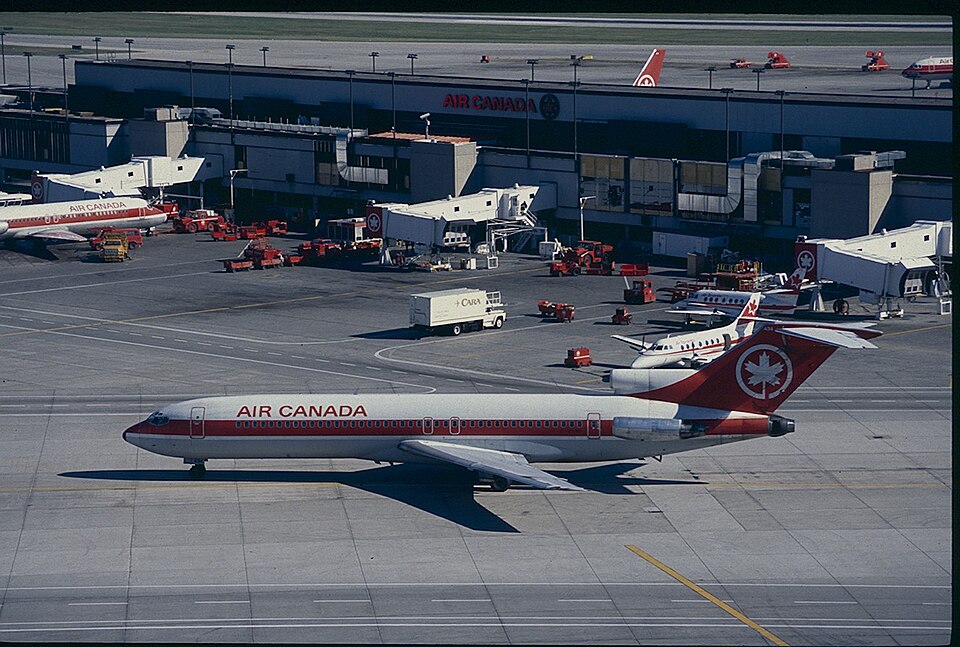
Boeing 727-233
Photo: Pete Macklin / CC BY-SA 2.0, via Wikimedia Commons

During initial climb, the amber leading edge flat light remained lit after flap retraction. Aileron and rudder inputs were needed to maintain wings level. Cycling flaps did not resolve; No. 7 slat failed to retract. Flaps extended to 15 degrees eliminated roll, and flight returned to LaGuardia. Inspection revealed a failed inboard slat track roller support bolt.

Event Description

During the initial climb phase, the amber leading edge flat light remained illuminated after the flaps were retracted from 5 degrees to 2 degrees. The flight crew required moderate aileron and rudder inputs to maintain wings-level flight. The flaps were cycled from 5 back to 2 degrees, but the same condition persisted. The second officer confirmed that the No. 7 slat was not retracting. The crew then extended the flaps to 15 degrees, which eliminated the rolling tendency. The flight returned to LaGuardia Airport.

Inspection Findings

Subsequent inspection revealed that an inboard slat track roller support bolt for the No. 7 slat had failed. The roller was found lodged between the inboard track and wing structure. The roller was seized, with several bearings missing, and little lubrication was evident. The bolt had fractured through a lubrication hole that the roller mounts over. The fracture faces exhibited striations and cupping. The total time on the bolt and roller was 18,815 hours.

Conclusion

The investigation identified that the failure of the No. 7 slat track roller support bolt, due to a fracture through the lubrication hole, prevented the slat from retracting, necessitating corrective flight control inputs and a return to the departure airport.

Probable cause

The No. 7 slat inboard track roller support bolt failed due to a fracture through a lubrication hole, with fracture faces exhibiting striations and cupping.

Investigation report by the U.S. National Transportation Safety Board (NTSB) historical archive. Original record: https://carol.ntsb.gov/event/20020917X04065. This page is a structured re-presentation; facts and quotes are in the National Transportation Safety Board (NTSB), United States.