Casualties unknown

2000-06-22: Cessna 172N (N7598D) — Sunrise Aviation — Santa Ana, CA

Santa Ana, CA, US

On June 22, 2000, a Cessna 172N (registration N7598D) operated by Sunrise Aviation was involved in an aviation accident near Santa Ana, CA. Investigators recorded the probable cause as: The loss of engine power during the initial takeoff climb, at too low an altitude to afford remedial action, because of an ingested valve, and the airplane's subsequent collision with the ground adjacent to the runway. This summary draws on records from the U.S. National Transportation Safety Board (NTSB) historical archive; 15 related events involving the same aircraft type or operator are linked below.

Sourcesthe U.S. National Transportation Safety Board (NTSB) historical archivePrimary reportUpdated 1781061362Data APIEditorial standards
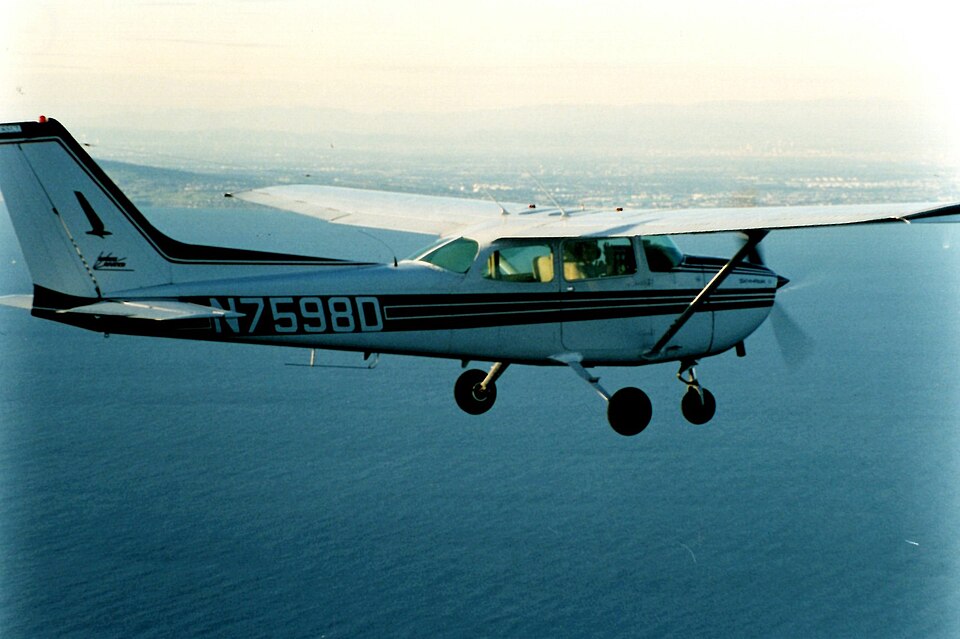
Aircraft registered N7598D
Aircraft registered N7598D. Photo: FlynntheProtogen / CC BY-SA 4.0, via Wikimedia Commons

A flight instructor and student pilot experienced an engine failure shortly after takeoff. The engine lost power completely, forcing a landing in the grass between runways. Postaccident examination found the No. 4 cylinder exhaust valve had been ingested into the engine.

Accident Overview

A flight instructor and a student pilot were conducting takeoffs for pattern work in preparation for the student's first solo flight. Shortly after takeoff, during the initial climb, the instructor observed that the engine was running very rough and that the engine revolutions per minute (rpm) had decreased to about 1,700.

Sequence of Events

Declaring an emergency, the instructor announced his intention to circle back for landing. The control tower informed him that they were unable to clear him on the requested runway due to departing traffic. Immediately thereafter, the engine rpm dropped completely and the engine ceased operating. Continuing his turn toward the runway, the instructor determined that he would not be able to reach it and elected to set the aircraft down in the grass area between the runways.

Postaccident Examination

A postaccident examination of the engine revealed that the No. 4 cylinder exhaust valve had been ingested into the engine.

Investigation report by the U.S. National Transportation Safety Board (NTSB) historical archive. Original record: https://carol.ntsb.gov/event/20001212X21283. This page is a structured re-presentation; facts and quotes are in the National Transportation Safety Board (NTSB), United States.