Incident Overview
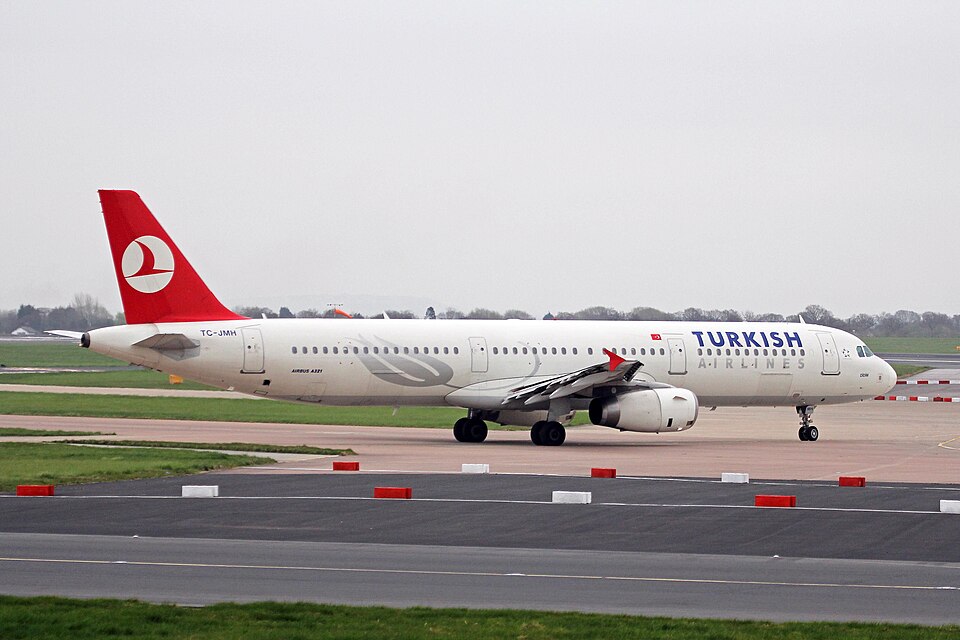
On 22 June 2017, at 20:57 local time (17:57 UTC), an Airbus A321-231, registration TC-JMH, operated by Turkish Airlines, conducted a scheduled commercial flight from Istanbul to Bucharest, Romania. The aircraft carried 117 passengers and 7 crew members. Upon landing on runway 26R at Henri Coandă International Airport (Otopeni), the aircraft braked heavily approximately 160 meters before the displaced threshold of the runway. Despite the braking effort, the aircraft did not stop within the available runway length. It continued past the end of the runway lights for about 95 meters before slowing down. Following instructions from the Otopeni Tower (OTP TWR), the crew performed a 180-degree turn and stopped.
Damage and Injuries
The aircraft sustained no damage. However, two end-of-runway lights were destroyed, and the electrical cable feeding system for the beacons was damaged, though the lights remained serviceable. There were no reported injuries among passengers or crew.
Aircraft and Crew Information
The Airbus A321 (serial number 3637, year 2009) was owned by Turtle Rhythm Highway Kumiai and operated by Turkish Airlines. It had a valid airworthiness certificate and had accumulated 31,823 total flight hours. The flight crew consisted of two ATPL(A)-licensed pilots: a 48-year-old male captain and a 33-year-old male first officer, both holding valid Class I medical certificates.
Braking System
The aircraft was equipped with an automatic braking system (AUTO BRAKE) offering three modes: MAX, MED, and LO. MED mode provides a deceleration rate of 3 m/s² and is recommended for short or contaminated runways; LO mode provides 1.7 m/s² for long runways. MAX mode applies maximum braking pressure. The system can be deactivated by applying light pressure on the brake pedals.
Meteorological and Runway Information
At the time of the incident, the weather at LROP was reported as: wind from 110° at 4 knots, visibility 10 km, few cumulonimbus clouds at 5,500 ft, temperature 26°C, QNH 1013 hPa, with no significant changes expected. The meteorological conditions were not considered a factor.
Runway 08L/26R had a displaced threshold on runway 26R of 1,250 meters, resulting in an available landing distance of 2,237 meters. The runway was served by a Category I instrument landing system for runway 26R.
Communications
The flight received ATIS information broadcast by the airport. No communication anomalies were reported.
Flight Data Recorders
Flight data recorders were analyzed as part of the investigation.
Cause
The investigation concluded that the serious incident occurred due to an inadequate aircraft configuration for landing, specifically the automatic braking system setting relative to the available runway length.