Casualties unknown

Runway Excursion on Landing of Boeing 737-8AS EI-DCR at Bucharest

Aeroportul Internațional “Henri Coandă” București-Otopeni, Ilfov, RO

On July 25, 2017, a Boeing 737-800 (registration EI-DCR) operated by Ryanair was involved in an aviation accident near Aeroportul Internațional “Henri Coandă” București-Otopeni, Ilfov, RO. Investigators recorded the probable cause as: The aircraft speed at the runway threshold, which was higher than the calculated speed (155 kt compared to 142 kt), corroborated with the sudden change of wind direction and intensity at the time of landing. This summary draws on records from the Romanian Safety Investigation and Analysis Authority for Civil Aviation (AIAS); 6 related events involving the same aircraft type or operator are linked below.

Sourcesthe Romanian Safety Investigation and Analysis Authority for Civil Aviation (AIAS)Primary reportUpdated 2026-07-04Data APIEditorial standards
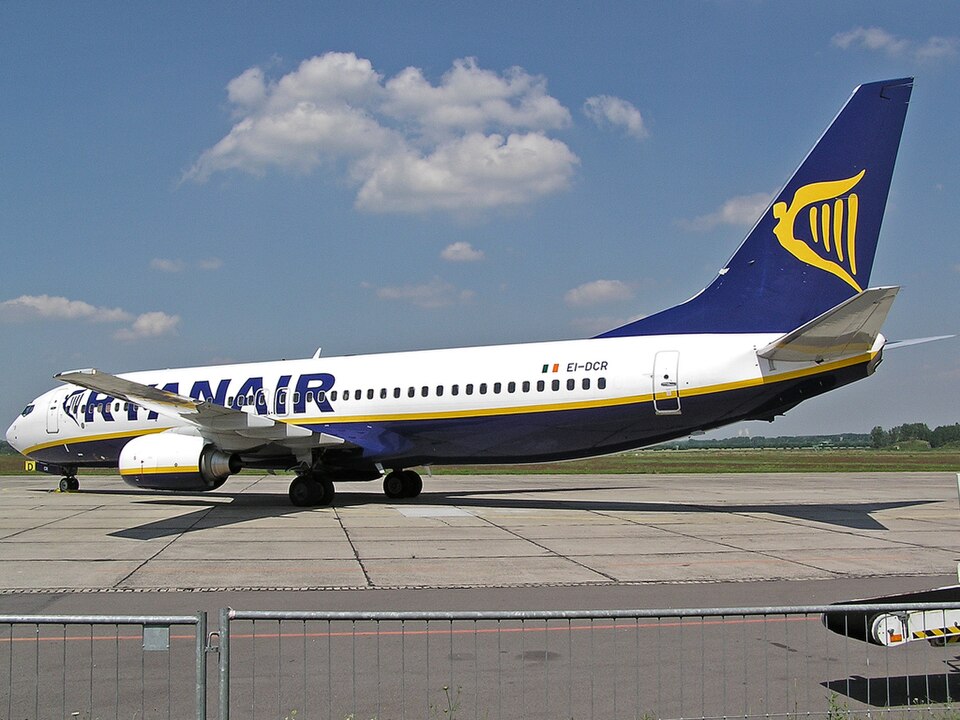
Aircraft registered EI-DCR
Aircraft registered EI-DCR. Photo: Philipp Tropschug / CC BY-SA 3.0, via Wikimedia Commons

On 25 July 2017, a Ryanair Boeing 737-8AS (EI-DCR) overran runway 26R at Henri Coandă International Airport after landing, destroying an over-ground light beacon. The aircraft was not damaged. The cause was a higher-than-calculated threshold speed combined with a sudden wind change.

History of the Flight

On 25 July 2017, a Boeing 737-8AS aircraft, registered EI-DCR and operated by Ryanair Designated Activity Company, took off from Berlin-Schönefeld Airport (SXF) in Germany on a scheduled flight to Henri Coandă International Airport (OTP) in Bucharest, Romania. The aircraft carried 183 passengers and 6 crew members.

During the initial approach, the crew received ATIS information indicating that runways 26L/26R were contaminated with water, wind from 360° at 14 kt (variable between 310° and 020°), cumulonimbus clouds at 5000 ft, and QNH 1003 hPa. The crew was cleared for a standard ILS approach to runway 26R. In the final approach phase, the tower informed the crew of a wind change to 60° at 10 kt, accompanied by a heavy rain shower.

Landing occurred normally within the touchdown zone. After touchdown, the crew applied braking but could not reduce the landing roll speed sufficiently to exit the runway via taxiway/clearway W. The aircraft continued rolling and overran the displaced end of runway 26R by approximately 100 meters.

During the overrun, the right main landing gear struck and destroyed an over-ground light beacon. The aircraft sustained no damage.

Aircraft and Crew Information

The aircraft was a Boeing 737-8AS, serial number 33811, manufactured in 2004, registered in Ireland. It was powered by two CFM International CFM56-7B24/26/27 turbofan engines. The flight crew consisted of a 54-year-old pilot-in-command with 3,500 flight hours and a 27-year-old co-pilot with 1,200 flight hours. Both held valid licenses and medical certificates.

Cause

The serious incident was caused by the aircraft speed at the runway threshold being higher than the calculated speed (155 kt compared to 142 kt), corroborated with the sudden change of wind direction and intensity at the time of landing.

Probable cause

The aircraft speed at the runway threshold, which was higher than the calculated speed (155 kt compared to 142 kt), corroborated with the sudden change of wind direction and intensity at the time of landing.

All Boeing 737-800 accidents →

Frequently asked questions

What happened in the 25 Jul 2017 Boeing 737-800 accident near Aeroportul Internațional “Henri Coandă” București-Otopeni, Ilfov, RO?

On 25 July 2017, a Ryanair Boeing 737-8AS (EI-DCR) overran runway 26R at Henri Coandă International Airport after landing, destroying an over-ground light beacon. The aircraft was not damaged. The cause was a higher-than-calculated threshold speed combined with a sudden wind change.

What aircraft was involved and where did it happen?

The accident on 25 Jul 2017 involved a Boeing 737-800, registration EI-DCR, operated by Ryanair, at Aeroportul Internațional “Henri Coandă” București-Otopeni, Ilfov, RO.

What was the probable cause of the accident?

The aircraft speed at the runway threshold, which was higher than the calculated speed (155 kt compared to 142 kt), corroborated with the sudden change of wind direction and intensity at the time of landing.