Incident Description
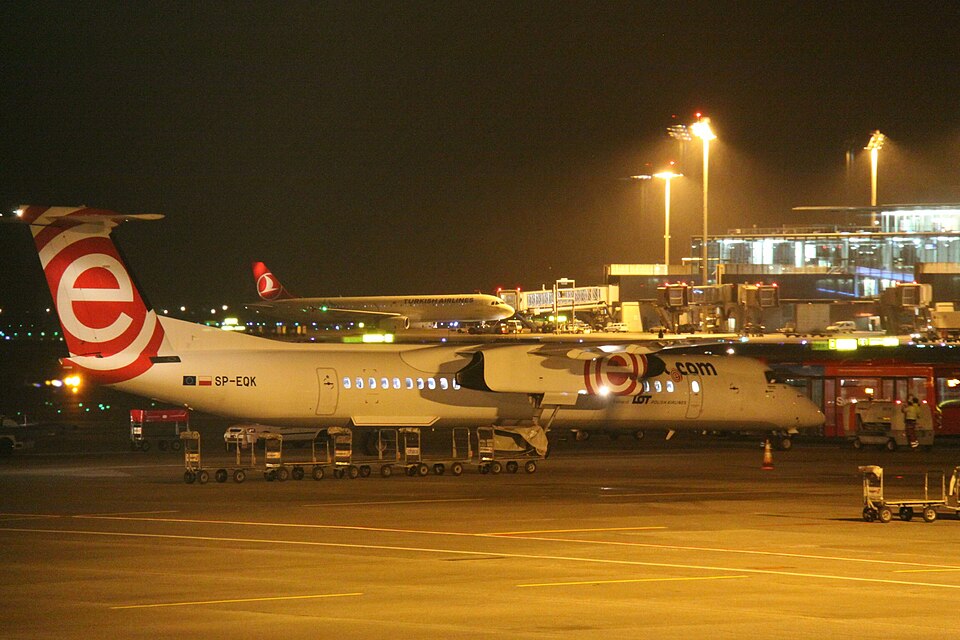
On 4 December 2017, around 19:23 UTC, an Embraer 170-100 departed from Warsaw Chopin Airport (EPWA) on a scheduled flight to Paris Charles de Gaulle Airport (LFPG). The aircraft was dispatched in accordance with the Minimum Equipment List (MEL) with the bleed 2 system inoperative (MEL 36-00-00). The takeoff and initial climb were normal. After passing through a cloud layer in icing conditions at approximately flight level 100, the crew received a BLEED 1 LEAKAGE caution, followed by an A-I WING FAIL indication. The crew requested air traffic control to stop the climb at flight level 140 and performed the procedures outlined in the Quick Reference Handbook (QRH). The situation was discussed with the Maintenance Control Center (MCC) via radio.
Background and Aircraft Configuration
The aircraft was an Embraer 170-100. The flight crew consisted of an Airline Transport Pilot License (ATPL) holder. The malfunction involved the number 1 Nacelle Pressure-Regulating Shutoff Valve (NAPRSOV). The number 2 valve was already inoperative. Due to the combined valve issues, the crew decided to return to Warsaw. The landing was completed without further consequences.
Investigation Findings
The investigation revealed that the valve problem was known to the aircraft manufacturer. A service bulletin was planned for the last quarter of 2018, introducing a modification to the NAPRSOV valves. The modification involved adding a damping mass with an isolator to improve valve lifespan. The unusual operation of the valve—characterized by momentary opening and closing—was attributed to engine vibrations.
Cause
The investigation determined that the incident was caused by a faulty construction of the NAPRSOV valve, resulting in pressure fluctuations.
Preventive Actions
The operator's technical department was asked to analyze the defect. The number 1 valve malfunction occurred several times until the NAPRSOV valve was replaced. The incident was recorded in the operator's Safety Management System database, classified according to established criteria, and included in safety performance indicators. The commission recommended the swift introduction of modified valves.