Summary
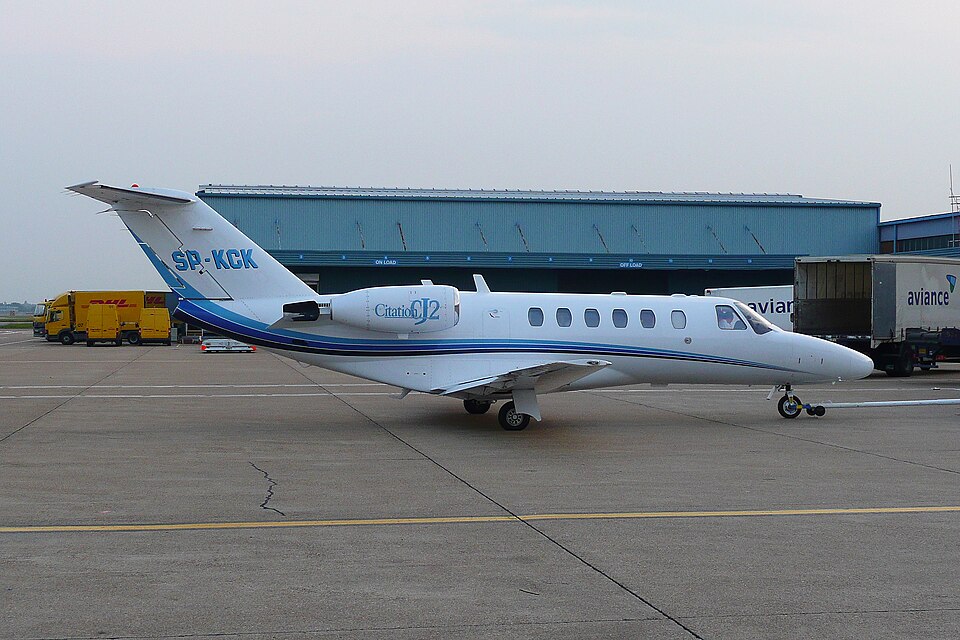
On 26 September 2020, at 15:00 UTC, during the start of the left engine of a Cessna C525A CJ2 (registration SP-KCK) at Nice Airport (LFMN) prior to a flight to Stockholm-Arlanda (ESSA), the crew observed that the low-pressure rotor speed did not increase. The start was immediately aborted. Manual rotation of the engine fan was attempted but proved impossible.
Circumstances
After consulting with the CAMO, the operator's maintenance personnel, and the engine manufacturer, a mechanic from the Cessna Service Center in Paris was called to Nice to perform a borescope inspection. The inspection found no damage to the compressor or turbine rotors, but the mechanic determined that the engine was likely damaged in the low-pressure turbine area.
Subsequently, the engine manufacturer, Williams International (producer of the FJ44-2C engine), required the engine to be disassembled and overhauled at their facility. During disassembly, the manufacturer identified that the cause of rotor seizure was a fracture of the housing of the first-stage low-pressure turbine nozzle assembly (part number 115316). The report provided to the operator was brief and did not include detailed descriptions of the damage, the exact location, or photographs.
Investigation Findings
The Polish State Commission on Aircraft Accident Investigation (PKBWL) investigated the incident. The manufacturer argued that detailed damage information could not be disclosed because it would reveal proprietary design details protected as intellectual property. At the operator's request, PKBWL sought assistance from the NTSB.
The NTSB responded that the manufacturer could have explained the operator's concerns better without disclosing proprietary information. Additionally, the NTSB noted that the manufacturer's service bulletin lacked sufficient information about differences between nozzle assembly types, leading to contradictory positions regarding their interchangeability.
Cause
The direct cause of the incident was a fracture of the housing around the entire circumference of the first-stage low-pressure turbine nozzle assembly, which caused displacement of separated parts and locked the rotor. The original cause of the fracture was not determined.