What happened
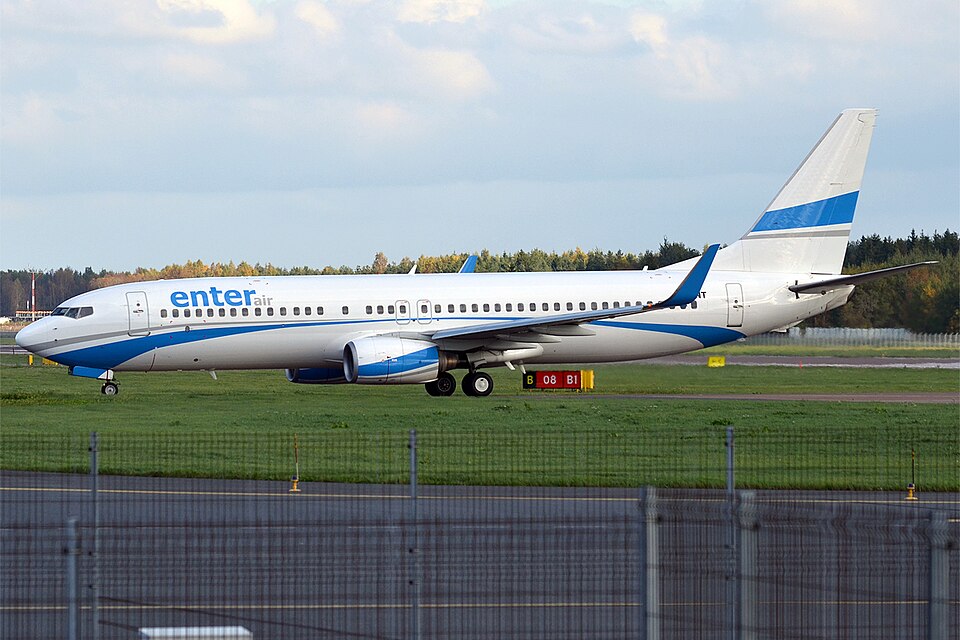
On January 16, 2020, a Boeing 737-800, registration SP-ENT, operated by Enter Air, experienced a technical issue shortly after takeoff from Katowice Airport (EPKT). During the climb to the assigned altitude, the crew received a "MASTER CAUTION - FUEL – FILTER BY and BYPASS" alert for engine number 1. Following established non-normal procedures, the crew coordinated with the Flight Operations Department (OPS) and decided to perform an overweight landing at Katowice Airport. At the time of landing, the aircraft's mass was 71,215 kg, exceeding the maximum allowable landing weight. The landing was completed without incident.
The investigation
The PKBWL investigation examined a pattern of similar failures within the operator's fleet, noting that three aircraft had experienced the same "Fuel Filter Bypass" indication between January 9 and January 21, 2020. Laboratory analysis of filters removed from the aircraft revealed a brown dust-like residue. Chemical testing showed the material was of organic origin, containing high levels of carbon, oxygen, sulfur, and calcium, consistent with water contaminated with organic matter. While traces of sodium were found—suggesting the potential presence of superabsorbent polymers (SAP)—the concentration was not high enough to be identified as the primary cause of the blockage.
The manufacturer confirmed that the contamination did not originate from the aircraft's internal fuel system. A large-scale inspection of the fleet, involving 51 filter replacements across 33 aircraft, identified similar accumulated material in several instances. The investigation also reviewed EASA SIB No. 2018-10 and IATA guidelines regarding SAP contamination, noting that improper fueling pressures (exceeding 3 bar/15 psi) are a known risk factor. The investigation noted that the operator frequently operates at smaller airports where fuel quality and refueling equipment standards may be less consistent than at major international hubs.
Findings
- The primary cause of the incident was the failure to adhere to EASA and IATA recommendations regarding aircraft refueling procedures.
- The presence of organic contaminants in the fuel filters was linked to external sources during the refueling process.
- Operating at smaller airports with potentially inferior refueling equipment and fuel quality contributed to the risk of contamination.
Safety action
Following the investigation, the following actions were implemented:
- All fuel filters across the Enter Air fleet were replaced, regardless of flight hours.
- The "Fly Away KIT" for the entire fleet was expanded to include the necessary components for a fuel filter replacement in the event of a bypass indication.
- The fuel filter replacement interval was significantly reduced from 6,000 flight hours to 2,000 flight hours (notably lower than the manufacturer's recommended 12,000 flight hours).
- Refueling service providers for the operator are now subject to increased oversight to ensure strict compliance with the requirements of EASA SIB 2018-10.