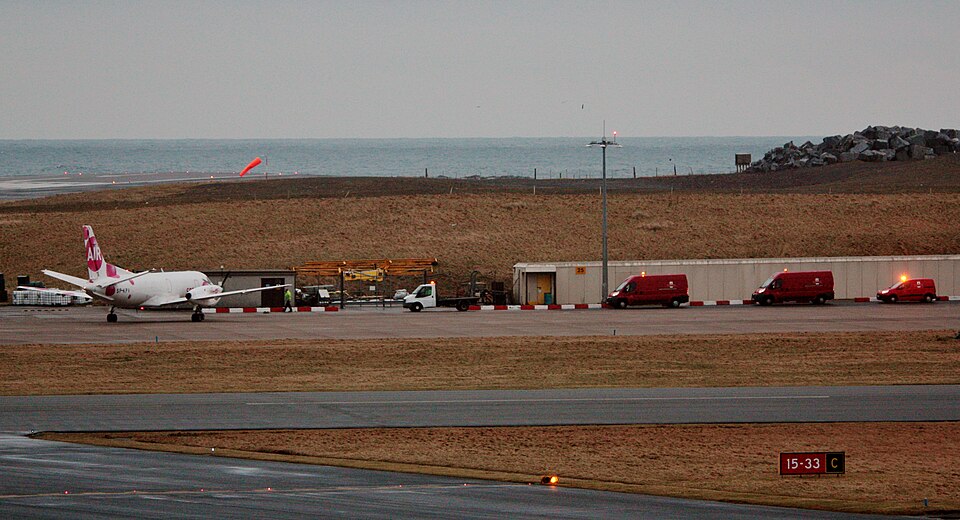
Incident Summary
On 17 January 2020, the crew of a Saab 340A, registration SP-KPV, was performing a flight from Kyiv (UKKK) to Warsaw Chopin Airport (EPWA). During the approach to runway 11, after passing the Gosit waypoint, the aircraft was above the intended glide path, prompting the crew to execute a go-around.
Sequence of Events
During the initial climb phase of the go-around, the Flight Data Monitoring (FDM) system recorded that the torque (TRQ) on both engines exceeded the permissible limit of 108% for a duration of 30 seconds. The left engine torque reached 127% and the right engine 119%. The maximum allowed time for transient phases is 12 seconds, with a never-exceed limit of 129%. Additionally, at propeller speeds between 900 and 1396 RPM, the torque momentarily reached 644 Nm (475 lbf ft), corresponding to 122% TRQ, exceeding the limit. The crew did not activate the Constant Torque on Take-Off (CTOT) system, which is designed to prevent torque exceedance by limiting TRQ to a value set by the crew (below 108%).
Probable Cause
The cause of the torque exceedance was the crew's failure to activate the CTOT system during the go-around procedure.
Contributing Factors
The investigation identified the following contributing factors:
- Poorly planned descent, resulting in the aircraft being above the proper approach path for runway 11 during the final approach.
- A break in the first officer's flight duties, which, combined with a scheduled line check on that day, may have been conducive to the event.
- Personal conflict between the captain and the first officer, leading to a lack of cooperation and proper communication between crew members.
Safety Actions
The following preventive recommendations were adopted:
- The line check conducted during the incident was invalidated, and a re-examination was ordered.
- The crew involved in the incident were prohibited from operating together and were directed to attend Crew Resource Management (CRM) training.
- A reminder was sent to flight crews about the necessity of reporting aviation incidents using the Air Safety Report (ASR) form.
- All flying and technical personnel were briefed on the circumstances and sequence of events.