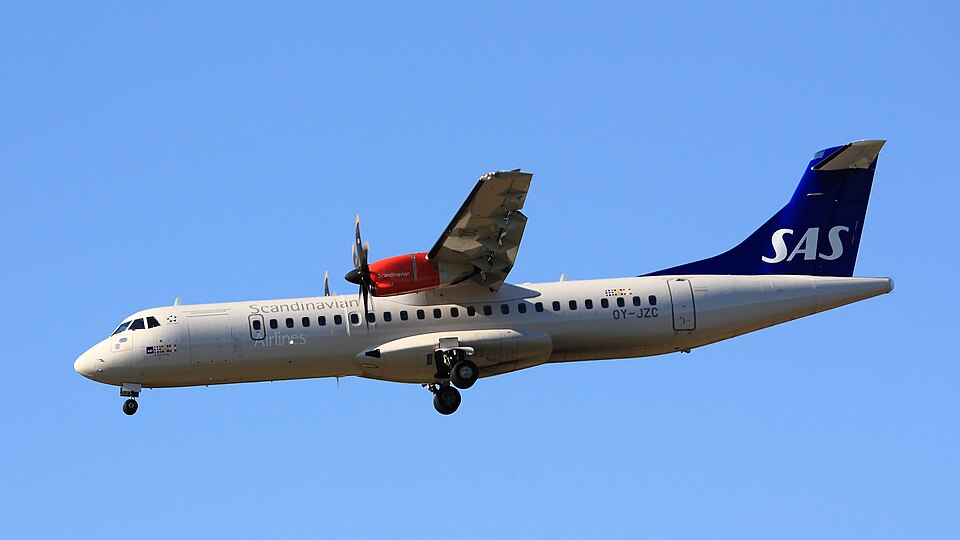
Incident Overview
On 14 November 2016, at approximately 0810 hours local time, an ATR 72-212A aircraft, registration OY-JZC, operated by Jet Time AS on behalf of SAS, experienced a temporary loss of control in severe icing conditions. The incident occurred west of Førde Airport Bringeland, approximately 70 nautical miles north-northeast of Bergen, Norway. The aircraft was performing flight SAS4144 from Bergen to Ålesund, with a subsequent leg to Trondheim.
Flight History
The crew assembled at 0640 hours to plan the first flight of the day. They noted moderate icing was forecast for the first leg from Bergen to Ålesund. At Bergen, the temperature was 7 degrees Celsius with a south-south-easterly fresh breeze, scattered low clouds, and rain. Anti-icing systems for both propellers were activated during taxi. En route, the crew encountered severe icing and began a course change to escape the conditions. During this maneuver, control of the aircraft was temporarily lost. The crew regained control and continued to Ålesund, where they landed as normal.
Crew and Passengers
The flight crew consisted of two pilots, and the cabin crew had two members. There were 36 passengers on board. No injuries were reported among any of the occupants, and the aircraft sustained no damage.
Weather Conditions
The incident occurred in severe icing conditions. The aircraft manufacturer defines severe icing as conditions where the ice accretion rate exceeds the capacity of the ice protection systems. The aircraft checklist for severe icing states: "SEVERE ICING CONDITIONS …….… ESCAPE".
Investigation
The Norwegian Safety Investigation Authority (NSIA) investigated the incident. The investigation relied on data from the Flight Data Recorder, crew interviews, radar and communication recordings from Avinor, and interviews with two passengers. No Cockpit Voice Recorder recordings were available.
Contributing Factors
The NSIA concluded that the loss of control resulted from a combination of insufficient planning and inappropriate decisions en route, particularly the crew's attempt to climb above the icing conditions despite degraded aircraft performance, as well as incorrect use of the autopilot. The commander's initial response to the stick shaker activation, likely due to the startle effect, may have impeded recovery. Additionally, two memory items on the stall checklist—deploying flaps and increasing engine power—were omitted.
Aftermath
The crew quickly regained composure, and the remainder of the flight and landing proceeded without further issues. The incident was initially reported as an incident but later upgraded to a serious aviation incident by the operator.