Incident Overview
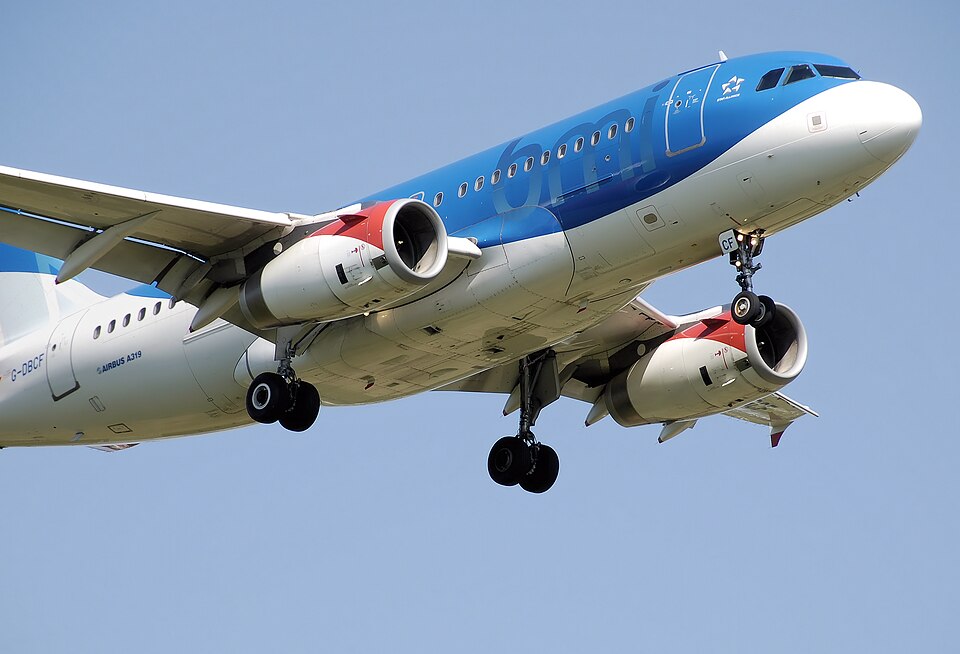
On 6 August 2021, an Airbus A319-131 (registration G-DBCF) operating a commercial passenger flight from Edinburgh Airport to London Heathrow experienced multiple disconnections of the autopilot and autothrust systems. The aircraft departed at 0907 hrs and took off from Runway 06 at 0918 hrs. During the takeoff roll, the crew heard a loud bang as the aircraft passed over what felt like a centreline light. The aircraft landed safely at Heathrow with no injuries or damage.
Sequence of Events
After takeoff, during initial climb through approximately 1,500 ft, the co-pilot observed a temporary GPS primary lost message on the MCDU. The climb continued normally until reaching FL340, when the co-pilot noted a check IRS 3/FM position message. Shortly thereafter, the autopilot and autothrust disconnected, flight directors vanished, and ECAM displayed multiple failure messages. The commander manually levelled the aircraft at FL350. The crew made a PAN call due to inability to comply with RVSM requirements. After about five minutes of manual flight, they successfully re-engaged the autopilot and autothrust.
During troubleshooting, the crew noticed abnormal IRS position differences on the MCDU position monitor page, with readings varying between dashes, 31.0 nautical miles, or sensible values—far exceeding the normal 1 nm tolerance. They requested radar vectors from ATC and decided to continue to Heathrow, considering but declining an in-flight IRS realignment due to lack of ECAM guidance and potential risks.
The approach to Heathrow was initially flown with autopilot engaged until approximately 4,000 ft, when the autopilot and autothrust disconnected again. The crew executed a manually flown raw data approach, which was uneventful.
Recorded Data and Investigation
Quick Access Recorder data confirmed that during takeoff, as the aircraft accelerated through 120 kt, the nose landing gear (NLG) weight-on-wheels signal changed state three times in two seconds, indicating runway surface irregularities. Post-flight analysis showed IRS positions began drifting after encountering the irregularities. The autoflight system rejected one ADIRU at 0928 hrs (not annunciated), and at 0932 hrs rejected all three IRS positions, causing the autopilot and autothrust disconnection. The ADIRUs continued to provide valid attitude and air data. At 0936 and 0941 hrs, a NAV FM/GPS POS DISAGREE ECAM message appeared briefly. Position data later deteriorated again at 1006 hrs, and at 1015 hrs during the approach, the autoflight system rejected data from more than one ADIRU, leading to the second disconnection.
Previous History
The operator had experienced five similar incidents on its A320 fleet between 2017 and 2020, all involving aircraft fitted with Northrop Grumman Corporation (NGC) ADIRUs standard-0316/318. Another operator also reported similar events. The manufacturer investigated by installing accelerometers on the NLG and ADIRU mounting rack, finding that severe IRS drift was induced by abnormal vertical shock loads transmitted through the NLG during takeoff roll and rotation. The manufacturer concluded the drift was likely caused by a combination of runway surface vertical loads, incorrect NLG shock absorber servicing, and ADIRUs suffering shocks outside their qualification envelope. In April 2020, the manufacturer issued a Technical Follow Up (TFU) notice for maintenance teams.
Aircraft Examination
After landing, maintenance inspected the NLG per the Troubleshooting Manual and found the NLG shock absorber overextended by 0.6 inches.
System Background
The Air Data and Inertial Reference System (ADIRS) includes three identical ADIRUs, each combining an Air Data Reference and an Inertial Reference (IR) unit. The IR uses gyroscopes and accelerometers to provide navigation information. The autoflight system relies on IRS positions; drift can cause autopilot and autothrust disconnection.