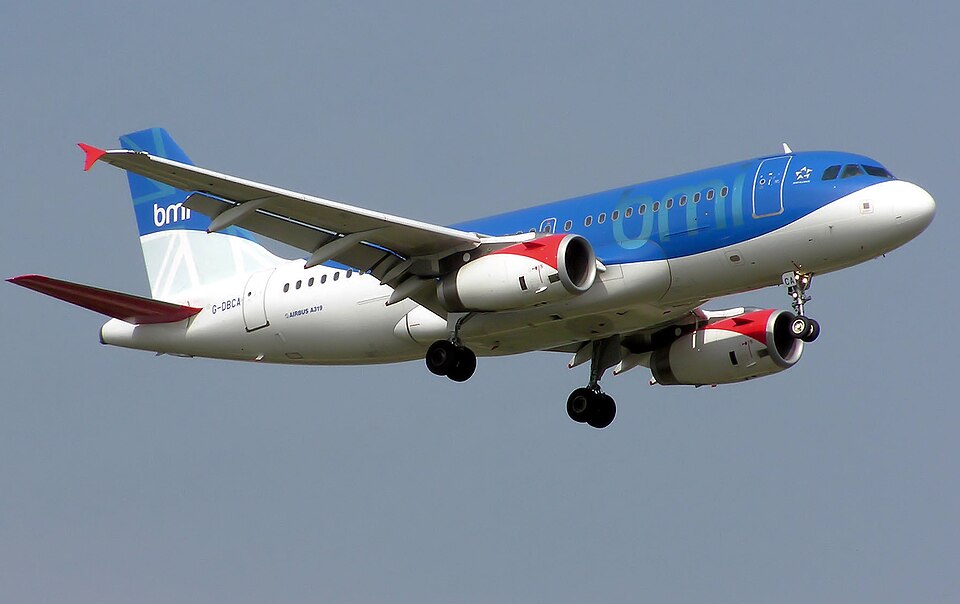
Three cabin crew injured during severe turbulence encounter

Casualties unknown • Verona Villafranca, IT

A British Airways Airbus A319 encountered severe turbulence during descent near Saronno, resulting in injuries to three cabin crew members.

What happened

On January 3, 2018, at approximately 14:54 UTC, a British Airways flight from London Gatwick to Verona Villafranca encountered severe turbulence while descending through the Milan FIR. The Airbus A319, registration G-DBCA, was descending from FL330 to FL210 near the Saronno VOR when the aircraft entered an area of intense atmospheric instability.

During the encounter, the aircraft experienced significant vertical accelerations, with recorded values ranging from -1.20 G to +2.76 G, including a maximum vertical variation of +3.96 G within a single second. These sudden movements caused three cabin crew members to be thrown against the ceiling and floor. A senior cabin crew member (SCCM) in the forward galley sustained injuries to the leg and ankle that rendered them unable to move for the remainder of the flight. Two other crew members in the central section of the cabin were also injured.

Prior to the encounter, the pilot had observed several radio calls from other aircraft reporting severe turbulence in the area. The pilot notified passengers via the PA system to return to their seats and activated the seatbelt sign. Although the pilot used the interphone to instruct a crew member to sit down due to imminent turbulence, the cabin crew were still in the process of securing the cabin for landing at the time of impact.

The investigation

The ANSV conducted a desk investigation into the event, coordinating with the UK' and French aviation authorities. The investigation examined flight data recorder (FDR) parameters, including vertical and lateral accelerations, pitch and roll angles, and airspeed. The analysis focused on the sequence of events leading to the crew injuries and the effectiveness of the cockpit-to-cabin communications.

Investigators noted that while the pilot had briefed the crew on the potential for turbulence during the initial briefing, the crew had not yet secured themselves in their jumpseats when the severe turbulence hit. The investigation also reviewed air traffic control (ATC) communications, noting that a heavy workload on the frequency caused a delay in the pilot receiving descent clearance, which resulted in the aircraft passing the top of descent (TOD) point before authorization was granted.

Findings

  • The aircraft encountered severe turbulence while the cabin crew were not yet secured in their jumpseats.
  • The flight crew was aware of the potential for turbulence through flight documentation and briefings.
  • Vertical accelerations reached a peak of +3.96 G within one second.
  • The aircraft's flight control laws remained in normal law, and the autopilot and auto-thrust remained engaged throughout the turbulence.
  • Communication via interphone to a single crew member may have delayed the warning to the rest of the cabin crew.

Probable cause

The primary cause of the incident was the sudden encounter with severe turbulence while the cabin crew had not yet secured themselves in their jumpseats.

All Airbus A319-100 accidents →

Frequently asked questions

What happened in the 2018-01-03 Airbus A319 accident near Verona Villafranca, IT?

A British Airways Airbus A319 encountered severe turbulence during descent near Saronno, resulting in injuries to three cabin crew members.

What aircraft was involved and where did it happen?

The accident on 2018-01-03 involved a Airbus A319, registration G-DBCA, at Verona Villafranca, IT.

What was the probable cause of the accident?

The primary cause of the incident was the sudden encounter with severe turbulence while the cabin crew had not yet secured themselves in their jumpseats.

Investigation report by the Italian National Flight Safety Agency (ANSV). Original record: https://ansv.it/wp-content/uploads/2024/06/G-DBCA-1.pdf. This page is a structured re-presentation; facts and quotes are in the Agenzia Nazionale per la Sicurezza del Volo (ANSV), Italy.

Loading the flight search…