Incident Overview
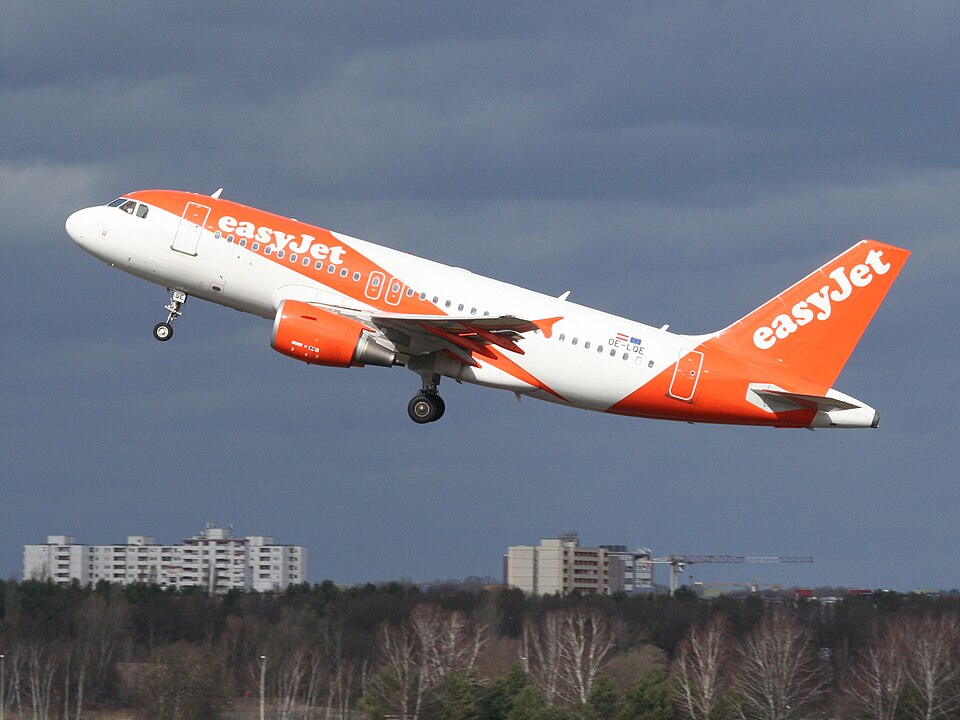
On 30 September 2018, an Airbus A319 (registration OE-LQE) operating a commercial passenger flight from London Gatwick Airport experienced a serious incident due to a data entry error during loadsheet preparation. The aircraft, equipped with two CFM56-5B5-3 turbofan engines and manufactured in 2010, had 6 crew and 144 passengers on board. No injuries or damage were reported.
Flight Preparation and Error
The Pilot Monitoring (PM) used an Electronic Flight Bag (EFB) application in 'Detailed' mode to input passenger and cargo data from the Loading Form Certificate (LFC) provided by the handling agent. The Pilot Flying (PF) later cross-checked the entries and identified an approximately two-tonne discrepancy between the calculated Zero Fuel Weight (ZFW) and the flight plan's estimated ZFW. Despite re-checking, the crew could not find the source of the discrepancy and proceeded with the existing loadsheet for takeoff calculations.
Prior to departure, the handling agent notified the crew of a Last-Minute Change (LMC) to passenger and cargo numbers. The crew used the application's 'Reduced' mode to update the loadsheet, which reduced the calculated all-up-weight (AUW) by 384 kg. The new loadsheet did not invalidate the earlier takeoff performance calculations already loaded into the flight management system.
Error Discovery
While holding at the runway holding point, the crew discussed the unresolved ZFW anomaly but decided to proceed with the reduced-thrust departure, agreeing to select TOGA (Takeoff/Go-Around) thrust if any performance concerns arose during takeoff. The departure was uneventful. Once established in cruise, the crew re-checked their loading calculations and discovered that the 'Males', 'Females', and 'Children' data fields had been incorrectly populated with passenger cabin zone distribution figures instead of the correct gender/age data. This error caused the total passenger weight to be underestimated by 1,962 kg. The flight continued to its destination without further incident, and the commander reported the loadsheet error to the Company Duty Pilot upon arrival.
Investigation Findings
The airline's internal investigation noted that the design of the LFC and the EFB application may have contributed to the initial data-entry error. The report stated that the layouts and labelling of the LFC and EFB formats were not comparable and did not support the user in the data entry task. Additionally, the crew commented that once they entered 'Reduced' mode to input the LMC, the passenger gender/age profile information was no longer visible, which hindered their ability to identify the ZFW anomaly.
Human Factors
The AAIB drew parallels with a previous serious incident involving a Boeing 737 (C-FWGH), which highlighted the challenges of cross-checking data entry in electronic systems. In that incident, system feedback regarding errors was opaque, and once the initial error was made, failure to detect it was predictable. The C-FWGH report also concluded that pilots cannot reliably detect abnormally low acceleration during takeoff, even when thrust is significantly reduced. This finding cast doubt on the crew's plan to use TOGA thrust if they perceived performance problems.
Aircraft Performance Considerations
The takeoff performance application uses loadsheet AUW and center of gravity data to calculate optimum takeoff speeds and thrust settings. Incorrect data inputs produce invalid outputs, potentially affecting safety during normal and rejected takeoffs, obstacle clearance, and one-engine-inoperative performance. In this incident, the erroneous AUW led to the use of incorrect takeoff parameters.
Conclusion
The serious incident resulted from a data entry error where incorrect passenger gender/age data was entered into three fields of the loadsheet application. This error led to a 1,962 kg underestimation of aircraft weight and the subsequent use of incorrect takeoff performance parameters. The crew noted an anomaly but could not identify the error before departure, and the flight proceeded without further incident.