Flight History
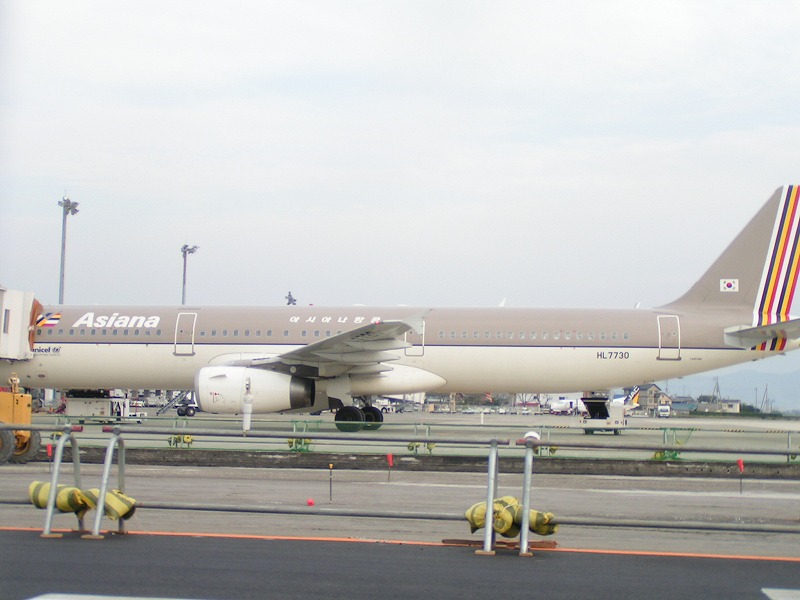
On 16 April 2013, Asiana Airlines Flight 340, an Airbus A321-200 registered as HL7730, departed from Harbin Taiping International Airport, China, as a scheduled international passenger flight bound for Incheon International Airport, Republic of Korea. The flight took off at approximately 15:46 Korean Standard Time (KST) and climbed to a cruising altitude of 9,200 meters. At about 17:37 KST, while touching down on runway 16 at Incheon International Airport, the aircraft experienced a tail strike.
Injuries and Damage
As a result of the tail strike, three flight attendants sustained injuries. The aircraft suffered substantial damage, including damage to the pressure bulkhead and stringers, as well as scratches on the exterior skin of the rear fuselage.
Causes
The Aviation and Railway Accident Investigation Board (ARAIB) determined that the accident had two primary causes. First, the pilot flying (PF) failed to maintain the proper approach speed until the flare just before touchdown. The airplane bounced on touchdown due to a higher-than-normal vertical gravity force resulting from a high sink rate and increased thrust and speed just before touchdown. Second, during the bounce, the PF failed to keep the thrust at idle and establish the proper pitch attitude. As a result, the airplane made a second touchdown at a pitch attitude exceeding the A321's limitation, leading to the tail strike.
Contributing Factors
The ARAIB identified several factors that contributed to the accident. These included an inadequate training program for recovery from a bounce, lack of pre-landing preparation due to failure to conduct an approach briefing on pitch attitude, the PF's improper allocation of attention after delegating flight control to the pilot monitoring (PM) who did not meet flight control requirements, inadequate advice and monitoring by the PM due to the PF's failure to make standard callouts, disconnection of the autothrottle and failure to manually control thrust and speed, and failure to execute a go-around when stabilized approach criteria were not met.