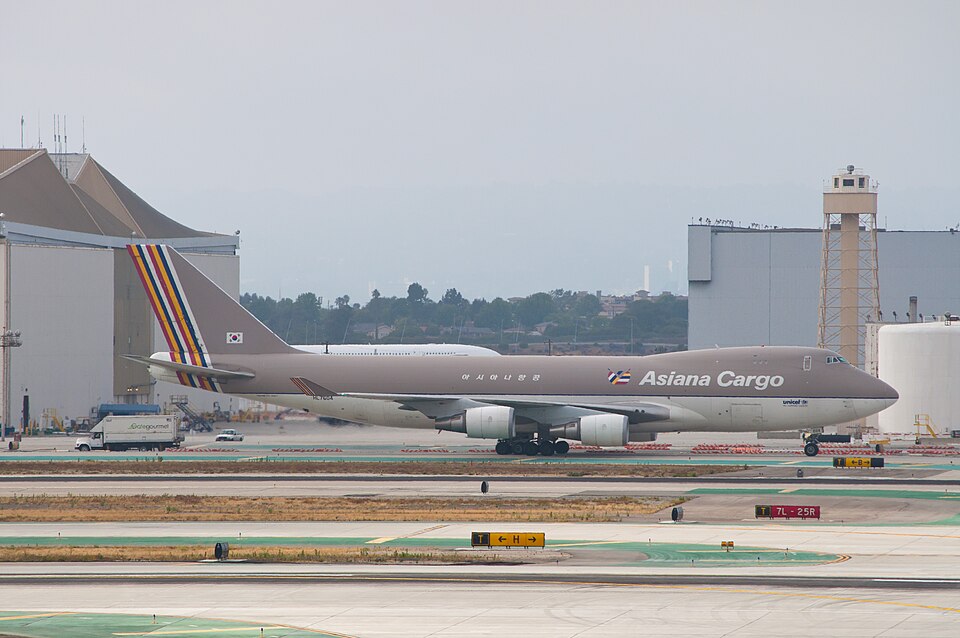
Accident Overview
On 28 July 2011, Asiana Airlines flight HL7604, a Boeing 747-400F freighter, crashed into international waters approximately 130 km west of Jeju International Airport following an in-flight fire. The aircraft was destroyed. The accident was investigated by the Aviation and Railway Accident Investigation Board (ARAIB) of the Republic of Korea, which released its final report on 24 July 2015.
Flight Crew
The captain and first officer were the only occupants. No injuries to other persons were reported in the investigation. The captain held an Airline Transport Pilot License (ATPL) with type ratings for the Boeing 747, and the first officer held a Commercial Pilot License (CPL) with a Boeing 747 type rating. Their total flight experience and rest periods were documented.
Aircraft and Fire
HL7604 was a Boeing 747-400F (freighter variant) manufactured in 2006. The airframe had accumulated a significant number of flight hours and cycles. According to the report, a fire originated on the main cargo deck. The fire warning and detection system operated, but the crew were unable to extinguish the fire. The aircraft eventually crashed into the sea.
Wreckage and Recovery
The wreckage was located on the seabed at a depth of approximately 85 meters. Recovery operations retrieved various portions of the airframe, including sections of the fuselage, wing, and cargo containers. The flight data recorder (FDR) and cockpit voice recorder (CVR) were not recovered, limiting the investigation's ability to reconstruct the final moments of the flight.
Fire Investigation
Examination of the recovered wreckage showed extensive thermal damage concentrated in the forward main cargo deck area, consistent with a severe in-flight fire. The cargo included dangerous goods, and tests simulated the transport conditions of lithium batteries, which were present on the flight. However, the exact ignition source was not determined.
Tests and Research
The ARAIB conducted chemical analysis of cargo residue and performed fire simulation tests. A partial reconstruction of the wreckage was undertaken to understand the fire's propagation. The report also reviewed Asiana Airlines' cargo handling procedures and flight crew training related to dangerous goods and firefighting.
Organizational Information
The investigation examined Asiana Airlines' safety management system, crew training programs, and post-accident actions. The airline subsequently revised its freighter operating procedures, enhanced dangerous goods training, and planned to install CCTV in its Boeing 747-400F freighters. The report highlighted the importance of proper cargo screening and firefighting procedures.