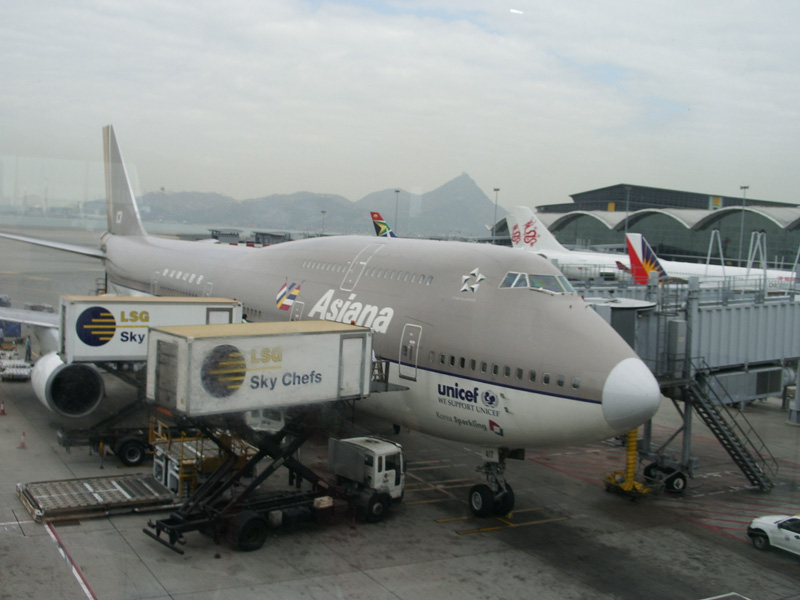
Incident Overview
On 13 January 2015, approximately 18:50 UTC, Asiana Airlines flight 784, a Boeing 747-400SF cargo aircraft registered as HL7417, was en route from Oslo Airport (OSL) to Incheon International Airport (ICN) at an altitude of 35,000 feet. About 190 km north of Novosibirsk International Airport, sparks and smoke developed in the cockpit. A flight crewmember used a fire extinguisher, and the aircraft diverted to Novosibirsk, landing around 19:36 UTC. There were no injuries to crew or passengers.
Investigation
The investigation was delegated by the Interstate Aviation Committee (IAC) of Russia to the Aviation and Railway Accident Investigation Board (ARAIB) of the Republic of Korea, in accordance with Annex 13 to the Convention on International Civil Aviation.
Findings
The source report states the probable cause: "As the length of the window terminal block screw recommended by Boeing 747-400 Aircraft Illustrated Parts Catalog (IPC) was not appropriate, the terminal insert fractured, leading to high temperature electrical arcing across the fracture, which caused combustibles around the screw to burn and emit smoke." A contributing factor was "the fracture of the terminal insert caused by the tensile overload generated when an aircraft mechanic applied, to the window terminal block screw, an excessive torque above the torque requirement specified in the maintenance manual."
Aircraft and Incident Details
- Operator: Asiana Airlines
- Manufacturer: The Boeing Company
- Aircraft type: B747-400SF
- Registration: HL7417
- Location: 190 km north of Novosibirsk International Airport
- Date and time: 13 January 2015, approximately 18:50 UTC
- Flight: Asiana Airlines flight 784 from Oslo (OSL) to Incheon (ICN)
Damage and Injuries
The incident resulted in no injuries. The aircraft sustained damage related to smoke and electrical arcing in the cockpit area, but specifics are not detailed in the source beyond thermal damage to the terminal block.
Recommendations
The ARAIB issued safety recommendations to Asiana Airlines, Boeing, and the Korea Office of Civil Aviation (KOCA) based on the investigation.