Paraglider Crash in Puente Alto Injures Pilot and Passenger
A SkyWalk Join't 3 paraglider crashed into the ground near Las Vizcachas, Chile, on September 1, 2024. The pilot and passenger sustained serious spinal…
On November 12, 1975, a Boeing 727-225 (registration N8838E) operated by Eastern Air Lines was involved in an aviation accident near Raleigh, North Carolina. No fatalities were reported. Investigators recorded the probable cause as: The National Transportation Safety Board determined that the probable cause of the accident was "an encounter with heavy rain and associated downdrafts and wind shear during the final stages of landing when the airplane was less than 100 feet above the… This summary draws on records from the U.S. National Transportation Safety Board (NTSB) Aircraft Accident Reports; 11 related events involving the same aircraft type or operator are linked below.
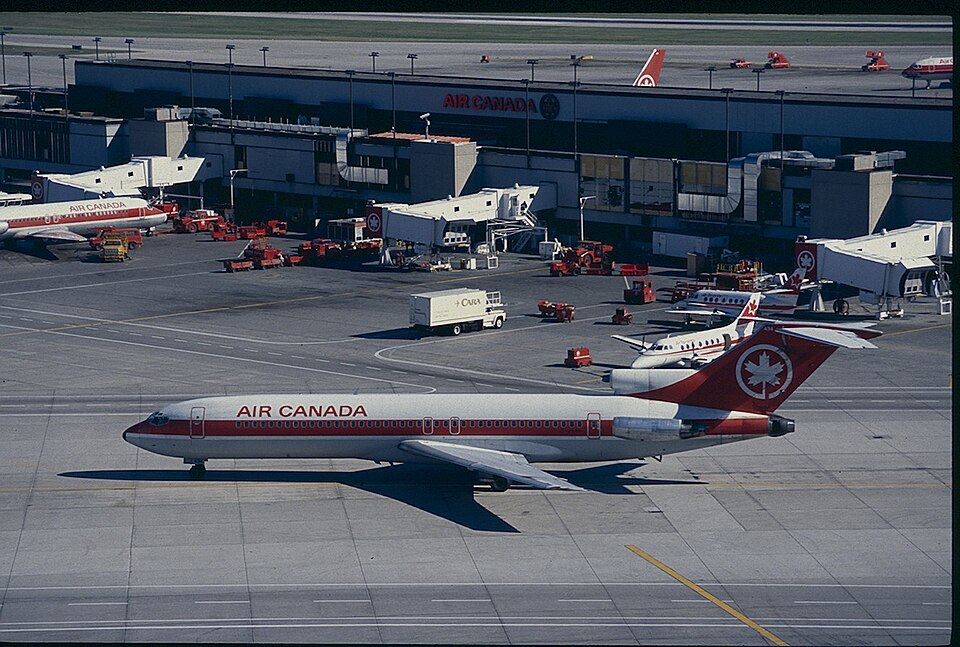
The National Transportation Safety Board determined that the probable cause of the accident was "an encounter with heavy rain and associated downdrafts and wind shear during the final stages of landing when the airplane was less than 100 feet above the ground. The sudden onset of the meteorological conditions did not allow sufficient time for the captain to perceive and react to the effect of the downdraft and wind shear on the airplane's performance to stop the airplane's increased rate of descent and for the airplane to respond before striking the ground short of the runway."
— NTSB Determination
About 2002 e.s.t. on November 12, 1975, Eastern Air Lines Flight 576, a Boeing 727-225 (N8838E), struck the ground 282 feet short of runway 23 at the Raleigh-Durham Airport in Raleigh, North Carolina. The airplane bounced, touched down on the runway, and slid to a stop off the right side of the runway 4,150 feet past the threshold. The accident occurred during an instrument landing system (ILS) approach when the airplane encountered unexpectedly heavy rain while 100 feet above the ground. Of the 139 persons aboard, one was injured seriously and seven received minor injuries. The airplane was damaged substantially.
### The flight
Flight 576 was a scheduled passenger flight from Miami, Florida, to Washington, D.C., with intermediate stops at Atlanta, Georgia, and Raleigh, North Carolina. The flight departed Atlanta with 139 persons, including 8 crewmembers, aboard. The flight was uneventful until it approached the Raleigh-Durham area, where the crew deviated from their course to circumnavigate heavy precipitation depicted on the airplane's weather radar.
### The approach
During the en route descent, the flightcrew received the Airport Terminal Information Service broadcast, which estimated a 2,000-foot overcast ceiling, 7 miles visibility, and light rain. At 1956:06, approach control revised the weather to 1,000 scattered, a measured 2,000 overcast, and 4 miles visibility.
At 1958:35, the tower controller cleared Flight 576 to land on runway 23, reporting the wind as variable 180 degrees at 4 knots. The controller added that a Queen Air had reported a strong wind from the left of about 20 knots between 900 and 1,200 feet on final approach. The first officer acknowledged, stating, "It looks like you have quite a storm coming your way."
The airplane intercepted the runway 23 localizer course and the glide slope, and was flown with flaps at 30 degrees. The landing reference speed was 140 KIAS. At 2000:35, the tower controller reported that airport visibility was one and three-quarters miles.
At 2001:37, about 500 feet above the airport, the first officer called, "Five hundred feet ground contact." At 2001:46, as the airplane descended below the 400-foot ceiling, the first officer stated he saw the flashers just ahead. The captain said he looked out, saw the approach lights, the runway threshold, and the runway lights, and was satisfied the airplane was aligned properly.
Flight 576 had been in light to moderate rain throughout the final approach. At 2001:49, the captain called for the windshield wipers to be placed at the high setting as the rainfall rate increased. The captain stated he continued to fly by visual cues. At 2001:55, the first officer reported the runway in sight. The airplane was about 200 feet above the runway.
The captain said he noticed the airplane was slightly below the glide slope and increased thrust to level the airplane and reintercept the glidepath. Both pilots noticed the visual approach slope indicator (VASI) was a "pinkish" color, indicating the airplane was below the desired glidepath. At 2002:00, the first officer stated, "Looks to be a little bit low." At 2002:04, the first officer called, "Rate of descent too high," and repeated it at 2002:05. The captain stated he did not hear these callouts.
The captain said that at 100 feet, he lost all forward visibility as the windshield became "opaque" and the external light glare became "brilliant." He described encountering "a wall of water" and said the airplane developed an excessive sink rate. He stated he added more thrust and pulled back on the yoke instinctively, and almost simultaneously felt the main gear catch. The first officer and flight engineer said the airplane continued to descend after the captain added thrust. Initial impact occurred at 2002:08.5.
The airplane struck the ground 282 feet short of the threshold. The captain said the airplane continued forward and emerged from the heavy rain at the runway threshold. Believing he had caught the lip of the runway, he decided not to attempt a go-around. He reduced power, deployed the ground spoilers, and placed the Nos. 1 and 2 engines into reverse thrust. The airplane drifted off the right side of the runway and stopped. The occupants evacuated quickly using the escape slides.
### What the investigation found
The Board found no evidence of a failure of the airplane's systems, structures, or powerplants before impact. The flight data recorder (FDR) showed that airspeed on the final approach varied from 140 to 145 knots until about 300 feet, increasing to about 147 knots at initial impact. The rate of descent remained fairly constant between 650 and 700 feet per minute until about 100 feet. During the 5 seconds before impact, the FDR showed an average rate of descent of 1,260 feet per minute. Ground damage and marks indicated a glidepath angle of about 2.5 degrees at impact.
The Board concluded that Flight 576 encountered heavy rain, which probably included downdraft activity and a horizontal wind shear, as it descended below decision height. A rain gauge 3,700 feet southwest of the threshold measured a rainfall rate of about 7 inches per hour between 1957 and 2000. Witnesses near the threshold reported that the rainfall increased from a light, steady rain to a heavy downpour in a short period, with winds gusting to 20 knots.
The Board noted that the captain observed the descent below the glide slope and responded by adding thrust, but the rate of descent increased rapidly after the airplane encountered the heavy rain despite the addition of thrust and the upward rotation of the airplane. The Board concluded that the captain had between 4 and 6 seconds to correct the airplane's flightpath, which was insufficient time for him to react and for the airplane to respond.
The investigation noted that the flightcrew did not accomplish all checklist items related to altitude awareness, specifically the required calls at 1,000 feet above the airport and at decision height. However, the Board found that members of the flightcrew did monitor the altitude and flight instruments, and the deviations from the checklist did not contribute to the accident.
### Probable cause
The National Transportation Safety Board determined that the probable cause of the accident was "an encounter with heavy rain and associated downdrafts and wind shear during the final stages of landing when the airplane was less than 100 feet above the ground. The sudden onset of the meteorological conditions did not allow sufficient time for the captain to perceive and react to the effect of the downdraft and wind shear on the airplane's performance to stop the airplane's increased rate of descent and for the airplane to respond before striking the ground short of the runway."
All Boeing 727-200 accidents →
About 2002 e.s.t. on November 12, 1975, Eastern Air Lines Flight 576, a Boeing 727-225 (N8838E), struck the ground 282 feet short of runway 23 at the Raleigh-Durham Airport in Raleigh, North Carolina. The airplane bounced, touched down on the runway, and slid to a stop off the right side of the runway 4,150 feet past…
No fatalities were recorded in this accident.
The accident on 12 Nov 1975 involved a Boeing 727-225, registration N8838E, operated by Eastern Air Lines, at Raleigh, North Carolina.
The National Transportation Safety Board determined that the probable cause of the accident was "an encounter with heavy rain and associated downdrafts and wind shear during the final stages of landing when the airplane was less than 100 feet above the ground. The sudden onset of the meteorological conditions did not…
A SkyWalk Join't 3 paraglider crashed into the ground near Las Vizcachas, Chile, on September 1, 2024. The pilot and passenger sustained serious spinal…
A Cessna 172N struck electrical cables while on final approach to land at Aucó Aerodrome in Chile. The pilot was uninjured, but the aircraft sustained damage…
A Bombardier DHC-8-402 suffered a tail strike during landing at Puerto Williams on September 9, 2024. All 76 occupants were unharmed, but the aircraft…
A MYD JS-MD 3 glider veered off the runway and struck a wall at Vitacura Aerodrome on January 6, 2025. The pilot was uninjured, but the aircraft sustained…
A recreational paraglider flight in Puchuncaví, Chile, ended with the pilot sustaining serious injuries after a rapid descent and impact with a hillside on…
A Tecnam P2006T landed on its belly at an aerodrome in Poland after the crew failed to confirm landing gear deployment. The incident resulted in no injuries…