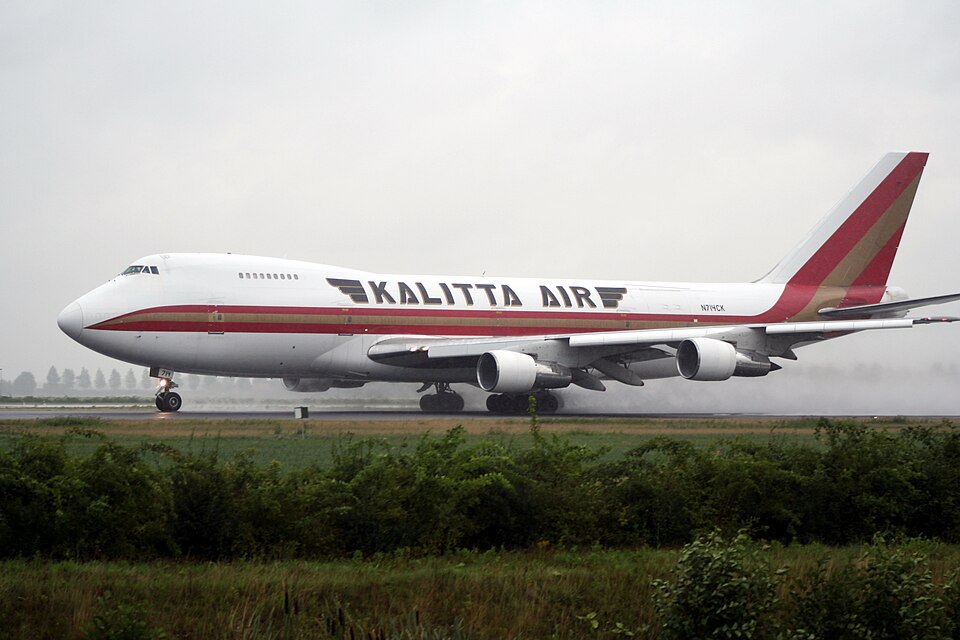
Incident Overview
On July 4, 2005, at approximately 10:52 Japan Standard Time, a Boeing 747-200B operated by Kalitta Air experienced a serious incident shortly after departing from New Chitose Airport. The aircraft, registered as N714CK, was operating as non-scheduled cargo Flight 825 bound for Anchorage International Airport. The flight crew consisted of a pilot-in-command, a first officer, a flight engineer under familiarization training, and an instructing flight engineer. Two mechanics were also aboard.
Flight History
The aircraft took off from Runway 19R at 10:51 JST. While the pilot-in-command reduced engine power from takeoff to climb, the fire warning light for the No. 3 engine illuminated and an audible alarm sounded. At that time, the aircraft was at an altitude of approximately 1,300 ft and about 3 km south of New Chitose Airport. The nacelle temperature indicator for the No. 3 engine indicated a fire. The pilot-in-command shut down the engine and activated the fire extinguishing system. The first officer declared an emergency to air traffic control. The crew jettisoned approximately 140,000 lb of fuel to reduce the aircraft weight to the maximum landing weight of 630,000 lb or below. The aircraft climbed and maintained altitudes of 3,000 ft and 4,000 ft before receiving clearance for an instrument landing system approach to Runway 19R. The aircraft landed safely at New Chitose Airport at 12:09 JST.
Damage
No damage was found to the aircraft except for the No. 3 engine. The right side of the engine cowling was deformed and broken, with part of the inside frame and hinge fittings broken. On the engine exterior, sooting was present on the right upper area from the high-pressure compressor to the high-pressure turbine. Electric cables, tubes, and other parts in that area were damaged. The turbine sleeve at the aft part of the engine had an open hole measuring approximately 75 cm in length and 10 cm in width.
Occupant Injuries
None of the six persons on board sustained injuries.
Investigation
The Aircraft and Railway Accidents Investigation Commission of Japan conducted the investigation with the participation of an accredited representative from the United States. The investigation included teardown examination of the affected engine and analysis of flight data and cockpit voice recorders.