Incident Summary
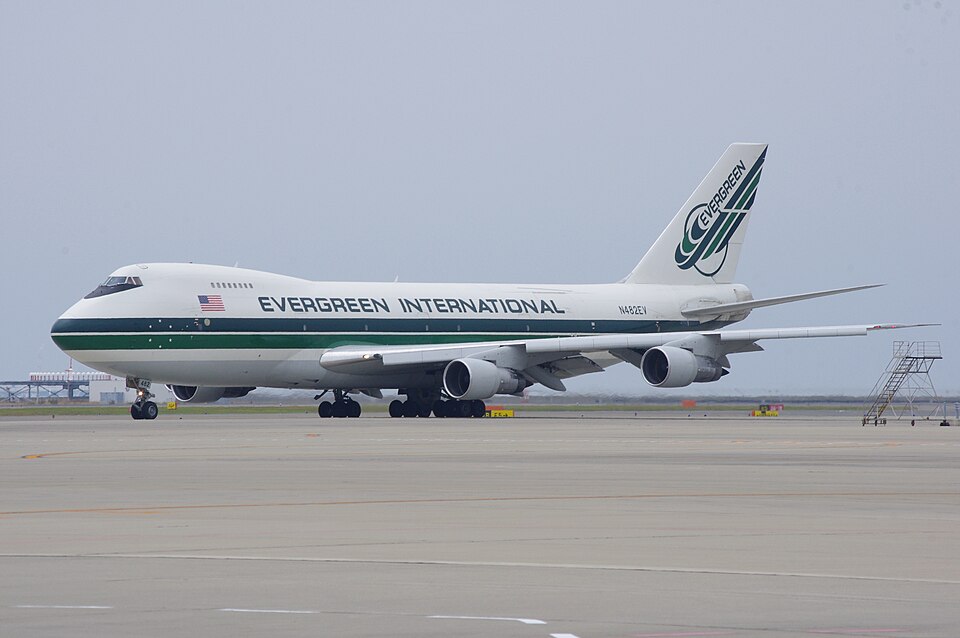
At 06:00 Japan Standard Time on November 28, 2010, a Boeing 747-200 freighter, registered N482EV, operated by Evergreen International Airlines, Inc., departed from runway 36 of Chubu Centrair International Airport as scheduled cargo flight 238, bound for Anchorage International Airport, USA. During the takeoff climb, the No. 2 engine thrust indication dropped and the aircraft experienced strong vibrations. The crew shut down the engine, jettisoned fuel, and returned to the airport, landing at 07:14. The three crew members—the pilot in command, first officer, and flight engineer—were uninjured.
Flight History
According to air traffic control communications and radar tracking, the aircraft pushed back from Spot 117 around 01:55 but returned for maintenance after a brief delay. After corrective actions, it pushed back again around 05:13 and taxied to runway 36, receiving takeoff clearance at 06:00. While climbing through approximately 3,500 feet, about 4 nautical miles southwest of the airport, the crew reported an engine problem and requested fuel dumping for a return. At around 06:07, they confirmed that the No. 2 engine had been shut down. The aircraft landed on runway 36 at 07:14.
Aircraft Damage
The No. 2 engine sustained extensive internal damage. Borescope inspections revealed that the fan blades showed no signs of foreign object ingestion, and the combustion chamber and high-pressure turbines were normal. However, the low-pressure turbine section suffered severe damage: the 1st stage LPT rotor blades (LPT3) were fractured, and downstream stator vanes and rotor blades were progressively damaged. All LPT6 blades were fractured with broken stator vanes. Turbine exhaust case struts were partially fractured, and a small rupture was found in the engine case at the 1 o'clock position. Additionally, fairings of the flap driving system and the inboard aileron had minor collision marks.
Probable Cause
It is possible that the serious incident occurred because the fractured 1st stage LPT rotor blades in the No. 2 engine damaged the downstream components during takeoff climb.