Synopsis
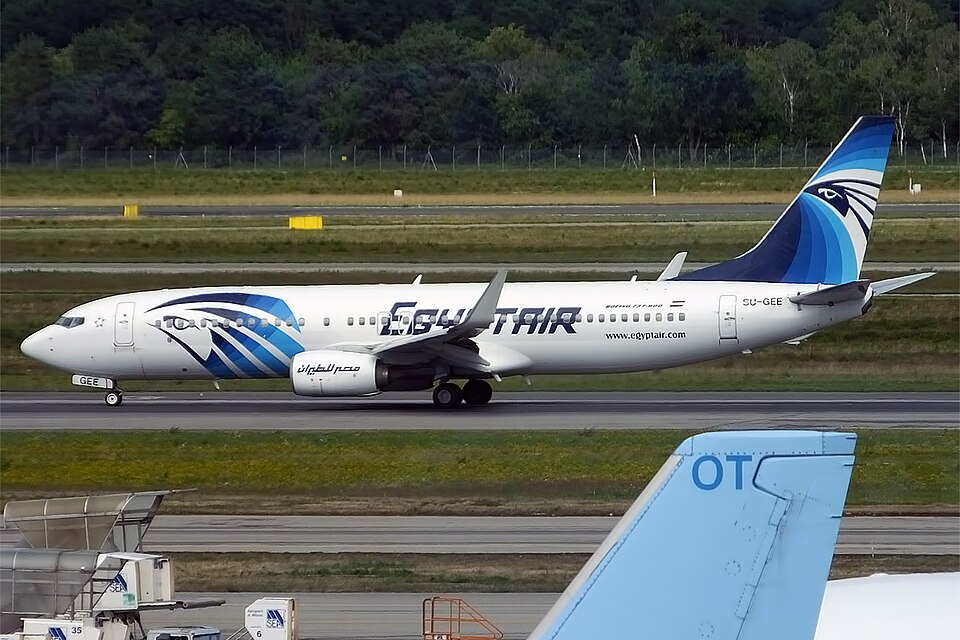
Egypt Air flight MSR2677 was a scheduled passenger service from Cairo International Airport, Egypt, to Prince Mohammad Bin Abdulaziz International Airport in Madinah, Saudi Arabia. The flight crew consisted of two pilots and five flight attendants, with 109 passengers aboard. The flight proceeded normally until the landing phase.
Sequence of Events
During the approach to runway 17, the first officer, who was the pilot flying, induced a high sink rate just before touchdown, causing a strong bounce. The captain, acting as pilot monitoring, assumed control and attempted to recover. However, difficulties with throttle management and maintaining runway centerline tracking led to four additional bounces. Two of these bounces involved significant vertical acceleration (G) values. On the fifth and final bounce, the captain regained control and successfully brought the aircraft to a stop at high-speed taxiway exit J. During the corrective maneuvers, the left engine struck the runway surface, and both nose wheel tires burst, forcing the aircraft to complete the remaining distance on the nose wheel rims.
Damage and Injuries
No injuries were reported among passengers or crew. Damage was limited to scraping of the left engine and fuselage impact dents caused by debris from the nose wheel tires. After stopping, passengers were safely disembarked with assistance from airport facilities. One nose wheel tire was replaced, and the aircraft was towed to a designated parking area.
Investigation Findings
The Saudi Aviation Investigations Bureau determined that the accident resulted from improper flare technique followed by a nonstandard recovery in accordance with the Boeing FCT Balked Landing maneuver. A contributing factor was the first officer's history of landing difficulties during flight training.
Recommendations
The AIB recommended that Egypt Air's flight training department consider developing Line Oriented Flight Training (LOFT) scenarios incorporating lessons from this event and review policies for pilots who experience repeated flight skill difficulties during the Initial Operating Experience (IOE) phase. Additionally, Saudi Air Navigation Services (SANS) was advised to emphasize that tower controllers maintain a precautionary minimum of Category II Alert when observing aircraft losing parts or debris during landing.