History of Flight
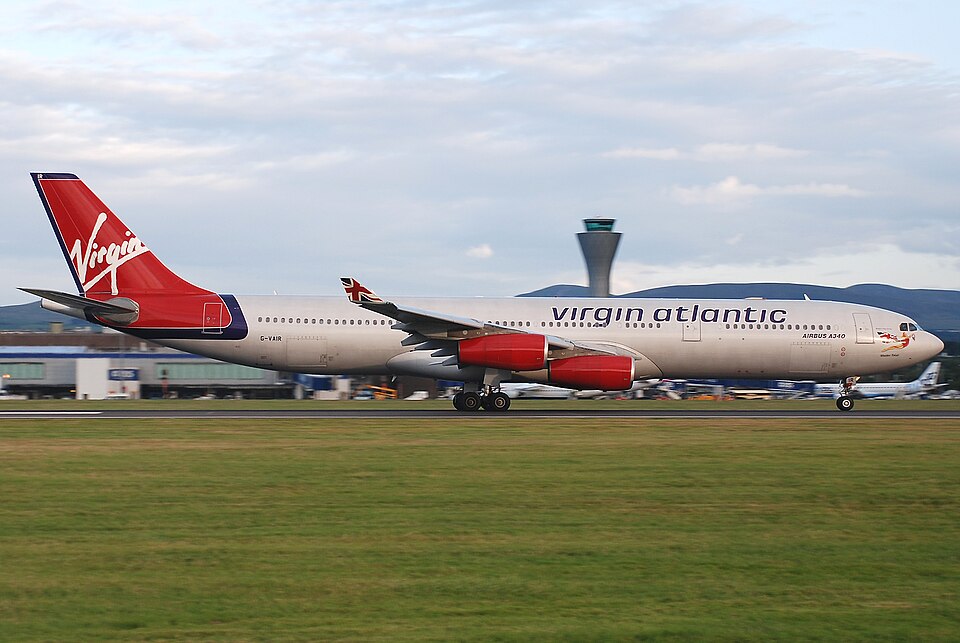
The aircraft, an Airbus A340-313 registered G-VAIR, was operating a scheduled passenger service from London Heathrow Airport to Johannesburg, South Africa. Nine hours into the flight, with the cabin in darkness and cabin crew members either in the crew rest area or preparing breakfast in the galleys, a passenger alerted two crew members in the rear galley to a fire. The crew observed an illuminated area above a central overhead cabin luggage bin near the aft end of the cabin. One crew member retrieved a BCF fire extinguisher and proceeded to the location, while the other notified the aircraft commander via the flight interphone.
At rows 60/61D, the crew member saw flames and smoke emerging from a narrow gap between the closed bin door and the cabin ceiling. Attempting to discharge the extinguisher through the gap, she could not break the seal due to the difficulty of reaching and applying sufficient force. A nearby passenger then took the extinguisher, discharged its contents into the bin, and smothered the fire. A second extinguisher was also discharged into the same area. The fire was extinguished, but smoke and extinguishant began to drift across the cabin. Additional extinguishers were brought by supporting crew members. Once the bin door was opened, the team used extinguishers in the bin and surrounding areas to prevent reignition. Several smokehoods were brought to the scene but were not used. Crew members instructed nearby passengers to keep their heads down due to smoke and fumes.
Upon learning of the fire, the commander sent the relief pilot from the co-pilot's seat to assist. The relief pilot took the portable fire extinguisher from the flight deck but left the smokehood. The commander made a public address announcement informing passengers of the fire and asking for compliance. The first officer, summoned from the adjacent crew rest area, joined the commander on the flight deck. Both pilots executed the "Smoke/Toxic Fumes Removal" drill from the checklist. Cabin crew members from the rest area entered the cabin to assist.
After the fire was out, the crew reached the debris and dampened it to prevent re-ignition. Damage was limited to clothing and bags within one compartment of the overhead bin. The commander decided to continue to Johannesburg. The contents of the bin were removed to the rear galley, sealed in plastic bags, and upon arrival given to the Airport Police, then to the South African Police for forensic investigation.
Fire Training and Equipment
The aircraft carried 12 Halon (BCF) fire extinguishers distributed throughout the cabin. All crew members received initial fire-fighting training and recurrent training at three-year intervals, along with annual refresher training in safety equipment. Smokehoods were provided for each cabin crew member and two were located on the flight deck. The airline used a third-party organization for fire-fighting training. Use of Halon extinguishers was restricted to actual fires due to environmental concerns; training did not involve live discharge. The extinguishers have a trigger mechanism requiring considerable force to break the seal on first use. The training program did not provide actual experience of the force required, nor did it allow crews to experience back pressure from a full discharge. Instead, briefings described what to expect, and practical experience was given using a water-filled extinguisher with the seal already broken.
Engineering Investigation
The operator's engineering staff examined the aircraft at Johannesburg and declared it fit for a revenue return flight to London, with the affected overhead bin taken out of service. After the aircraft returned to the UK, a detailed examination by the AAIB and the operator showed positive evidence that the fire originated within the overhead bin and not from any aircraft systems external to it. A forensic examination of a bag containing cosmetics and a ladies handbag, located at the aft end of the bin, was conducted in South Africa, but no report has been received. The disposition of other items from the bin is unknown.
Discussion
The prompt action of the first crew member in obtaining an extinguisher and proceeding to the scene ensured rapid response to the fire. Other crew members followed up with additional equipment and alerted the flight deck. The fire was contained within the bin and quickly extinguished. Although crew are trained to use smokehoods when fighting fires, the time required to don one (about 30 seconds) conflicted with the need for speed in this incident. Backup crew members were prepared to use smokehoods, but the fire was already extinguished. The fire and smoke training addressed the challenges of using real extinguishers through extra briefings, but the crew member still could not operate the extinguisher unassisted. Given the successful outcome of this serious emergency, no recommendations were deemed necessary.