Introduction
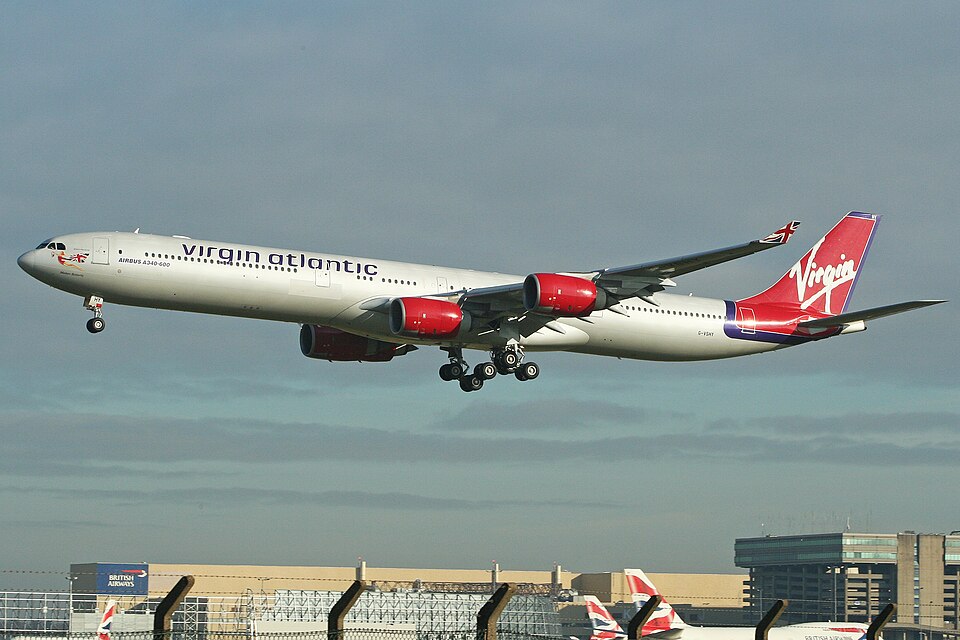
On 23 April 2005, an Airbus A340-642, registration G-VSHY, operated a public transport passenger flight from London Heathrow Airport to Tokyo Narita Airport. The aircraft departed at 1230 hrs with a centre of gravity (CG) slightly forward of the operator's allowable limits. The error was detected while airborne, and corrective action was taken. No injuries or damage were reported.
History of the Event
The aircraft arrived at Stand 340 at 1011 hrs and passengers disembarked. Preparations for the next flight began, with cleaners arriving at 1045 hrs. The Turnround Coordinator (TCO) left the aircraft to compile paperwork for the next flight. At approximately 1100 hrs, the TCO returned with the Loading Instruction Report (LIR) and discussed loading with the handling company's Loading Team Leader. By 1125 hrs, final passenger figures were determined, and the loadsheet was sent to the aircraft at 1130 hrs. A minor Last Minute Change (LMC) was annotated, and the TCO took a signed copy from the commander before returning to her office.
After returning, the TCO received a Cargo Weight Statement by fax. Comparing it to the loadsheet revealed a discrepancy in total cargo weight of 1,660 kg. Further examination showed that one pallet was listed as 2,015 kg on the Cargo Weight Statement but only 355 kg on the LIR. After confirming the accurate weight as 2,015 kg, a revised loadsheet was generated, revealing that the aircraft CG was slightly forward of the operator's allowable limits.
The commander, now en-route, was contacted. By moving three passengers toward the rear of the aircraft, the CG was brought back within limits. A new loadsheet was generated, and the commander confirmed no unusual circumstances during takeoff. The flight continued and landed normally at Tokyo. The company Safety Services Department was notified while the aircraft was airborne, and all cargo was weighed on arrival, revealing significant differences compared to the Cargo Weight Statement. The errors were traced to inaccurate cargo scales at Heathrow, which have since been corrected.
Operator's Investigation
The operator's Safety Services Department conducted a comprehensive investigation. The initial error was traced to a member of the Central Load Planning (CLP) facility, an outsourced contractor, who manually input cargo details into the computer planning system that generated the loadsheet. Three areas for improvement were identified: the electronic interface between the company and CLP, data transfer procedures at CLP, and loadsheet monitoring by the TCO. A report issued on 6 June 2005 contained numerous internal safety recommendations covering all aspects of loading procedures. The operator is undertaking a full review of loading procedures.
Previous Incidents
During the previous year, there were multiple reported loading incidents involving the same operator:
- 10 July 2004: Incorrect loadsheet for a Boeing 747, weight 819 kg more than actual. Detected after departure; aircraft remained within limits.
- 16 August 2004: Incorrect loadsheet for an Airbus A340, weight 2,163 kg less than actual. Detected and rectified before departure.
- 20 September 2004: Incorrect loadsheet for an Airbus A340, weight 1,911 kg less than actual. Detected after departure; aircraft remained within limits.
- 26 November 2004: Incorrect loadsheet for an Airbus A340, weight 1,665 kg less and two passengers not included. Cargo error detected after departure; passenger error at destination.
- 16 December 2004: Incorrect loadsheet for an Airbus A340, two fewer containers than loaded. Detected after departure; aircraft remained within limits.
- 8 February 2005: Incorrect loadsheet for a Boeing 747, two passengers not included. Detected after departure; aircraft remained within limits.
- 19 March 2005: Incorrect loadsheet, weight 2,290 kg less than actual. Pallet not off-loaded as expected. Detected at destination; aircraft remained within limits.
- 8 April 2005: Incorrect loadsheet, weight 1,330 kg more than actual. Detected at destination.
Additionally, an NTSB investigation was initiated into an incident involving an Airbus A340 flight from Washington Dulles to London Heathrow on 7 June 2004, where an 'EXCESS AFT CG' warning activated during flight. Incorrect loading resulted in a CG of 39.4% MAC on takeoff rather than 28.1% as shown on paperwork. Recommendations were made by NTSB and the company Safety Services Department.
Subsequent Actions
At the time of the incident, the CAA was conducting an annual audit of the operator. Due to the number of recent loading incidents, a specialist Loading Inspector was included in the audit team. The audit identified loading as an area of concern, leading to continued CAA monitoring of the company's loading procedures. Research of the CAA MOR database showed that the operator had a significantly higher frequency of significant loading errors compared to other UK operators.
Conclusion
The incident resulted from incorrect data entry into the computer-based planning system, and the mistake was not detected until the aircraft was airborne. The aircraft was outside the operator's CG limits, posing inherent handling risks. While human mistakes occur, a robust monitoring system for critical flight aspects is necessary. The number and regularity of previous loading incidents indicated that the operator had not given sufficient priority to loading issues. With improvements by the operator and CAA involvement, action is in hand to improve the situation. The AAIB did not issue any safety recommendations in light of this action.