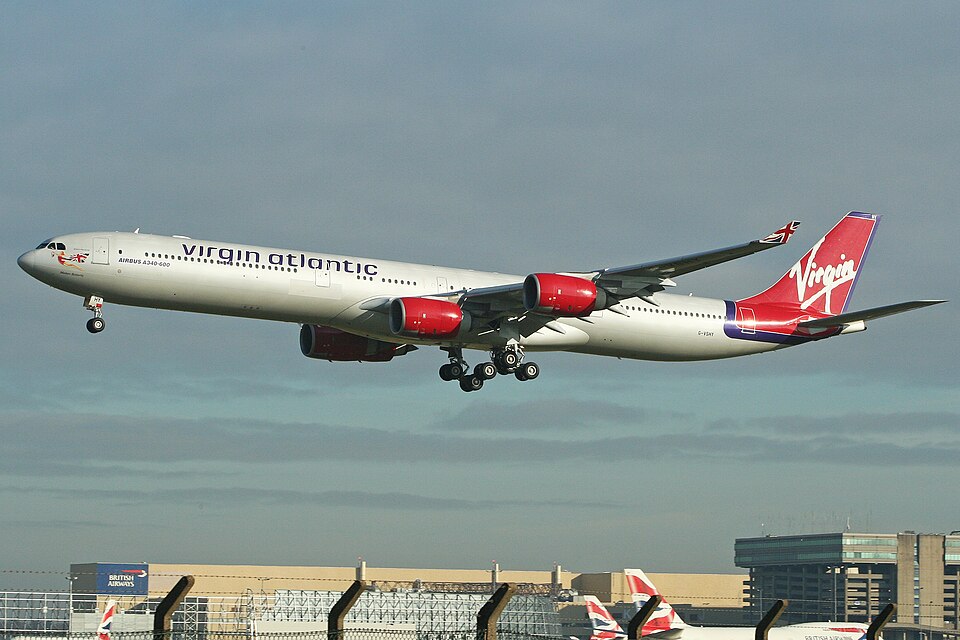
Incident Overview
On February 25, 2006, an Airbus A340-642 with registration G-VSHY was operating a public transport passenger flight from Los Angeles to London Heathrow Airport. The aircraft, manufactured in 2002 and powered by four Rolls-Royce Trent 556-61 turbofan engines, carried 18 crew members and 268 passengers. No injuries were reported among the personnel on board.
Operational Context and Approach
The flight crew, consisting of a commander acting as Pilot Flying and two co-pilots, had an uneventful flight until the final approach. Due to air traffic control delays and reports of windshear on Runway 09L, the crew was instructed to hold and subsequently re-briefed for an approach to Runway 09R. The weather at Heathrow reported a wind from 060 degrees at 21 knots with moderate turbulence. The commander elected to maintain the autopilot until passing the Decision Altitude of 275 feet, after which manual control was assumed.
Landing Sequence and Damage
During the flare phase at approximately 50 feet radio altitude, all three pilots reported that the aircraft began moving rapidly to the right. The commander reduced the flare rate to expedite touchdown but did not use rudder to counteract the drift, fearing it might cause the nose to depart the runway. Consequently, the aircraft touched down on the right edge of the designated runway surface with a 10-degree heading offset to the left and a 3.5-degree right wing-low attitude.
This alignment resulted in firm contact between the two outer wheels of the right main landing gear and the right edge line of the paved surface. Both tires deformed and burst, causing serious damage to the wheels and minor damage to the flaps and the right main landing gear structure. The aircraft remained on the paved surface and was subsequently towed to a nearby stand after an engineering inspection confirmed it was safe for movement.
Investigation Findings
The Accident Investigation Branch (AAIB) field investigation noted that the operator’s manual specifies a maximum demonstrated crosswind of 37 knots for manual landings. The incident occurred in strong gusting crosswind conditions where turbulence downwind of airport structures may have contributed to the lateral drift. The commander indicated that a go-around was not considered because the event developed rapidly at a late stage of the approach, and such a maneuver might have resulted in the aircraft departing the runway.