Event Overview
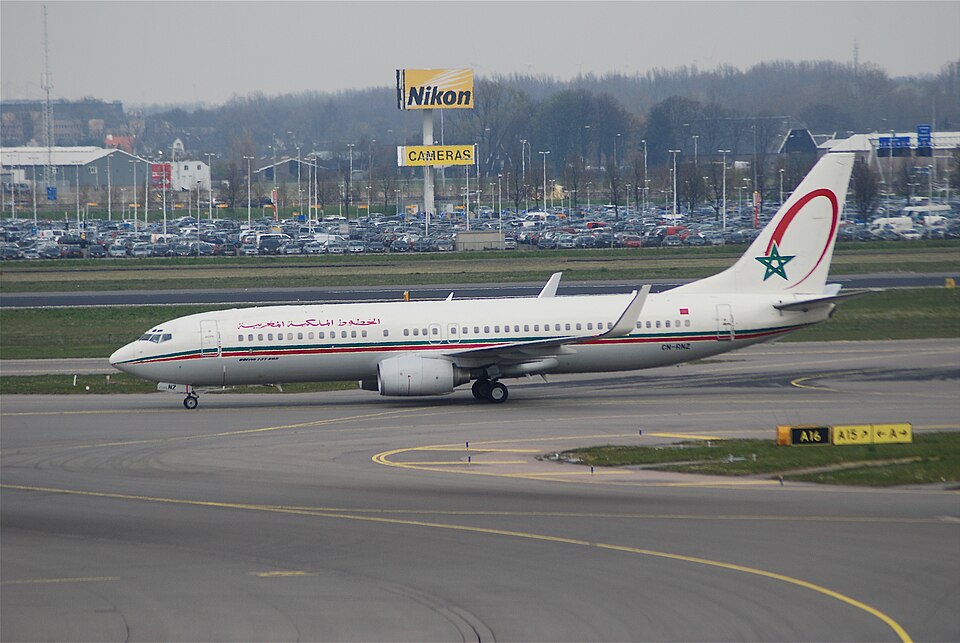
On March 23, 2015, a Boeing 737-800 registered as CN-RNZ, operated by Royal Air Maroc, was conducting a scheduled night flight from Paris Orly Airport to Agadir El Massira Airport. The aircraft carried 110 passengers and a full crew. While cruising at flight level 370 (FL370) south of the Madrid Flight Information Region (FIR), air traffic control instructed the flight crew to descend to FL350.
Flight Details
During the descent, the flight crew noticed a gradual and continuous increase in cabin altitude, approaching 9,000 feet. At 21:25 UTC, the cabin altitude warning alarm activated. The crew observed that the cabin rate-of-climb indicator was at its maximum limit and decided to switch the pressurization system selector to manual mode. Unable to control cabin pressure manually, they executed the rapid depressurization procedure: manually deploying passenger oxygen masks and initiating an emergency descent from FL350 to FL070. After reaching FL070, the aircraft climbed and stabilized at FL090.
Cockpit Crew Actions
The flight crew reported that the cabin pressure could not be controlled in manual mode. They followed the quick reference handbook (QRH) procedure for rapid depressurization. After stabilizing at FL090, the commander announced that a safe altitude had been reached and that normal operations could resume.
Cabin Crew Observations
Cabin crew members reported that some of the deployed oxygen masks did not supply oxygen.
Aftermath
The aircraft diverted from its original destination and landed safely at Casablanca Mohammed V Airport at 22:35 UTC. No injuries to passengers or crew were recorded, and no damage to the aircraft was reported.
Investigation Notes
The Moroccan Bureau d'Enquêtes et d'Analyses (BEA) classified the event as a serious incident. The cockpit voice recorder data were not preserved by the airline, and the flight data recorder did not include parameters related to the pressurization system. However, non-volatile memory data from the cabin pressure controllers were downloaded and analyzed by Boeing through the U.S. National Transportation Safety Board. The investigation team was unable to examine the aircraft after landing due to operational constraints. Weather conditions were reported as favorable for the flight.