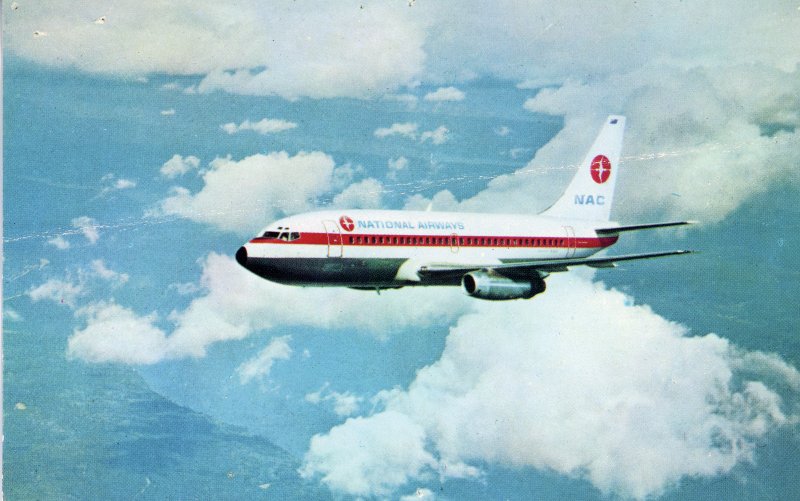
Flight Details
Nigeria Airways flight WT357 departed Yola (YOL) at 07:00 en route to Lagos (LOS), with intermediate stops planned at Jos (JOS) and Kaduna (KAD). The Boeing 737 landed at Jos at 07:40 and departed fifty minutes later. The flight to Kaduna was uneventful.
Approach and Landing
Kaduna ATC gave the aircraft an inbound clearance with no delay for a locator approach to runway 05. However, the captain requested to land on runway 23. The controller reminded him that the wind was from 090 magnetic, but the captain insisted on using the 23 approach. At 08:42, the aircraft commenced its initial descent at 48 miles on the ILS/DME to 4,500 ft. At 08:49 UTC, it was cleared to 3,500 ft at 10 miles out and later descended to 500 ft.
The aircraft turned left from track 310 to align with runway 23. The aircraft was still in the turn when the threshold was sighted just 1.5 miles to the left. The first officer asked, "Can you make it to land from that position?" The observer in the jump seat also suggested going on the downwind, presumably to reposition for runway 05. The captain did not respond and the approach continued for runway 23. The left turn was very steep and took the aircraft left of the runway centreline, requiring a right correction. The observer shouted, "Watch the wing!" as the wings could have struck the ground on final approach. The aircraft crossed the threshold with the pilot still struggling to maintain directional control for runway centreline alignment.
Accident
The aircraft touched down 7,820 feet down the runway, leaving just 2,020 feet (615.85 m) of runway length. The captain reportedly used 1.8 and 1.6 EPR on the reversers. When a runway overrun became inevitable, the captain turned the aircraft left intending to use the last rapid exit intersection to avoid the runway end lights. At that point, the aircraft entered an uncontrollable skid. The right wing hit the ground, rupturing the fuel tanks, and a huge fire erupted. The aircraft was destroyed by the fire.
Probable Cause
The probable cause of the accident is the continuation of a highly unstabilized approach when the option of a missed approach could have been taken. The contributing factor was the turn off at 76 knots into the high speed intersection when an overrun into the extended runway end should have been maintained.