Incident Overview
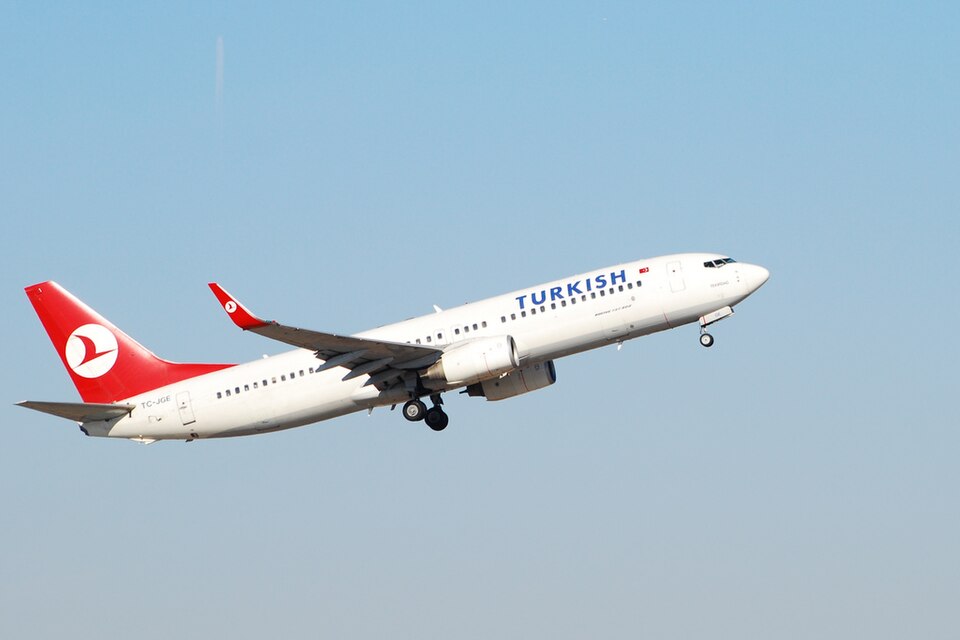
Turkish Airlines Flight 1951, a Boeing 737-800, was on a scheduled flight from Istanbul-Atatürk International Airport to Amsterdam-Schiphol International Airport. The flight crew consisted of three pilots: a line training captain in the left seat, a first officer under line training in the right seat serving as pilot flying, and an additional first officer occupying the flight deck jump seat. The en route portion was uneventful.
Approach and Initial Warnings
As the aircraft descended for Schiphol, passing overhead Flevoland at about 8,500 feet, the aural landing gear warning sounded. Air traffic control directed the flight toward runway 18R for an ILS approach. The standard procedure for runway 18R requires lining up at least 8 nautical miles from the runway threshold at 2,000 feet, with glide path interception from below. However, Flight 1951 was vectored to line up at approximately 6 nautical miles at 2,000 feet, resulting in the glide slope being approached from above. During the approach, one autopilot and the autothrottle were engaged. The landing gear was selected down, and flaps were set to 15.
Radio Altimeter Malfunction
While descending through 1,950 feet, the radio altimeter value on the captain's primary flight display suddenly changed to -8 feet. The landing gear warning sounded again. The first officer's display indicated the correct altitude from the right-hand system. The left radio altimeter system categorized the erroneous reading as correct, providing the faulty data to various aircraft systems, including the autothrottle. The crew was unaware of this error and could not have known, as flight manuals contained no procedures for radio altimeter errors, and training did not cover such system details.
Autothrottle Retard Flare and Stall
Because of the incorrect altitude reading, the autothrottle activated the 'retard flare' mode, a mode normally engaged below 27 feet. The thrust from both engines reduced to approach idle. The right autopilot, receiving correct altitude from the right system, attempted to maintain the glide path, causing the aircraft nose to rise and angle of attack to increase. The crew's only initial indication of speed decay was the 'RETARD' display. At 750 feet, the airspeed fell below the selected 144 knots, but the crew did not respond. The airspeed indicator changed color and flashed at 126 knots, and the artificial horizon showed an excessive nose-high attitude. The crew did not react to these warnings.
Stall and Impact
When the stick shaker activated at 460 feet, the first officer pushed the control column forward and advanced the throttles. The captain then took over control, interrupting the first officer's throttle input. The autothrottle, still engaged, retarded the throttles again. After the captain disconnected the autothrottle, no thrust was selected until nine seconds after the stick shaker, when the throttles were fully advanced. By then, the aircraft had stalled at about 350 feet, too low for recovery. The last recorded data showed the aircraft at 22° nose-up and 10° left wing down at impact. The aircraft struck farmland, sustaining severe damage: the horizontal stabilizer and main landing gear separated, engines detached, and the fuselage broke into sections.
Official Findings
The probable cause, as stated in the official investigation, was a sequence of events beginning with the erroneous left radio altimeter reading, which caused the autothrottle to enter retard flare mode. The approach vectoring led to a glide slope intercept from above, obscuring the mode change and increasing crew workload. The approach was not stabilized below 1,000 feet, but no go-around was initiated. The crew failed to recognize airspeed decay and pitch increase until the stick shaker, and the subsequent stall recovery was not executed properly, resulting in the stall and crash.