Ultralight Crash in Chonburi Kills Pilot Due to Wing Fabric Failure
An X-AIR HAWK ultralight crashed in Chonburi, Thailand, killing the pilot and injuring a passenger. The accident was caused by deteriorated wing fabric and…
On October 14, 2004, a Boeing 747-200 (registration 9G-MKJ) operated by MK Airlines was involved in an aviation accident near Halifax-Stanfield, Canada during takeoff. 7 people were killed. Investigators recorded the probable cause as: The Bradley take-off weight was likely used to generate the Halifax take-off performance data, resulting in incorrect V speeds and thrust setting being transcribed to the take-off data card. This summary draws on records from the Bureau of Aircraft Accidents Archives (B3A); 10 related events involving the same aircraft type or operator are linked below.
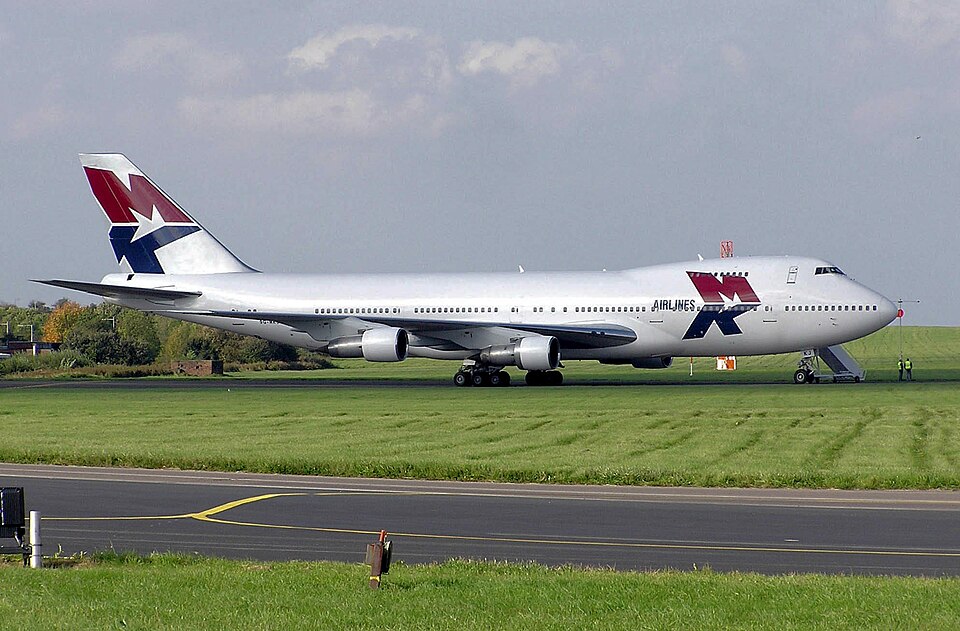
MKA1602 crashed after takeoff from Halifax International Airport due to incorrect performance data and crew fatigue. The aircraft struck a berm, lost its tail, and burned, killing all seven crew members on board.
The Bradley take-off weight was likely used to generate the Halifax take-off performance data, resulting in incorrect V speeds and thrust setting being transcribed to the take-off data card. The incorrect V speeds and thrust setting were too low to enable the aircraft to take off safely for the actual weight of the aircraft. It is likely that the flight crew member who used the Boeing Laptop Tool (BLT) to generate take-off performance data did not recognize that the data were incorrect for the planned take-off weight in Halifax. It is most likely that the crew did not adhere to the operator's procedures for an independent check of the take-off data card. The pilots of MKA1602 did not carry out the gross error check in accordance with the company's standard operating procedures (SOPs), and the incorrect take-off performance data were not detected. Crew fatigue likely increased the probability of error during calculation of the take-off performance data, and degraded the flight crew's ability to detect this error. Crew fatigue, combined with the dark take-off environment, likely contributed to a loss of situational awareness during the take-off roll. Consequently, the crew did not recognize the inadequate take-off performance until the aircraft was beyond the point where the take-off could be safely conducted or safely abandoned. The aircraft's lower aft fuselage struck a berm supporting a localizer antenna, resulting in the tail separating from the aircraft, rendering the aircraft uncontrollable. The company did not have a formal training and testing program on the BLT, and it is likely that the user of the BLT in this occurrence was not fully conversant with the software.
An X-AIR HAWK ultralight crashed in Chonburi, Thailand, killing the pilot and injuring a passenger. The accident was caused by deteriorated wing fabric and…
A Challenger II Special ultralight aircraft (U-B23) landed off-runway at Pai Airport, Mae Hong Son, on September 17, 2024, due to a gust of wind. No injuries…
The Polish aviation safety authority is investigating a serious incident involving an AT-3R100 aircraft that occurred on September 2, 2024. The investigation…
A SZD-48-3 glider suffered damage when its left wing struck a ground obstacle during a low final approach at EPWK on June 20, 2025. The pilot was uninjured.
A 39-year-old skydiver died after a hard landing near Leszno on May 1, 2026. The PKBWL preliminary report indicates the fatal impact resulted from a late,…
A student pilot crashed an SZD-50-3 Puchacz glider into the airfield fence during a solo training flight on June 6, 2026. The pilot was uninjured, but the…