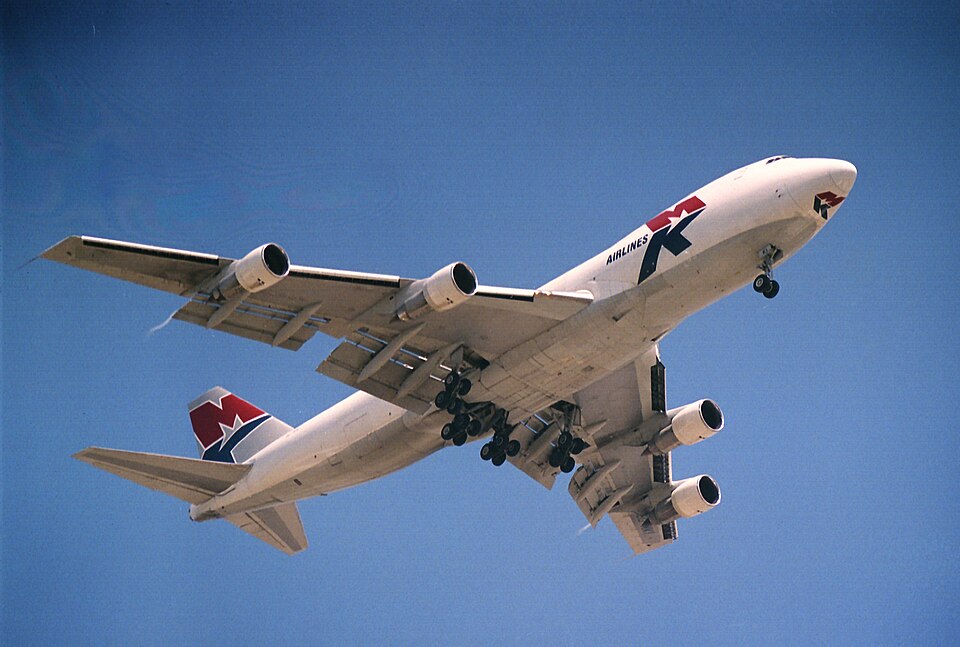
Accident Overview
On a night approach to Port Harcourt Airport, a cargo flight carrying nine passengers, four crew members, and approximately 60 tons of electronics struck the ground 700 meters short of the runway. The aircraft, which had departed Luxembourg-Findel Airport on a flight to Johannesburg with an intermediate stop in Port Harcourt, sustained severe damage. The undercarriage was torn off, and the aircraft slid for several dozen meters before coming to rest with its front section broken away and engulfed in flames.
Flight Details
The flight was operated with nine passengers and four crew members on board. The load consisted of almost 60 tons of electronics. The approach was conducted at night. The copilot was the pilot-in-command, contrary to operator policy which stipulated that approaches to Port Harcourt must be completed by the captain only.
Accident Sequence
During the approach, the copilot failed to comply with company published procedures. He carried out a non-standard autopilot approach, tracking a localizer radial inbound and descending using the vertical speed mode as reference. On short final, the crew did not realize that the aircraft's altitude was insufficient, and the aircraft struck the ground 700 meters short of the runway. The impact tore off the undercarriage, and the aircraft slid for a few dozen meters before its front section broke away and burst into flames.
Injuries and Damage
One crew member was killed, seven occupants were injured, and five escaped uninjured. The aircraft was partially destroyed by fire.
Probable Cause
Wrong approach configuration on part of the flying crew which resulted in a controlled flight into terrain after the crew failed to comply with several published procedures. It was determined that the copilot was the pilot-in-command while the operator policy stipulated that approaches to Port Harcourt must be completed by captain only. The following findings were identified: - It was defined in the operational procedures that the autopilot could not be used below the altitude of 2,000 feet on approach but the copilot failed to comply with, - Poor crew coordination, - There were no calls on final approach between both flying and non flying pilots, - The crew suffered a lack of situational awareness following a misinterpretation of the visual references on approach.