History of Flight
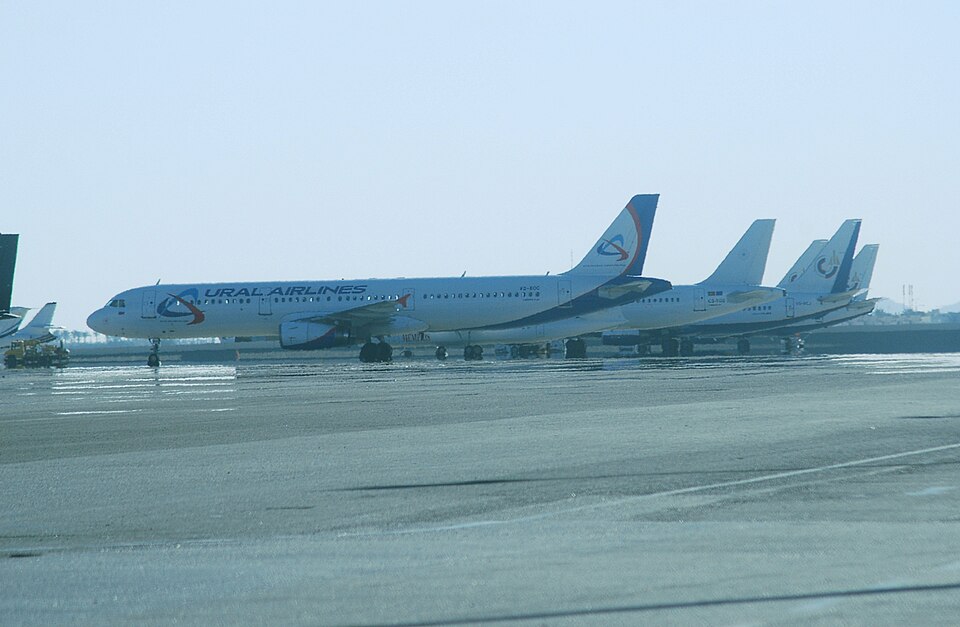
On February 28, 2013, at approximately 02:13:59 UTC, an Airbus A321, registered VQ-BOC and operated by Ural Airlines as flight SVR3027, suffered a tail strike during landing on runway 34 at Hurghada Airport, Egypt. The flight originated from Bolshoye Savino Airport (USPP) in Perm, Russia. After the tail strike, the flight crew executed a go-around procedure and subsequently landed the aircraft on the same runway. Post-landing inspection revealed damage to the lower tail section of the fuselage. Runway inspection by marshalling personnel found traces of aircraft paint on the left side near the centerline; the runway was deemed serviceable.
Injuries to Persons
No injuries were reported among the occupants.
Damage to Aircraft
Examination of the aircraft revealed structural damage to the lower aft side of the fuselage, just right of the aircraft centerline, as a result of the tail strike and impact with the ground. Photographs were taken to document the damage.
Personnel Information
The flight crew consisted of one captain and two first officers. The captain held an ATPL with A319/320/321 type rating and had accumulated 3,498 total flying hours, with 2,817 hours on type. The first officer held an ATPL and had 15,102 total flying hours, with 757 hours on type. Both pilots held valid licenses and medical certificates. The captain's report was available; the first officer's report was not. Information on the third crew member was limited to a passport copy.
Aircraft Information
The aircraft was an Airbus A321-231, serial number 1199, manufactured in 2000. It was powered by two V2533-A5 turbofan engines. Total airframe hours were 39,597, with 15,681 cycles. The certificate of airworthiness was valid until October 23, 2013. The owner was Royal Flight Limited, and the operator was Joint Stock Company Ural Airlines. A computerized load sheet was available but not detailed in this report.
Meteorological Information
At the time of the incident (0200 UTC), the wind was from 320 degrees at 13 knots, visibility was CAVOK (ceiling and visibility OK, visibility greater than 10 km, no ceiling below 5,000 ft, no precipitation, no cumulonimbus clouds). Outside air temperature was 18°C, dew point 3°C, and QNH 1013 mb.
Communication
Communication between approach control, tower control, and the cockpit crew was recorded and transcribed. No anomalies were noted in the communications.
Aerodrome Information
The incident occurred at Hurghada Airport (HEGN), Egypt. The aircraft landed on runway 34. The originating airport was Bolshoye Savino Airport (USPP) in Perm, Russia.
Flight Recorders
Both the cockpit voice recorder (CVR) and flight data recorder (FDR) were recovered and read out at the Flight Recorders Lab. The CVR transcript was prepared, noting potential voice confusion between the captain and first officer due to similar voices. The FDR data were used for analysis; plots of selected parameters were generated. The investigation included time correlation between CVR and FDR events.
Additional Information
The investigation was conducted by the Aircraft Incident Investigation Central Directorate of the Egyptian Ministry of Civil Aviation. The report was issued on November 17, 2013.