25 fatalities

1973-03-03: Ilyushin II-18 (LZ-BEM) — Balkan Bulgarian Airlines — Moscow-Sheremetyevo, Russia

Moscow-Sheremetyevo, RussiaLanding (descent or approach)

On March 3, 1973, an Ilyushin II-18 (registration LZ-BEM) operated by Balkan Bulgarian Airlines was involved in an aviation accident near Moscow-Sheremetyevo, Russia during landing or approach. 25 people were killed. Investigators recorded the probable cause as: The commission considered that the most probable cause of the accident was an adverse combination of the following factors: - Icing of the stabilizer (probably due to lack of heating in the leading edge), - A pitch manoeuvre executed to correct a deviation… This summary draws on records from the Bureau of Aircraft Accidents Archives (B3A); 8 related events involving the same aircraft type or operator are linked below.

Sourcesthe Bureau of Aircraft Accidents Archives (B3A)Primary reportUpdated 1781232994Data APIEditorial standards
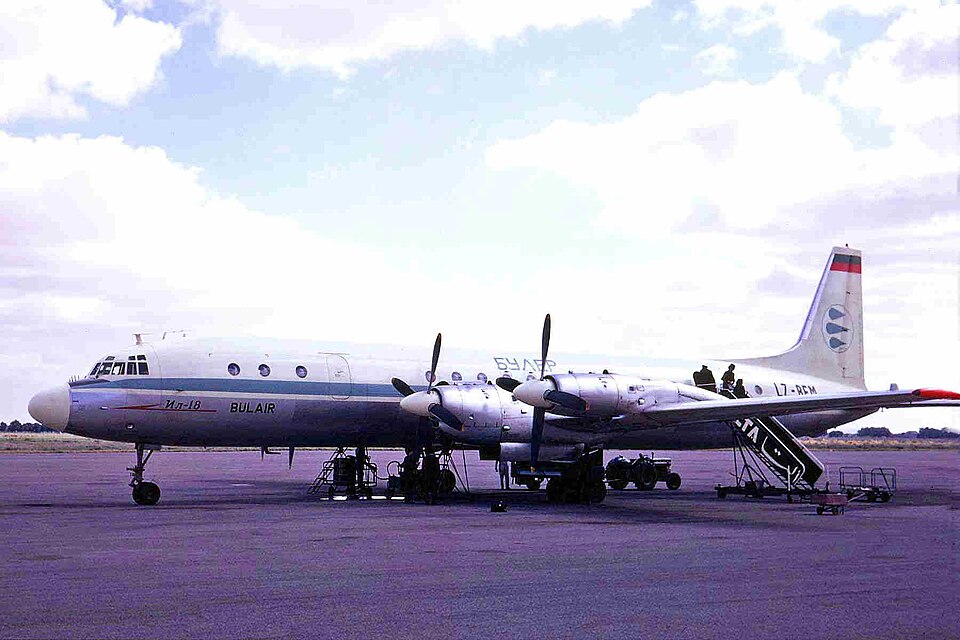
Aircraft registered LZ-BEM
Aircraft registered LZ-BEM. Photo: Ken Fielding / CC BY-SA 3.0, via Wikimedia Commons

During a second approach to Moscow-Sheremetyevo Airport, an aircraft deviated below the glide path and later nosed down, crashing 4,330 meters short of runway 07. All 25 occupants died. Probable cause includes stabilizer icing and flap extension.

Event Summary

During an approach to Moscow-Sheremetyevo Airport in marginal weather conditions, the crew initiated a go-around for an unknown reason. On the second approach, at a distance of 5 km from the threshold of runway 07, air traffic control informed the crew that the aircraft's position was 15 meters below the glide path. Shortly thereafter, the airplane nosed down and crashed in a huge explosion 4,330 meters short of the runway. The aircraft disintegrated on impact, and all 25 occupants were killed.

Probable Cause

The commission considered that the most probable cause of the accident was an adverse combination of the following factors:

  • Icing of the stabilizer (probably due to lack of heating in the leading edge),
  • A pitch manoeuvre executed to correct a deviation from the glide path which resulted in a g-loading of 0.6 – 0.5,
  • Extension of the flaps to the full landing setting, which had the effect of degrading the airflow over the lower surface of the stabilizer and, consequently, of producing loads on the control column which promoted a further increase in the negative g-loading and prevented recovery of the aircraft from the developing nosedive.

Owing to the destruction of the aircraft, it was not possible to check the actual functioning of the stabilizer deicing system.