History of the Flight
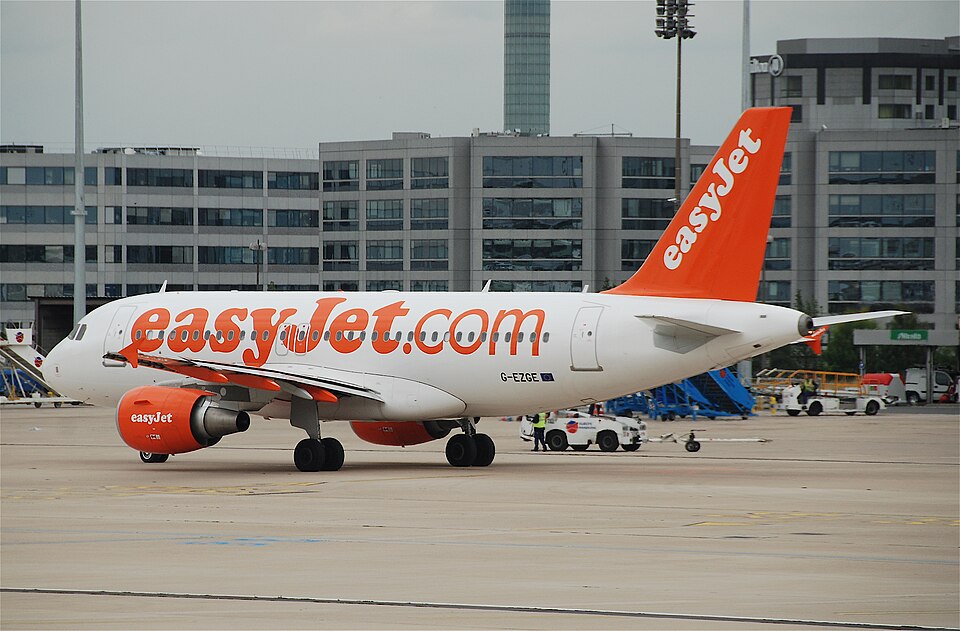
On 19 June 2016 at 23:40 UTC, an Airbus A319-111, registration G-EZGE, operated by EasyJet, was preparing to depart from Ibiza Airport (LEIB) to Stansted Airport (EGSS) with 159 passengers and 6 crew members. As the aircraft taxied out of parking stand 29 under its own power, it executed a prolonged left turn. During this maneuver, the right wingtip struck the boarding jetway and became lodged. The aircraft was turning using only the left engine, which limited its maneuverability. At one point, the nose wheel was approximately 6 meters to the right of the guide line painted on the apron. Airport personnel reported that the aircraft did not follow the standard exit line and widened the turn to the right. After the impact, the aircraft came to rest facing parking stand 28, encroaching on the No Parking Area between the stands and affecting the pushback of another aircraft. The incident aircraft was subsequently towed to stand 14 for repairs.
Injuries and Damage
No occupants were injured. One flight attendant fell to the floor during the impact and was taken to a hospital as a precautionary measure, but was not injured. The aircraft and airport facilities sustained minor damage. Specifically, a section approximately 1.5 meters long at the end of the wing's leading edge was damaged.
Aircraft and Crew Information
The aircraft was an Airbus A319-111 with registration G-EZGE. The crew held valid licenses and were properly qualified. No pre-existing technical issues were reported for the aircraft.
Airport Information
Parking stand 29 at Ibiza Airport requires a sharp and constant left turn to exit. The aircraft's maneuverability was limited due to taxiing with only the left engine providing thrust. The ground guide lines and markings were standard for the airport.