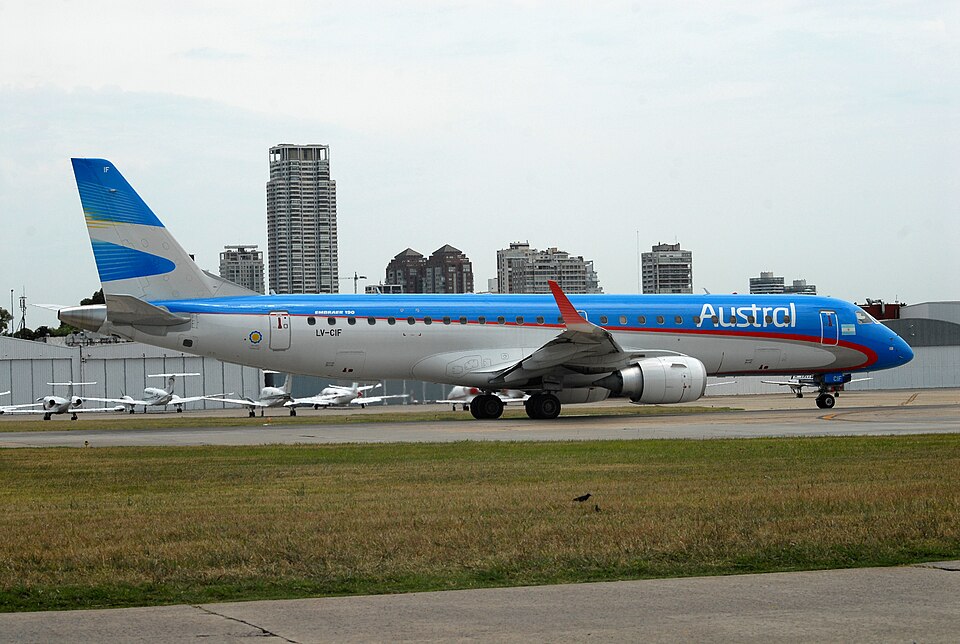
Cabin Pressure Loss Triggers Emergency Descent in Embraer ERJ 190

Casualties unknown • Aeropuerto Juan Domingo Perón - Neuquén (Sazn) (Neuquen), AR

A flight crew performed an emergency descent after a cabin pressure malfunction led to a high cabin altitude alert during a commercial flight in Argentina.

What happened

On March 1, 2020, an Embraer ERJ 190, registration LV-CIF, was operating a scheduled commercial flight from Bariloche to Buenos Aires. Approximately 85 minutes into the flight, while cruising at 35,000 feet, the crew identified a discrepancy in cabin pressure caused by a malfunction in the cabin pressure control system.

Following the initial pressure instability, the crew transitioned the pressurization mode from automatic to manual. This action caused the outflow valve to remain at a 38-degree position. The subsequent gradual loss of pressure led to a significant increase in cabin altitude, eventually exceeding 9,700 feet and triggering a "CABIN ALTITUDE HI" alarm. In response to this emergency, the crew executed memory items and performed an emergency descent, diverting the aircraft to Neuquely to land safely at Presidente Perón International Airport. There were no injuries to the 5 crew members or 97 passengers, and the aircraft sustained no damage.

The investigation

The investigation examined the technical failure of the cabin pressure control system and the crew's response to the EICAS (Engine Indicating and Crew Alerting System) messages. Investigators analyzed the flight data and cockpit voice recordings to determine the sequence of events following the "PRESN AUTO FAULT" alert. The inquiry also reviewed the airline's training programs and the regulatory requirements for simulator training regarding depressurization scenarios.

Findings

  • The primary cause of the pressure loss was a malfunction of the cabin pressure control system.
  • The crew's interpretation of the EICAS messages may have been complicated by the visual similarity of different warning types, potentially leading to ambiguity during the critical phase of the event.
  • There was no evidence that the crew performed a complete check of the "CABIN ALTITUDE HI" checklist after completing the initial memory items.
  • During the emergency, the captain transitioned from the monitoring role to the flying role, but investigators noted a lack of explicit communication regarding the transfer of control.
  • Current regulatory standards for initial simulator training do not explicitly require the practice of cabin depressurization or emergency descent maneuvers.

Safety action

  • A recommendation was made to Aerolínes Argentinas S.A. to enhance pilot training regarding the accurate identification and interpretation of various EICAS message categories.
  • A recommendation was issued to the National Civil Aviation Administration (ANAC) to update regulations to ensure that cabin depressurization and emergency descent procedures are explicitly included in initial simulator training requirements.

Probable cause

A malfunction in the cabin pressure control system caused a gradual loss of cabin pressure, which was compounded by incomplete checklist execution and potential ambiguity in interpreting system alerts.

Frequently asked questions

What happened in the 2020-03-01 EMBRAER E-190 accident near Aeropuerto Juan Domingo Perón - Neuquén (Sazn) (Neuquen), AR?

A flight crew performed an emergency descent after a cabin pressure malfunction led to a high cabin altitude alert during a commercial flight in Argentina.

What aircraft was involved and where did it happen?

The accident on 2020-03-01 involved a EMBRAER E-190, registration LV-CIF, operated by Aviación Comercial, at Aeropuerto Juan Domingo Perón - Neuquén (Sazn) (Neuquen), AR.

What was the probable cause of the accident?

A malfunction in the cabin pressure control system caused a gradual loss of cabin pressure, which was compounded by incomplete checklist execution and potential ambiguity in interpreting system alerts.

Loading the flight search…