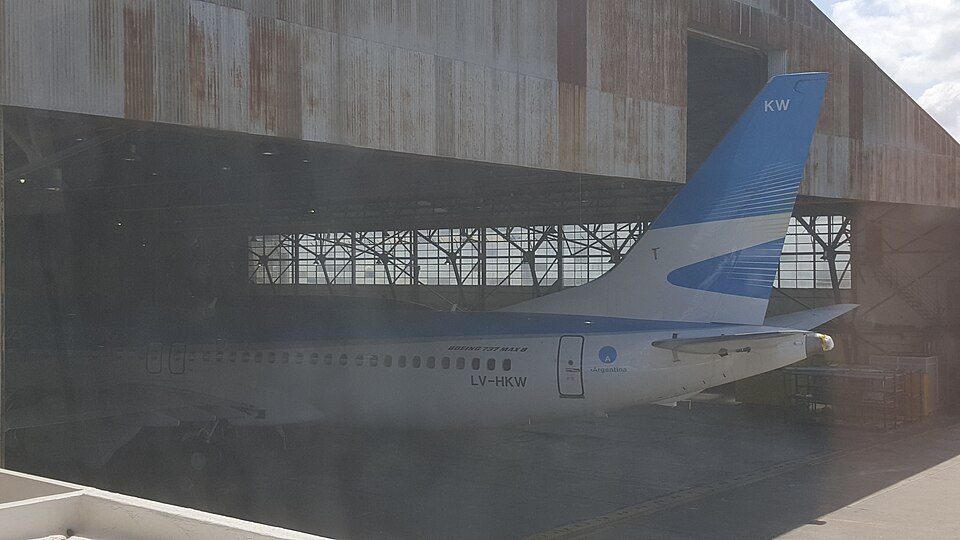
Incident Overview
On 13 November 2018, a Boeing 737 MAX 8, registration LV-HKW, operated by Aerolíneas Argentinas as flight AR1324, was en route from Ministro Pistarini International Airport (Ezeiza, Buenos Aires) to Punta Cana International Airport (Dominican Republic). During the cruise phase, at approximately 05:20 UTC, while navigating near a convective storm area, the aircraft experienced vibrations in the left engine. The vibration indicator reached 5.0, the maximum permitted value. The flight crew executed the "High Engine Vibration" procedure from the Boeing 737 Quick Reference Handbook (QRH) and decided to land precautionarily at Resistencia International Airport (Chaco, Argentina). The landing was normal, and all 180 occupants (7 crew and 173 passengers) disembarked without incident.
Investigation
The Junta de Investigación de Accidentes de Aviación Civil (JIAAC) initiated an investigation. Inspection of the left engine, a CFM International Leap-1B (as identified in the report), revealed rubbing marks on seven fan blades and corresponding rubs on the abradable (inner noise suppressor). The crew reported that during the final approach, at 9,000 feet and 20 NM from the airport, the vibrations stopped, and both engines operated normally for landing.
A subsequent engine run-up test, performed with various power settings, showed normal vibration parameters. Photographs of the affected fan blades were sent to the engine manufacturer, who approved a ferry flight cycle for the aircraft to be repositioned to a maintenance facility. The aircraft was then flown in ferry configuration.
Interviews with the crew, technicians, and company inspectors indicated that the fan blade rubbing may have been caused by flight in weather conditions conducive to the formation of crystal icing. Crystal icing can lead to ice accumulation behind the spinner, causing imbalance and subsequent vibrations. The report notes that these relatively new engines had been in service for less than two years, and this was the second such failure encountered in the new Boeing 737 MAX 8 fleet equipped with CFM Leap-1B engines.
Findings
The incident did not result in any injuries or damage to the aircraft. The crew followed established procedures and landed safely. The investigation focused on the engine anomaly, with technical personnel attributing the rubbing to possible crystal icing conditions.