What happened
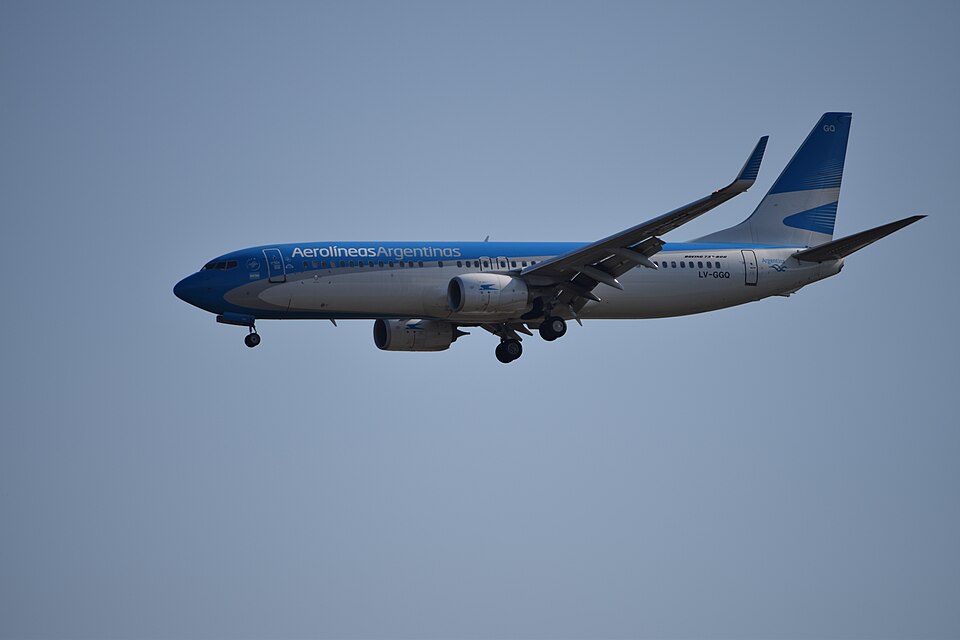
On November 24, 2018, an Aerolíneas Argentinas Boeing 737-800, registration LV-GGQ, was operating flight AR1293 from Rio de Janeiro, Brazil, to Ezeiza, Argentina. While cruising at 36,000 feet near Porto Alegre, the aircraft encountered a sudden zone of severe clear air turbulence (CAT).
Prior to the encounter, the captain had activated the seatbelt signs and the cabin crew had instructed passengers to remain seated. However, the intensity of the turbulence caught the aircraft by surprise. One passenger, who was inside a lavatory at the time, struck their head against the ceiling panel, sustaining superficial injuries to the forehead and nasal septum. Additionally, two flight attendants seated in the rear galley sustained minor injuries due to the aircraft's sudden movements. The aircraft sustained minor damage, including a broken seat armrest in row 27 and a dislodged oxygen mask panel in the lavatory. The flight continued to its destination, where medical personnel attended to the injured.
The investigation
The investigation analyzed flight data from the Flight Data Recorder (FDR) and the Cockpit Voice Recorder (CVR). The FDR revealed significant vertical accelerations, ranging from a minimum of 0.558 G to a maximum of 1.957 G, during the event. The CVR confirmed that the pilots were aware of the weather conditions and had discussed the meteorological information available at dispatch.
Meteorological analysis by the National Meteorological Service (SMN) and satellite imagery from GOES-16 indicated that the turbulence was caused by deep convection and intense wind shear. Specifically, a moderate to strong wind shear was identified between FL350 and FL390, driven by the interaction of the jet stream and a low tropopause. The investigation established that the turbulence was induced by convective activity at the edge of a storm line.
Findings
- The aircraft encountered severe clear air turbulence at the edge of a storm line.
- The crew had received meteorological briefings that allowed them to plan a route intended to avoid known turbulence.
- The sudden onset of wind shear and convective activity created unpredictable atmospheric instability.
- The flight crew had correctly implemented safety procedures by activating seatbelt signs and making cabin announcements before the most severe movements occurred.