3 fatalities

2006-08-13: Lockheed C-130 Hercules (7T-VHG) — Air Algérie — Piacenza, Italy

Piacenza, ItalyFlight

On August 13, 2006, a Lockheed C-130 Hercules (registration 7T-VHG) operated by Air Algérie was involved in an aviation accident near Piacenza, Italy in flight. 3 people were killed. Investigators recorded the probable cause as: The accident occurred because of the loss of sudden control of the aircraft, induced, reasonably speaking, by a technical problem in the flight control system, which the pilots were unable to counter/manage and which the safety investigation could not detect… This summary draws on records from the Bureau of Aircraft Accidents Archives (B3A); 8 related events involving the same aircraft type or operator are linked below.

Sourcesthe Bureau of Aircraft Accidents Archives (B3A)Primary reportUpdated 1781198682Data APIEditorial standards
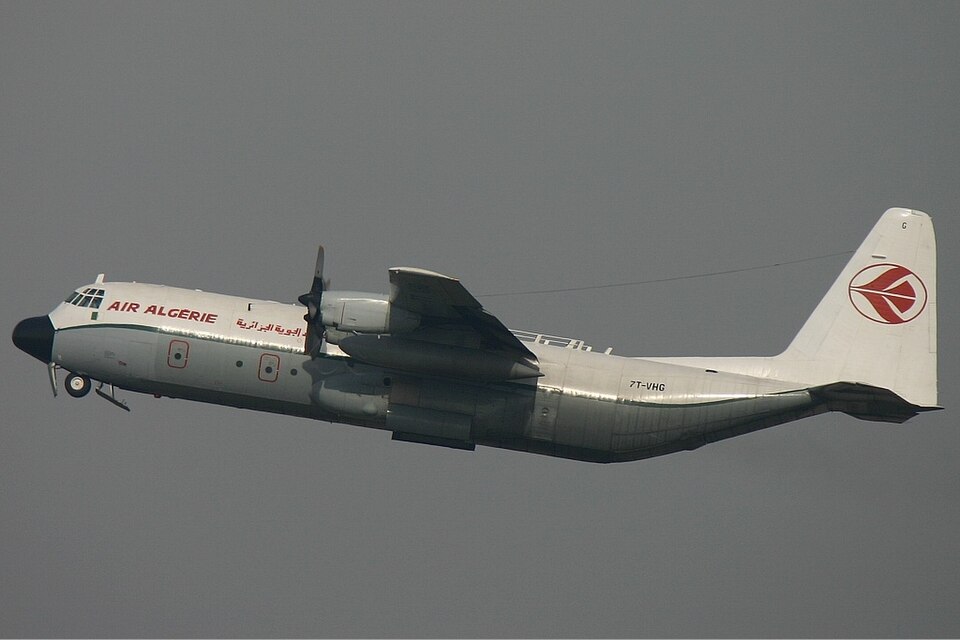
Aircraft registered 7T-VHG
Aircraft registered 7T-VHG. Photo: Johan Menten / CC BY-SA 3.0, via Wikimedia Commons

A four-engine cargo aircraft on a flight from Algiers to Frankfurt crashed near Piacenza, Italy, after the copilot reported autopilot failure. The aircraft entered an uncontrolled descent and disintegrated on impact, killing all three crew members.

Accident Details

On an unspecified date, a four-engine cargo aircraft departed Algiers-Houari Boumédiène Airport at 1705 local time on a flight to Frankfurt, Germany, with a crew of three. While cruising at an altitude of 25,000 feet over northern Italy, the copilot informed air traffic control about a failure of the automatic pilot system. Less than one minute later, the aircraft entered an uncontrolled descent. During the descent, the overspeed alarm sounded in the cockpit.

Impact and Aftermath

The aircraft, in a nose-down attitude of 45–50 degrees and at a speed of 850–900 km/h, crashed in an open field southwest of Piacenza, Italy. The impact caused total disintegration of the aircraft. A large crater was found at the point of impact, and debris was scattered over an area extending up to 800 meters around the crash site. All three crew members were killed.

Investigation

The official investigation noted that the high degree of fragmentation and the substantial absence or unavailability of flight data recorder (FDR) data made the safety investigation very difficult and prevented acquiring indisputable certainty on certain aspects. Based on examination of evidence and technical analyses, the investigation concluded that the accident likely resulted from a sudden loss of control of the aircraft, reasonably attributed to a technical problem in the flight control system. The pilots were unable to counter or manage the problem, and the investigation could not detect the exact cause with absolute certainty.

Probable cause

The accident occurred because of the loss of sudden control of the aircraft, induced, reasonably speaking, by a technical problem in the flight control system, which the pilots were unable to counter/manage and which the safety investigation could not detect with absolute certainty.