History of the Flight
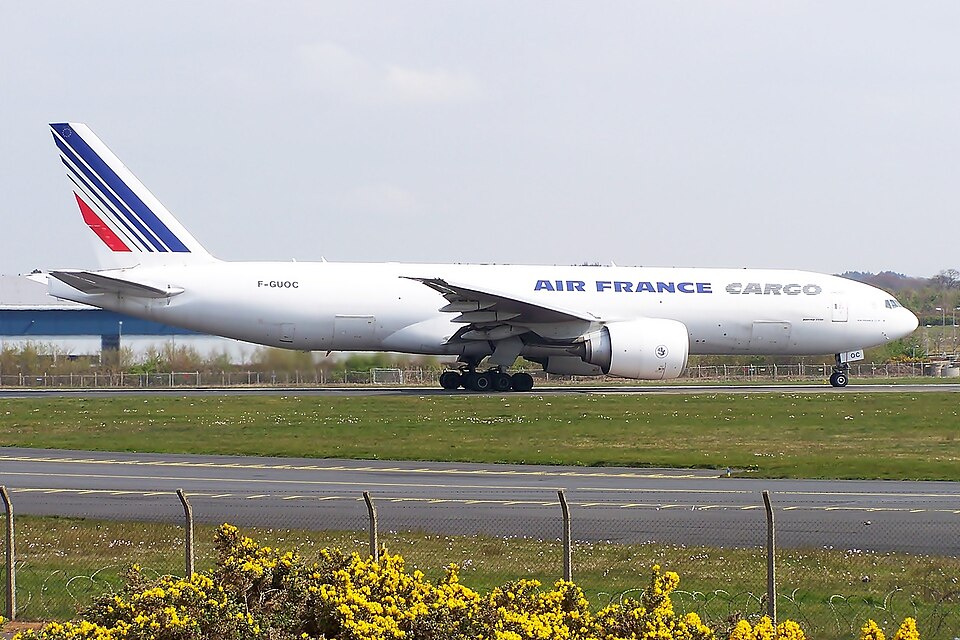
On 22 May 2015, at approximately 10:25 UTC, a Boeing 777-F cargo flight operated by Air France, registration F-GUOC, was departing from Paris-Charles-de-Gaulle Airport. The flight crew consisted of a captain serving as pilot monitoring, a co-pilot as pilot flying, and two relief pilots. There were no passengers or other persons on board.
During pre-flight preparations, the crew calculated take-off performance parameters using an electronic flight bag (EFB) tool. However, the weight entered was 100 tonnes lower than the actual take-off weight. As a result, the computed take-off speeds (V1, VR, V2) were significantly lower than required.
At take-off, the aircraft rotated at a low speed, and the tail strike protection system activated. The aircraft failed to gain altitude normally. The crew then applied full thrust. The aircraft flew over the opposite runway threshold at an approximate height of 170 ft and subsequently climbed normally. The crew continued the flight to the destination without further incident.
Investigation Findings
The investigation revealed that the error originated from the use of an erroneous weight during performance calculation. The operator's procedures lacked robustness, and the weight data handled across different systems were heterogeneous. These factors prevented the crew from detecting the 100-tonne discrepancy during checks. The aircraft systems did not alert the crew to the gross difference between the weight entered in the EFB and the weight calculated by the Flight Management System (FMS). Additionally, a message displayed on the FMS control display unit indicated that the FMS could not compute reference speeds, but this did not lead the crew to identify the data entry error.
The investigation also noted that for over 15 years, multiple international studies and investigation reports had addressed the issue of erroneous take-off parameters. The findings highlighted the limitations of operational barriers and promoted technical solutions such as On-Board Weight and Balance Systems, data discrepancy detection, and take-off performance monitoring systems. However, civil aviation authorities had not significantly influenced the availability of these systems. The Boeing 777 F-GUOC was not equipped with effective systems to prevent such errors.
Safety Recommendations
The BEA issued several safety recommendations to Air France, the DGAC, Boeing, and EASA. These recommendations addressed data entry procedures, weight data media, warnings and protections against erroneous speed entries on the Boeing 777, and the development and implementation of technical systems for the most exposed aircraft types.