Casualties unknown

1988-10-07: Boeing 727-100 (N118FE) — Federal Express — Newark, NJ

Newark, NJ, US

On October 7, 1988, a Boeing 727-100 (registration N118FE) operated by Federal Express was involved in an aviation accident near Newark, NJ. Investigators recorded the probable cause as: Progressive failure of all twelve tierods for the second stage low compressor, which led to the uncoupling of the fan section, imbalances in the third through sixth stages, uncoupling of the low power turbine, and subsequent overspeed and overheating of the… This summary draws on records from the U.S. National Transportation Safety Board (NTSB) historical archive; 13 related events involving the same aircraft type or operator are linked below.

Sourcesthe U.S. National Transportation Safety Board (NTSB) historical archivePrimary reportUpdated 1781061362Data APIEditorial standards
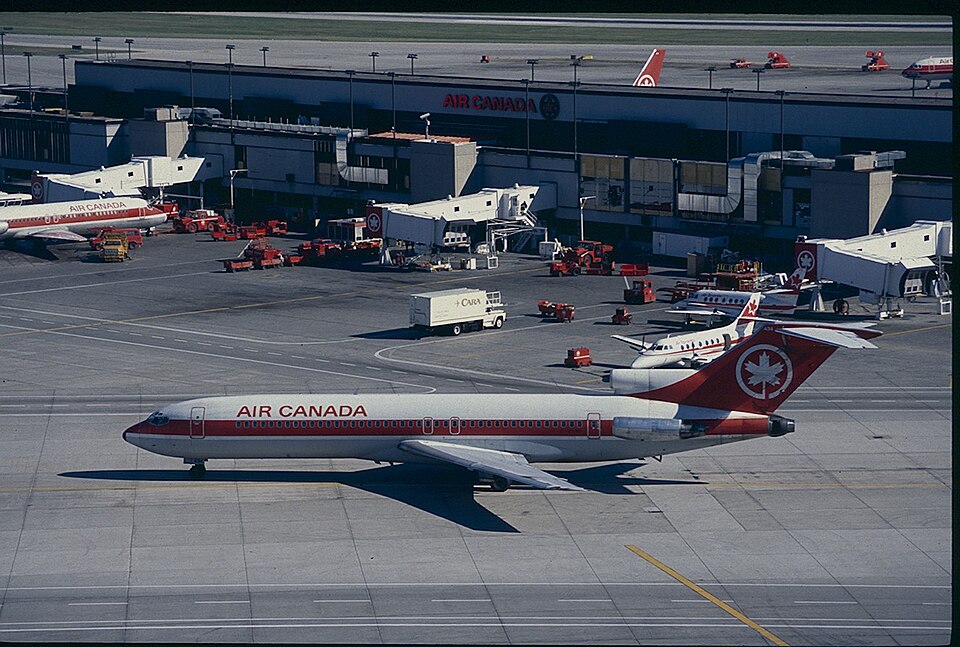
Boeing 727-100
Photo: Pete Macklin / CC BY-SA 2.0, via Wikimedia Commons

A takeoff was aborted at 120 knots after the number three engine suffered an uncontained turbine blade failure during the roll.

What happened

During the takeoff roll, the number three engine experienced an uncontained failure of a turbine blade. The crew initiated a rejected takeoff at a speed of 120 knots. The abort was executed successfully, and there were no further incidents reported during the remainder of the event.

The investigation

A detailed examination of the failed engine revealed that all twelve tierods associated with the second stage low compressor had suffered from progressive failure. This mechanical degradation led to a sequence of catastrophic internal events. First, the fan section became uncoupled from the rest of the engine assembly. Subsequently, significant imbalances developed in the third, fourth, fifth, and sixth stages of the turbine.

The structural failures continued as the low power turbine also became uncoupled. The loss of containment and mechanical integrity ultimately resulted in the turbine experiencing both overspeed and overheating conditions beyond its design limits.

Findings

The primary finding was the progressive failure of the second stage low compressor tierods. This initial failure mode triggered a chain reaction that included the uncoupling of the fan section, imbalances in multiple turbine stages, and the uncoupling of the low power turbine. These mechanical failures culminated in overspeed and overheating of the turbine components.

The investigation confirmed that the uncontained failure was not an isolated incident but the result of a cascading mechanical breakdown originating in the compressor section.

Probable cause

Progressive failure of all twelve tierods for the second stage low compressor, which led to the uncoupling of the fan section, imbalances in the third through sixth stages, uncoupling of the low power turbine, and subsequent overspeed and overheating of the turbine.

Investigation report by the U.S. National Transportation Safety Board (NTSB) historical archive. Original record: https://carol.ntsb.gov/event/20001213X27150. This page is a structured re-presentation; facts and quotes are in the National Transportation Safety Board (NTSB), United States.