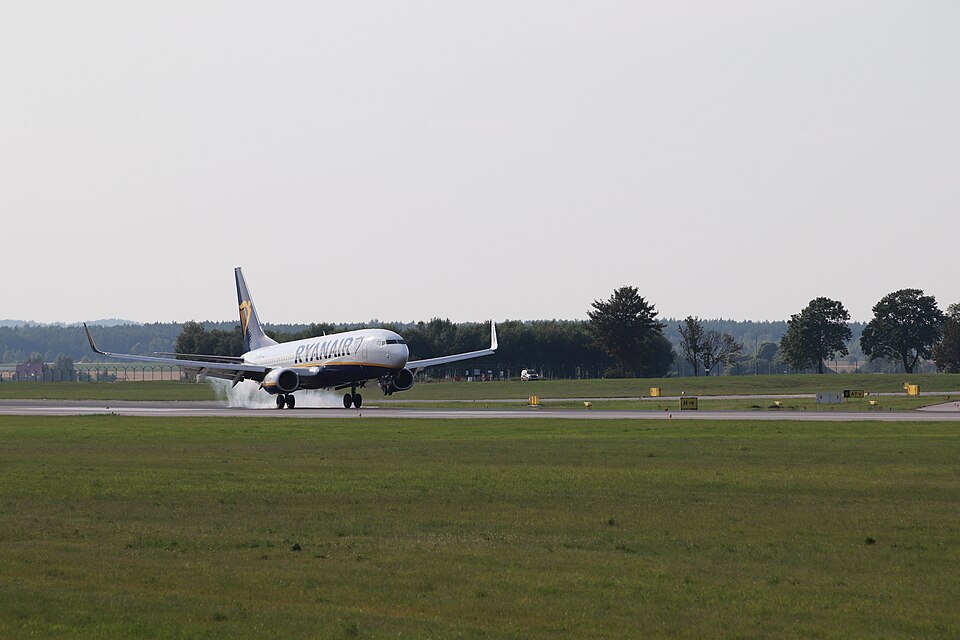
On February 1, 2022, a Boeing -737-800 (registration SP-RSB) operated by Ryanair Sun was involved in an aviation accident near EPKT, PL. Investigators recorded the probable cause as: Operational conditions on the final part of runway 27 were worse than the crew anticipated; lack of proactive actions and late execution of recommended procedures prevented timely recognition of the hazard and corrective action. This summary draws on records from the Polish State Commission on Aircraft Accidents Investigation (PKBWL); 5 related events involving the same aircraft type or operator are linked below.
On 1 February 2022, a Ryanair Boeing 737-800 (SP-RSB) overran runway 27 at EPKT during heavy snow. The aircraft stopped on grass with no injuries or damage.
Incident Overview and Operational Context On 1 February 2022, Ryanair Sun S.A. operated a scheduled flight from EDDK to EPKT using a Boeing 737-800-8AS, registration SP-RSB. During the approach, the crew reviewed ATIS information indicating an ILS approach to runway 27. The runway surface was 100% wet with a 2 mm layer of snow, and taxiways were fully covered in wet snow. Wind was from 220° at 15 knots, visibility at the touchdown point was 2,800 m, and weather included heavy snow with mist. Clouds were broken at 400 ft and overcast at 500 ft, with temperature and dew point at 0°C and QNH 997 hPa. The crew recognized icing conditions, performed landing performance calculations, and set flaps 30 with auto-brake level 3. ## Approach, Landing, and Runway Excursion At 22:47 UTC, approach control reported braking action on runway 27 as 4/4/4 with 100% wet snow. The crew recalculated performance and maintained the aircraft configuration. At 22:49 UTC, the tower issued a landing clearance and advised that runway 27 would be vacated via taxiway Lima. The aircraft landed at 22:55 UTC. After touchdown, speed brakes deployed automatically and thrust reversers were used. The aircraft decelerated, and auto-brake was disengaged at approximately 60 kt ground speed. Thrust reversers were initially set to idle and then shut down at 39.5 kt. The Runway Awareness and Advisory System (RAAS) activated about 900 m from the runway end at 50.5 kt. The aircraft continued at about 27 kt. At approximately 70 m from the end, the captain applied rudder pedals for braking. At about 30 m from the end and 23 kt, RAAS activated again. The captain observed a lack of response, increased pedal pressure, and reactivated thrust reversers. Despite these actions, the aircraft crossed the runway end lights at 11.5 kt, skidded, and turned left about 45° from the runway centerline. It stopped with the main wheels on hard asphalt and the nose wheel on grass about 5 m from the runway edge. Engines were shut down, and passengers evacuated without incident. Post-incident inspections found no damage. ## Findings, Cause, and Contributing Factors The investigating entity determined that the crew was aware of winter conditions, heavy snow, limited visibility, and 0°C temperature. The landing and initial rollout were conducted normally using standard procedures and deceleration techniques, and the aircraft remained fully controllable. However, FCOM analysis showed that later rollout actions were inconsistent with SOPs: ground speed above 5 kt was maintained on a contaminated, slippery runway; auto-brake and speed brakes were disengaged without certainty that the remaining runway length would allow a stop; and RAAS warnings were ignored. The cause was that operational conditions on the final part of runway 27 were worse than the crew anticipated. The lack of proactive actions and late execution of recommended procedures prevented timely recognition of the potential hazard and corrective action. Contributing factors included dynamically changing weather, non-compliance with SOPs regarding thrust reverser use, non-compliance with SOPs for rollout speed on a contaminated and slippery runway, and non-compliance with SOPs when RAAS messages appeared. ## Safety Actions and Recommendations The commission accepted preventive actions taken by the investigating entity: supplementary simulator training for both pilots using a winter operations scenario, and line checks for both pilots. No additional safety recommendations were issued.
Probable cause
Operational conditions on the final part of runway 27 were worse than the crew anticipated; lack of proactive actions and late execution of recommended procedures prevented timely recognition of the hazard and corrective action.