Accident Overview
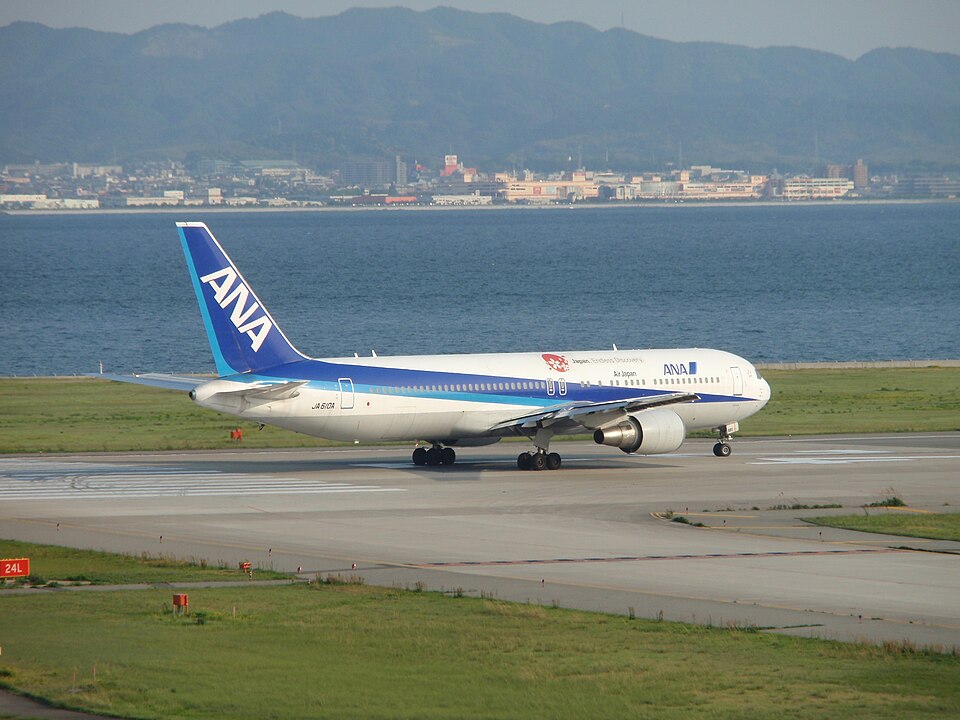
On June 20, 2012, at approximately 13:23 Japan Standard Time, a Boeing 767-300 registered JA610A, operated by All Nippon Airways as scheduled Flight 956, experienced a bounce while attempting to land on Runway 16R at Narita International Airport. The subsequent hard landing caused substantial damage to the aircraft structure. No fire occurred.
Occupants and Injuries
The aircraft carried 183 passengers and 10 crew members, including the captain. Four cabin attendants sustained minor injuries.
Sequence of Events
The aircraft was on approach to Narita Airport under conditions of a strong southwest wind with gusts. After the right main landing gear touched down, the aircraft bounced. The captain, not perceiving the bounce, applied nose-down control input in an effort to achieve early nose gear touchdown. This resulted in a hard impact of the nose landing gear. The landing was continued while the aircraft remained in an unstable posture due to the gusty crosswind.
Investigation and Findings
The Japan Transport Safety Board conducted an investigation. Analysis of flight data recorder and cockpit voice recorder information, along with weather data, revealed that the aircraft encountered a gusty crosswind during the final phase of landing. The fuselage upper crown sustained structural damage.
Probable Causes
The probable causes of the accident, as stated by the investigation, are: 1. The damage to the aircraft resulted from the hard landing of the nose landing gear after a bounce. 2. The hard landing of the nose landing gear occurred because the captain did not notice the bounce and controlled the aircraft to a nose-down attitude to expedite nose gear touchdown. 3. Continued landing with the aircraft in an unstable posture, influenced by a gusty crosswind from a strong southwest wind, contributed to the accident.