History of the Flight
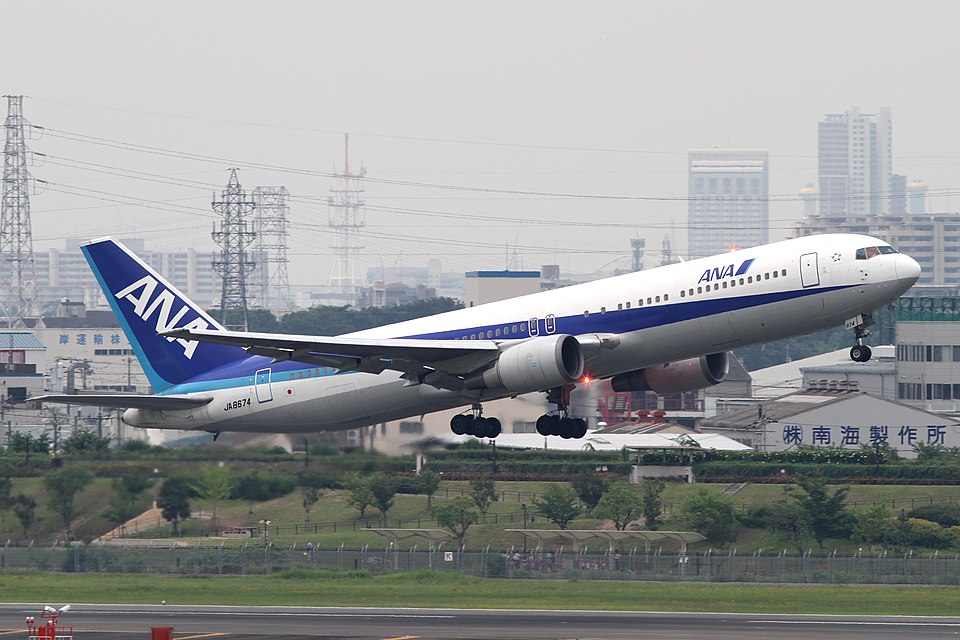
On July 8, 2011, a Boeing 767-300, registered JA8674 and operated by All Nippon Airways Co., Ltd., departed Tokyo International Airport at 09:08 JST as scheduled Flight 883 bound for Toyama Airport. At 09:19, while cruising at approximately 8,500 meters, the flight crew heard a loud noise accompanied by vibration from the No.1 (left) engine. They shut down the engine and returned to Tokyo International Airport, landing uneventfully at 09:51 after receiving air traffic control priority.
Damage to Persons and Aircraft
No injuries were reported. The aircraft sustained minor damage, with major damage occurring inside the engine. The high pressure turbine (HPT), comprising two stages, had one of its 74 second-stage HPT blades (Blade 69) separated 1.3 inches from the bottom of the shank and lost. Other second-stage HPT blades exhibited tip damage. The low pressure turbine (LPT), consisting of five stages, suffered damage along the full axial length of the LPT module.
Personnel and Aircraft Information
The pilot-in-command, age 52, held an airline transport pilot certificate with a Boeing 767 type rating and a valid Class 1 aviation medical certificate. The first officer, age 64, similarly qualified. The aircraft, a Boeing 767-300 (serial number 25661), was manufactured on May 19, 1994. The No.1 engine was a General Electric CF6-80C2B2F (serial number 702720) with 55,536 hours and 50 minutes of total service time and 23,373 cycles.
Investigation Findings
Examination of the second-stage HPT blades revealed that Blade 69 had a shank wall thickness of 0.037 inches, significantly less than the average of 0.08 inches (range 0.065–0.1 inches) for other blades. The minimum design value was 0.055 inches. Surface markings on Blade 69 and a similarly thin blade (the Similar Blade) were less legible, indicating surface erosion. Fracture surface examination of Blade 69 showed traces of fatigue propagation. High-temperature corrosion was limited to the outermost coating and did not penetrate the base material. Component material analysis showed no abnormality.
Three-dimensional measurement of Blade 69 indicated variations in shank wall thickness in the outer parts, but not in the interior. Review of repair history showed that in April 2008, Blade 69 was sent to a certificated repair facility for overhaul, where grit blasting was performed for cleaning. No cracks were reported. The Similar Blade underwent blasting on the same day. The maintenance manual did not specify a minimum shank wall thickness for second-stage HPT blades. The work order document provided by the repair facility lacked specific instructions on pneumatic pressure for blasting, allowing for possible excessive blasting. This document was used from February 2008 until June 2009. Examination of the manufacturing process for the blades revealed no abnormalities, and no shank wall thickness issues were reported for other blades from the same production lot.
Analysis and Probable Causes
The investigation concluded that it is highly probable that Blade 69 was the first blade to separate, given its minimal remaining part and evidence of fatigue propagation. The fatigue cracks likely initiated and propagated due to increased stress from the shank wall thickness being below the minimum design value. The thinning of the shank wall was possibly caused by excessive grit blasting during the 2008 repair. Factors supporting this include the non-specific work order instructions, surface erosion on the blade, lack of abnormalities in the manufacturing process, and the fact that the Similar Blade was blasted on the same day.
Safety Actions
Following the incident, All Nippon Airways decided to measure shank wall thicknesses of all second-stage HPT blades when removed from same-type engines. During the investigation, the company proactively removed engines with blades of similar purchase and repair history, leading to discovery of the Similar Blade. The engine manufacturer (General Electric) specified a minimum shank wall thickness, began measuring all blades sent to its designated repair facilities from October 2011, and monitored results. In December 2011, the manufacturer sent incident information to operators who might have blades subjected to excessive blasting. Subsequent monitoring identified another thin-walled blade, prompting a Service Bulletin on September 20, 2012, recommending operators check specific serial numbers and measure wall thickness.