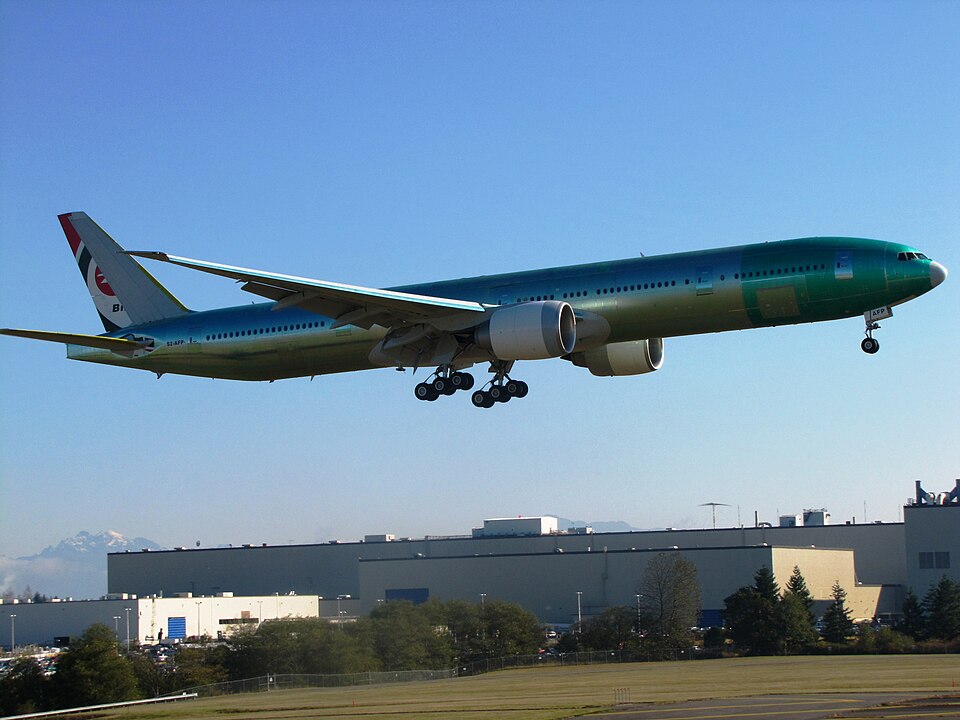
On June 7, 2016, an aircraft (registration S2-AFP) was involved in an aviation accident near Shah Jalal International, BD. Investigators recorded the probable cause as: [Listed below are the findings, causes and/or contributing factors established in the investigation. The list of. This summary draws on records from the Aircraft Accident Investigation Group of Bangladesh (AAIG, CAAB); 8 related events involving the same aircraft type or operator are linked below.
On 7 June 2016, a Biman Bangladesh Airlines Boeing 777-300ER (S2-AFP) aborted takeoff from Dhaka after a right engine failure warning. The aircraft stopped safely with no injuries.
Incident Overview and Flight Details On 7 June 2016, Biman Bangladesh Airlines Flight BG-049, a commercial passenger service bound for Dammam, Saudi Arabia, was scheduled to depart from Hazrat Shah Jalal International Airport (HSIA) in Dhaka, Bangladesh, at 1115 UTC. The aircraft was a Boeing 777-300ER with registration S2-AFP, operated by the national flag carrier of Bangladesh. The flight was crewed by two cockpit crew members and ten cabin crew members, and carried 241 passengers. ## Sequence of Events Take-off clearance was issued by Dhaka Control Tower at 1143 UTC, and the take-off roll began at 11:44:23 UTC. During the take-off roll, just before reaching V1, the crew reported an “ENGINE FAIL” warning on the Primary Flight Display (PFD) accompanied by master and aural warnings at approximately 150 knots. In accordance with standard operating procedures, the crew initiated a rejected take-off at an indicated airspeed of 149 knots at 11:44:54 UTC. The aircraft came to a stop on the runway. ## Post-Incident Actions and Findings After stopping, the crew communicated with the ATC Tower and reported an aborted take-off. The tower instructed the aircraft to vacate the runway and taxi back via taxiway. During the taxi back, the crew requested permission to stop on the high-speed taxiway, which was granted. The crew informed the tower of an “ENGINE PROBLEM,” and the tower instructed them to switch to Ground Control. The aircraft taxied back, and the engines were shut down at approximately 12:05 UTC. Ground engineers checked the cockpit parameters and found no abnormalities except an “ENGINE FAIL RIGHT” indication on the Engine Maintenance Page. A visual inspection of the right engine revealed severe damage to the rear part of the engine turbine section. During the runway inspection, many foreign object debris (FOD) in the form of metallic pieces were found scattered on the runway. The collected debris consisted of granular pieces a few millimeters in diameter, up to 5-6 inches in length, and up to 2 inches in width, numbering in the hundreds, with an overall weight of 13.56 kg. ## Aircraft and Crew Information The aircraft was airworthy, with no deficiencies detected prior to release. Performance status was satisfactory, and mass and center of gravity were within limits. The fuel used was Jet A-1. The Pilot in Command was 60 years old, held a valid Airline Transport Pilot License (ATPL), was current on the B-777-300ER, had completed mandatory checks, and had 23,512.00 hours of total flying experience, including 3,637.00 hours on type. The co-pilot was 38 years old, held a valid Commercial Pilot License (CPL), was current on the B-777-300ER, had completed mandatory checks, and had 6,951.00 hours of total flying experience, including 1,869.00 hours on type. Both crew members were rested for more than 24 hours. ## Meteorological and Aerodrome Conditions The actual meteorological conditions at the time were calm surface wind, a temperature of 26°C, QNH of 1003, and light rain. The Terminal Aerodrome Forecast (TAF) indicated rain and thunderstorm. Natural light conditions were sunlight with cloudy skies. The runway surface was hard bitumen, with runway directions 14 and 32. The runway length was 10,500 feet plus a stop-way of 902 feet for RW14 and 476 feet for RW32, with a width of 148 feet and exit markings at both ends. The runway surface condition during the incident was wet to damp. ## Investigation and Data The investigation was conducted by the Aircraft Accident Investigation Group of Bangladesh (AAIG-BD) in accordance with ICAO Annex 13. The flight recorders were located in the tail area of the aircraft and were intact, with data available. Fuel samples were taken from the fuel filter bowl and tested by INTERTEK in the UK, with all test parameters found within limits. The affected engine was the starboard engine. The report was published on 7 June 2018 by the Civil Aviation Authority of Bangladesh (CAA Bangladesh).