Paraglider Crash in Puente Alto Injures Pilot and Passenger
A SkyWalk Join't 3 paraglider crashed into the ground near Las Vizcachas, Chile, on September 1, 2024. The pilot and passenger sustained serious spinal…
On April 4, 1979, a Boeing 727-31 operated by Trans World Airlines was involved in an aviation accident near Saginaw, Michigan. No fatalities were reported. Investigators recorded the probable cause as: The Safety Board determined that the probable cause of the accident was "the isolation of the No. 7 leading edge slat in the fully or partially extended position after an extension of the Nos. This summary draws on records from the U.S. National Transportation Safety Board (NTSB) Aircraft Accident Reports; 16 related events involving the same aircraft type or operator are linked below.
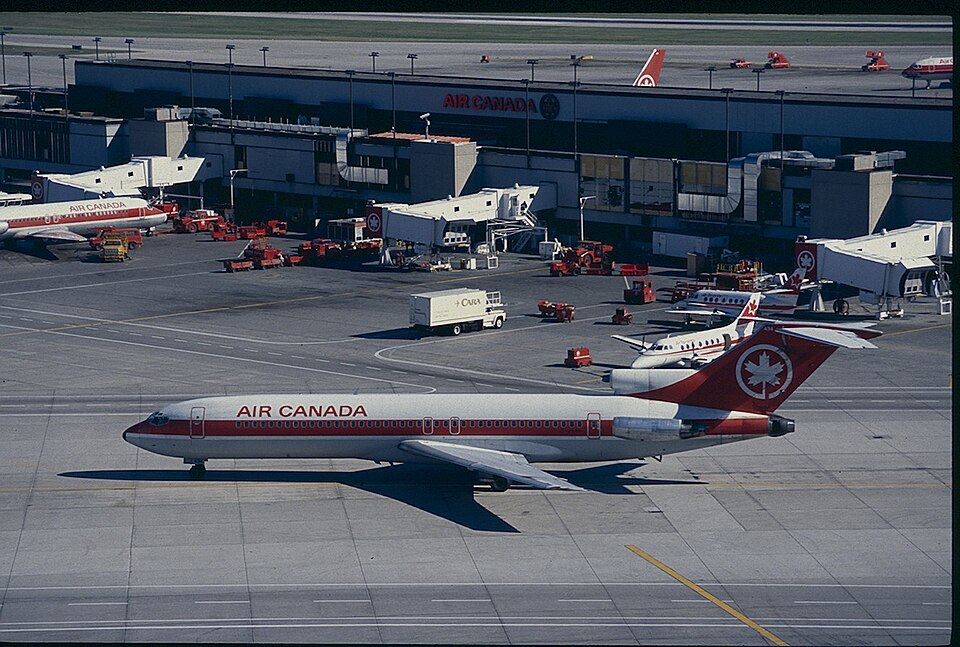
The Safety Board determined that the probable cause of the accident was "the isolation of the No. 7 leading edge slat in the fully or partially extended position after an extension of the Nos. 2, 3, 6, and 7 leading edge slats and the subsequent retraction of the Nos. 2, 3, and 6 slats, and the captain's untimely flight control inputs to counter the roll resulting from the slat asymmetry." Contributing to the cause was a preexisting misalignment of the No. 7 slat which, when combined with the cruise condition airloads, precluded retraction of that slat. After eliminating all probable individual or combined mechanical failures or malfunctions which could lead to slat extension, the Safety Board determined that the extension of the slats was the result of the flightcrew's manipulation of the flap/slat controls. Contributing to the captain's untimely use of the flight controls was distraction due probably to his efforts to rectify the source of the control problem.
— NTSB Determination
On April 4, 1979, about 2148 e.s.t., a Trans World Airlines, Inc. Boeing 727-31 entered an uncontrolled maneuver at 39,000 feet pressure altitude near Saginaw, Michigan. The aircraft descended to about 5,000 feet in about 63 seconds before the flightcrew regained control. The flight made an emergency landing at Metropolitan Airport in Detroit, Michigan, at 2231. Of the 89 persons aboard, eight passengers received minor injuries. The aircraft was substantially damaged.
### The flight
Flight 841 was a scheduled passenger flight from John F. Kennedy International Airport in New York to Minneapolis-St. Paul International Airport in Minnesota. It carried 82 passengers and 7 crewmembers.
The captain had accumulated 15,710 flight-hours, with 2,597 in the Boeing 727. He had recently requalified as a 727 captain after a medical leave for a broken ankle, having flown exclusively as a first officer on Boeing 747s from November 1977 to December 1978.
After a delay for traffic, the flight departed New York at 2025. At 2125, encountering a 100-knot headwind at flight level 350, the flight requested and was cleared to flight level 390, reporting level at 2138:44. The captain stated he leveled the aircraft at 39,000 feet at 0.80 mach and engaged the autopilot in the Altitude Hold mode. The flight was in visual flight conditions at night with no turbulence.
### The sequence of events
According to the captain, about nine minutes after reaching 39,000 feet, he felt a buzzing sensation that became a light buffet. He noticed the autopilot was commanding a left turn, but the attitude director indicator showed the aircraft in a 20° to 30° right bank. He disconnected the autopilot and applied left aileron control.
The captain stated that the aircraft continued to roll right despite nearly full left aileron, so he added left rudder. Believing the aircraft was going to roll inverted, he retarded the throttles to flight idle and stated "we're going over." The aircraft rolled completely and entered a second roll with the nose down.
The captain asked the first officer to extend the speed brakes. The first officer, who was calculating groundspeed, was initially unaware of the aircraft's attitude and did not react. The captain moved the speed brake lever to deploy them, detected no reaction, and retracted them.
During the rapid descent, the captain estimated the aircraft was near 15,000 feet when he commanded landing gear extension. The first officer extended the gear, and the crew heard a very loud sound similar to an explosion.
The captain stated he applied full left aileron and rudder throughout the descent. Simultaneous with the gear extension, he relaxed some pressure on the controls. The airspeed slowed, and he rolled the aircraft to a near wings-level attitude, stopping the descent. The aircraft pitched upward into a 30° to 50° climb before the crew leveled it near 13,006 feet.
Noticing an "A" hydraulic system failure light and an inoperative lower yaw damper flag, the captain decided to land at Detroit. During the approach, extending the landing flaps via the alternate system caused a sharp left roll, so the flaps were retracted for a no-flap landing. The aircraft landed without incident at 2231.
### What the investigation found
The aircraft's No. 7 leading edge slat on the right wing was missing. Its actuator cylinder was broken, and the inboard fairing-adjustment T-bolt was broken with fatigue fracture characteristics. The right outboard aileron actuator hinge fitting bolt was also broken in fatigue. A large portion of the No. 10 spoiler panel was missing. The No. 7 slat and other components were found near Saginaw.
The cockpit voice recorder was undamaged, but 21 minutes of the 30-minute tape were blank. The remaining 9 minutes covered conversations after landing. The tape could be erased by a bulk-erase feature activated on the ground with the parking brake engaged. The captain stated he usually erased the tape at the conclusion of each flight but could not recall doing so in this instance. The Board noted its skepticism regarding the erasure, stating it had difficulty accepting that a routine habit was not restrainable after a flight in which disaster was narrowly averted.
The flight data recorder showed that at 2147:34, the vertical acceleration (g) trace began to oscillate. The aircraft's heading changed abruptly, and it descended from 39,000 feet to a minimum of about 5,000 feet. The airspeed increased to a maximum of 470 knots (0.96 mach), and the g-trace reached a maximum of about 6.0 g's during the recovery.
Boeing flight and wind tunnel tests, along with simulator tests, showed that an extended No. 7 slat at 39,000 feet and 0.80 mach generates a right roll. The Board concluded that the No. 7 slat, and possibly others, began to extend about 2147:32, creating the buzzing and buffet.
The Board found no evidence of any probable combination of failures or malfunctions in the flight control system that would cause an unscheduled extension of the No. 7 slat. The Board determined that the Nos. 2, 3, 6, and 7 slats were extended as a consequence of flightcrew action, probably in an attempt to extend 2° of trailing edge flaps independently to improve aircraft performance. When scheduled to retract, the Nos. 2, 3, and 6 slats retracted, but the No. 7 slat failed to retract. The Board concluded this was likely because aerodynamic loads combined with friction from the slat's preexisting misalignment exceeded the hydraulic retraction force.
Calculations based on heading gyro tests and simulator data indicated that the aircraft initially rolled right to about 35°, after which the captain rolled it rapidly left to a near wings-level attitude. The aircraft then began to roll right again, probably while the captain was distracted by the control problem. The roll was stopped near 35° of right bank for several seconds, during which the captain applied full or nearly full lateral and rudder controls. The Board believed this induced a substantial right sideslip, which combined with the aircraft's mach number and angle of attack to reduce the lateral control margin to zero or less, causing the uncontrollable spiral dive. Lateral control was restored only after the No. 7 slat was torn from the wing.
### Probable cause
The Safety Board determined that the probable cause of the accident was "the isolation of the No. 7 leading edge slat in the fully or partially extended position after an extension of the Nos. 2, 3, 6, and 7 leading edge slats and the subsequent retraction of the Nos. 2, 3, and 6 slats, and the captain's untimely flight control inputs to counter the roll resulting from the slat asymmetry."
Contributing to the cause was a preexisting misalignment of the No. 7 slat which, when combined with the cruise condition airloads, precluded retraction of that slat. After eliminating all probable individual or combined mechanical failures or malfunctions which could lead to slat extension, the Safety Board determined that the extension of the slats was the result of the flightcrew's manipulation of the flap/slat controls. Contributing to the captain's untimely use of the flight controls was distraction due probably to his efforts to rectify the source of the control problem.
All Boeing 727-200 accidents →
On April 4, 1979, about 2148 e.s.t., a Trans World Airlines, Inc. Boeing 727-31 entered an uncontrolled maneuver at 39,000 feet pressure altitude near Saginaw, Michigan. The aircraft descended to about 5,000 feet in about 63 seconds before the flightcrew regained control. The flight made an emergency landing at…
No fatalities were recorded in this accident.
The accident on 4 Apr 1979 involved a Boeing 727-31, operated by Trans World Airlines, at Saginaw, Michigan.
The Safety Board determined that the probable cause of the accident was "the isolation of the No. 7 leading edge slat in the fully or partially extended position after an extension of the Nos. 2, 3, 6, and 7 leading edge slats and the subsequent retraction of the Nos. 2, 3, and 6 slats, and the captain's untimely…
A SkyWalk Join't 3 paraglider crashed into the ground near Las Vizcachas, Chile, on September 1, 2024. The pilot and passenger sustained serious spinal…
A Cessna 172N struck electrical cables while on final approach to land at Aucó Aerodrome in Chile. The pilot was uninjured, but the aircraft sustained damage…
A Bombardier DHC-8-402 suffered a tail strike during landing at Puerto Williams on September 9, 2024. All 76 occupants were unharmed, but the aircraft…
A MYD JS-MD 3 glider veered off the runway and struck a wall at Vitacura Aerodrome on January 6, 2025. The pilot was uninjured, but the aircraft sustained…
A recreational paraglider flight in Puchuncaví, Chile, ended with the pilot sustaining serious injuries after a rapid descent and impact with a hillside on…
A Tecnam P2006T landed on its belly at an aerodrome in Poland after the crew failed to confirm landing gear deployment. The incident resulted in no injuries…