History of the Flight
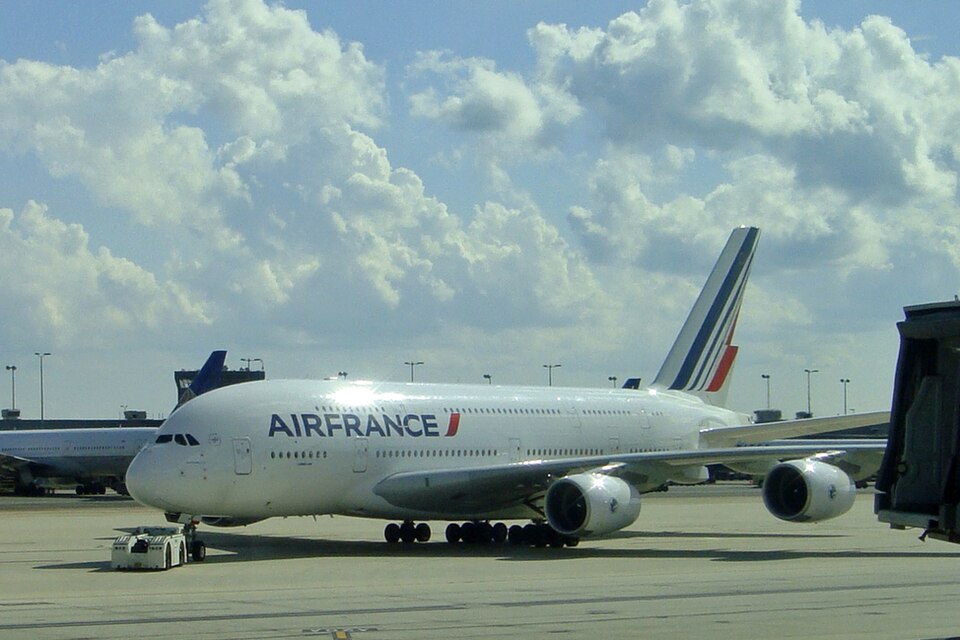
On 30 September 2017, an Airbus A380-861, registered F-HPJE and operated by Air France, was conducting scheduled flight AF066 from Paris (France) to Los Angeles (USA). The aircraft took off at 09:50 UTC. At 13:49, while the crew were changing en-route flight level, they heard an explosion and observed asymmetric thrust from the right side of the aeroplane, immediately followed by severe vibrations. The ECAM displayed the messages "ENG 4 STALL" and then "ENG 4 FAIL" nearly simultaneously. The crew diverted to Goose Bay airport (Canada) and landed at 15:42 without further incident.
Damage
A visual examination of the engine found that the fan, the first rotating assembly at the front of the engine, along with the air inlet and fan case had separated in flight, leading to slight damage to the surrounding structure of the aircraft. The right outer engine (No 4) was substantially damaged.
Occupants and Crew
The flight carried 497 passengers, 21 cabin crew, and a flight crew comprising a captain, a first officer, and a relief pilot. No injuries were reported.
Investigation
The Transportation Safety Board of Canada initially opened a safety investigation. After the flight data recorder confirmed the failure occurred over Greenland, the Accident Investigation Board Denmark delegated the investigation to the French Civil Aviation Safety Investigation Authority (BEA). The investigation team included accredited representatives and advisers from the BEA, NTSB, TSB, Airbus, Air France, Engine Alliance, General Electric, and Pratt & Whitney.
The investigation identified several factors likely to have contributed to the accident: engine designer's/manufacturer's lack of knowledge of the cold dwell fatigue phenomenon in the titanium alloy Ti-6-4; absence of instructions from certification bodies about taking into account macro-zones (colonies of similarly oriented alpha grains) and the cold dwell fatigue phenomenon in critical parts; absence of non-destructive means to detect unusual macro-zones in titanium alloy parts; and an increased risk of large macro-zones in larger Ti-6-4 forgings due to bigger engines.
Post-Accident Actions
After the accident, regular inspections of the fleet in service found no cracks detected in areas considered at risk on the fan hubs of Engine Alliance engines equipping the A380. Certification bodies and engine manufacturers are considering how to better understand and account for cold dwell fatigue in future engine designs.