Summary
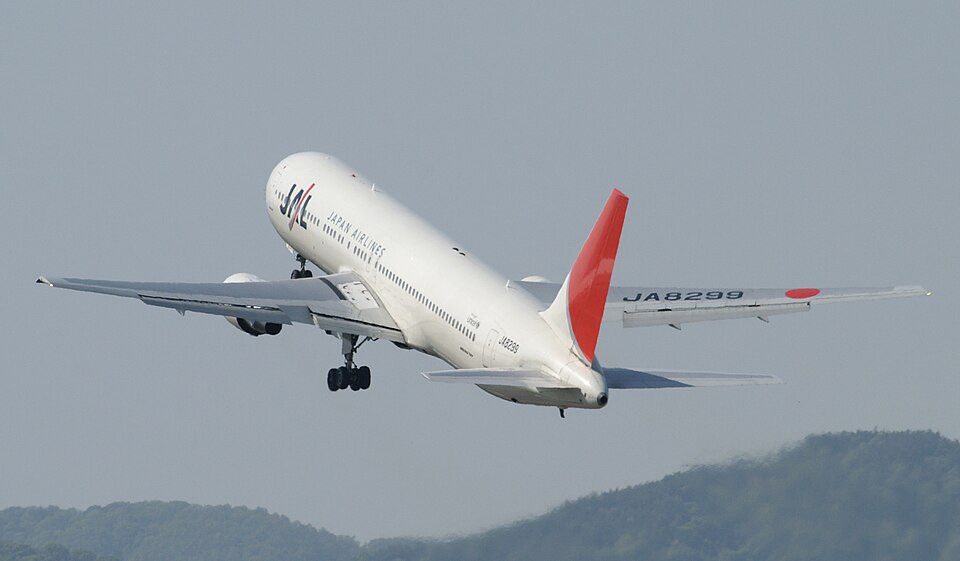
On Sunday, April 5, 2015, a Boeing 767-300, registered JA8299 and operated by Japan Airlines Co., Ltd., was operating as scheduled flight 455 from Tokyo International Airport to Tokushima Aerodrome. During the approach, the aircraft received a landing clearance for Runway 29 at 10:53 JST. After passing the runway threshold at about 10:58, the crew observed a vehicle on the runway and executed a go-around. The aircraft touched down briefly during the go-around before lifting off again. There were 67 persons on board, including the pilot in command, seven other crewmembers, and 59 passengers. No one was injured.
Sequence of Events
At about 10:40, an electric maintenance worker (the Worker) requested permission from the Tokushima Aerodrome control tower (the Tower) to enter the runway to replace bulbs in runway distance marker lights. Permission was granted, and the Worker entered the runway with a work vehicle at about 10:43. Meanwhile, flight 455 established contact with approach control at about 10:50 and requested an ILS approach to Runway 29. The approach controller vectored the aircraft to the final approach course.
At 10:53:09, the approach controller suggested to the ATC Facility Supervisor (the Supervisor) that Runway 11 should be used for a departing aircraft. The Supervisor agreed. At 10:53:17, the Tower issued a landing clearance for Runway 29 to flight 455. At 10:57:58, ground control issued a pushback clearance and a departure from Runway 11 for the departure aircraft. At about 10:58, flight 455 passed over the threshold of Runway 29. Shortly after, the first officer called "Go-around," and the pilot in command executed the go-around. The main landing gear touched down at 10:58:17, and the aircraft lifted off again at 10:58:19. The aircraft passed over the work vehicle at 10:58:24.
Probable Causes
The Japan Transport Safety Board determined that the serious incident occurred because local control at Tokushima Aerodrome control tower issued a landing clearance to JA8299 while the runway was occupied by a work vehicle. It is probable that the Tower issued the landing clearance because the Supervisor, who had combined duties of tower and ground control, had forgotten about the presence of the work vehicle. Contributing factors included that only one air traffic controller was on duty, preventing support from other controllers; the Supervisor was preoccupied with selecting a runway for the departure aircraft; and he did not use a reminder indicating that the runway was unusable for takeoffs and landings.